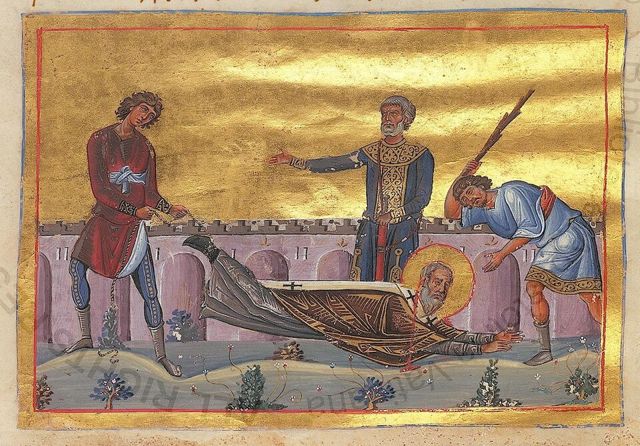
St. Dorotheus of Tyre

Dorotheus was a priest of Tyre in Phoenicia, some say its bishop, who suffered much under Dioclesian.

Read the essentials →
Feast June 5 · Martyr, Bishop

St. Dorotheus of Tyre

Current feast

June 5 (also listed: June 18)
Secondary source · Wikipedia infobox

Traditional feast

June 5
1914 / pre-1969 calendar, per Baring-Gould (1897)

Represents

Martyr
Bishop

Feast days

Feast: June 5

This Saint’s Story

Adapted in modern English from Alban Butler's Lives of the Saints · little is known

He is said to have survived his torments until the reign of Julian the Apostate (emperor 361–363, raised Christian, who tried to restore paganism) and to have finished his martyrdom at Odyssopolis in Thrace.

Butler warns that the Synopsis of the lives of the prophets and apostles under his name is the work of a later Greek and full of fables. The text on this page gives 362.
What he represents

How he teaches us to live

Drawn from themes in the original account

Stay faithful when it costs you. Holding firm under pressure is part of this story.

Make time for silence. Time alone in prayer is part of this story.

Feed your mind with Scripture and good books. Learning and the Scriptures matter in this life.

Read more

The full original · 220 words

Read Baring-Gould’s full account

Baring-Gould’s sources: Greek Menology, Russian Kalendar, and Roman Martyrology. Authority Theophanes in his account of the Council of Nicaea.

Dorotheus, bishop of Tyre, suffered much in the persecution of Diocletian [Roman emperor 284–305, who began the ‘Great Persecution’ of Christians in 303]. He was skilled in both Greek and Latin; and if he is the same Dorotheus as the priest of Antioch, mentioned by Eusebius, he was learned also in Hebrew.1 He was present at the Council of Nicsea. When Julian came to the throne he went to Odyssopolis, in Sicily, whither he had retired before, in the persecution of Diocletian. There he suffered much ill-usage and died, at the advanced age of a hundred and seven. It is not probable that he was put to death, for Julian was no persecutor in a direct manner; and the only authentic accounts of martyrdoms in his reign are those of Christian soldiers in the army.

But the sea-voyage, poverty, petty annoyances, and perhaps popular tumult, may have precipitated his death, and in martyrologies he is invariably enrolled as a martyr. And, indeed, his may be called a martyrdom though he did not shed his blood for Christ 1 Eusebius [Eusebius of Caesarea (d. c. 339), the first historian of the Church] says that Constantine made Dorotheus, priest of Antioch, his procurator to the dye-works at Tyre. It is possible that this may have been a different Dorotheus; but it is not unlikely that it is the same one, and that from being master of the dyeing, be was advanced to the bishopric of Tyre.

Help us add to this saint's story

Everything is read by a person before anything appears. Facts are checked against trusted sources first.

Facts are welcome; a source link helps (optional).With your permission we may share it on this page.

Nine days · Free

Pray the novena
with us.

One short email a day for nine days. The day's prayer, a line from St. Dorotheus of Tyre's story, and a nudge to keep going.

Also on June 5
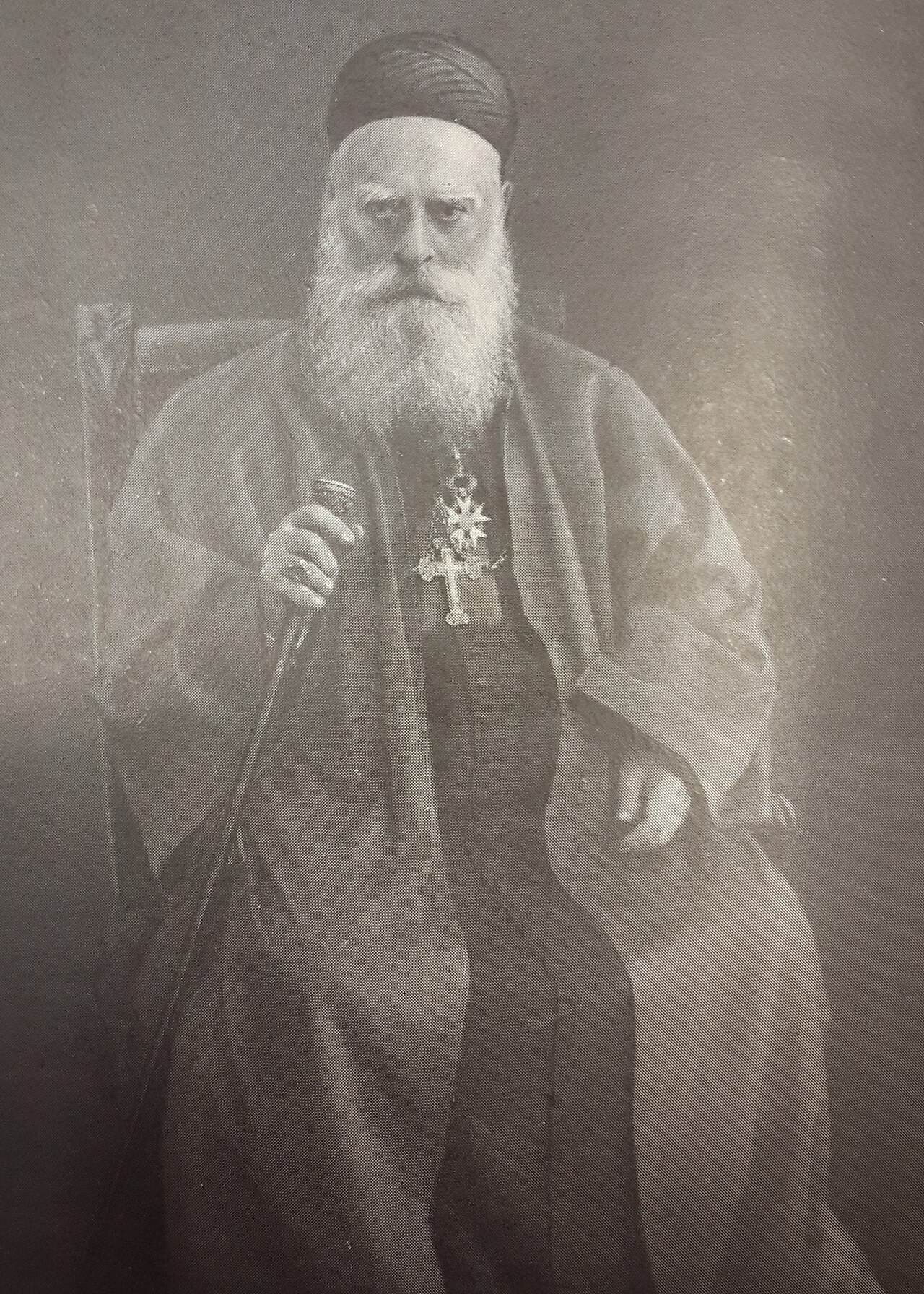
Bl. Elias Peter Hoayek

Bl. Elias Peter Hoayek

June 5 · Bishop, Patriarch, Founder
← All 1970 saints in the library
Sources & notes

Feast-day sources

Story sources

Sources

Credits

Image: Dorotheus of Tyre (Menologion of Basil II).jpg · Authors of Menologion of Basil II (circa 985 AC, Constantinople), Byzantine manuscript illuminators[1]: Pantoleon with G · Public domain, via Wikimedia Commons

Image: Authors of Menologion of Basil II (circa 985 AC, Constantinople), Byzantine manuscript illuminators[1]: Pantoleon with G, Wikimedia Commons (Public domain)

From Sabine Baring-Gould, The Lives of the Saints, new edition in 16 vols. (London: John C. Nimmo, 1897–98); text from the Internet Archive scan (OCR, lightly cleaned; errors possible). Public domain in the United States. Reproduced unedited, except for short bracketed notes in grey that we added to explain names and terms (“S.” is the old abbreviation for Saint). Some history and judgments reflect 19th-century scholarship.