This Saint’s Story
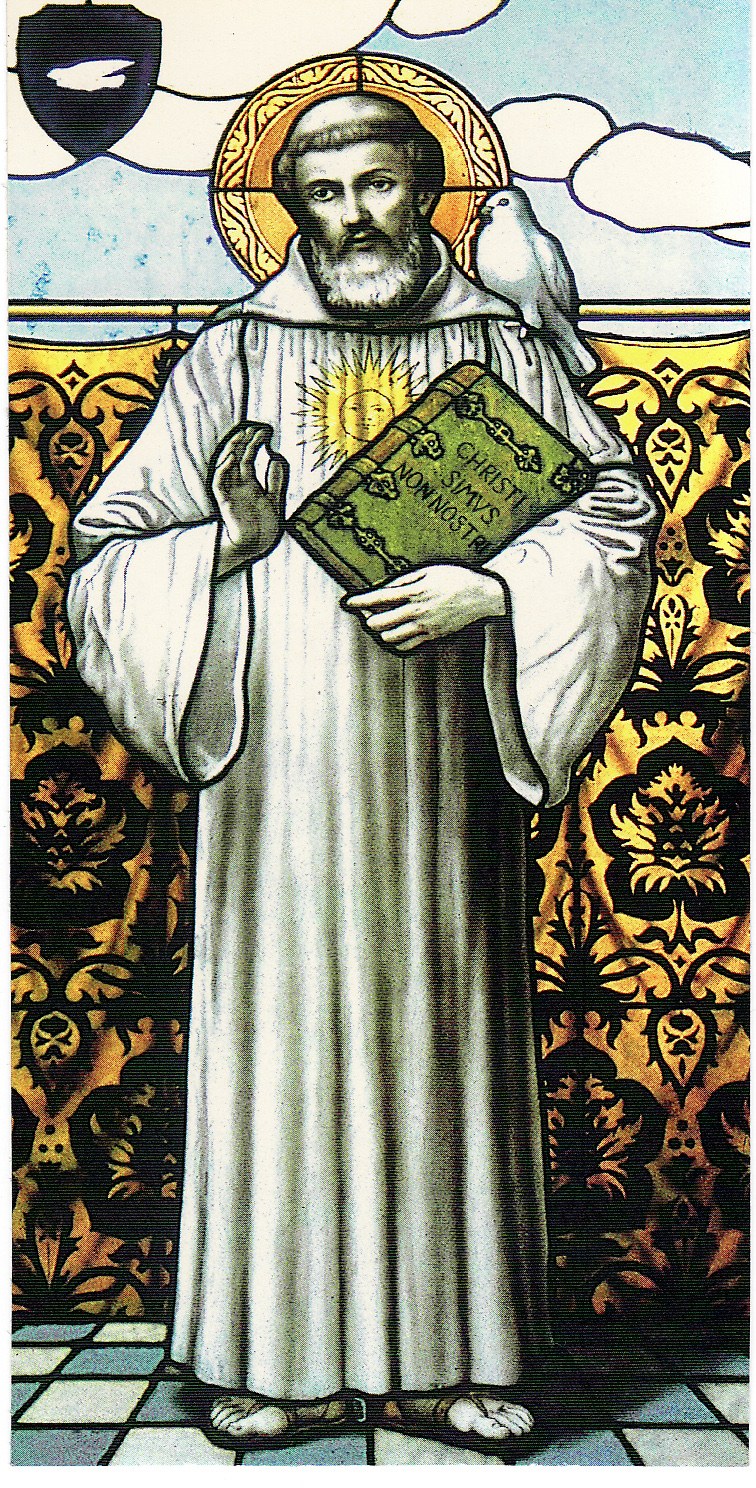
Columban — Columbanus in Latin and Columbán in Irish — was an Irish abbot and missionary. The Catholic Encyclopedia says he was born in west Leinster in 543 and died at Bobbio on 21 November 615. Wikipedia gives the same birth and death, and lists his feast as 23 November. Most of what is known comes from his own letters and rules, and from the Life written by Jonas of Bobbio between about 639 and 643, while monks who had known him were still alive. A later Bobbio text adds miracle stories.
He studied under Sinell at Cluaninis, on Lough Erne, and wrote a commentary on the Psalms. He then lived at Bangor under Comgall until about 590. He sailed with twelve companions, among them Attala and Gall. King Guntram gave them Annegray in the Vosges. As their numbers grew, they founded houses at Luxeuil and Fontaines. They kept the Irish date of Easter and the Irish tonsure. In 602 the Frankish bishops summoned him. He stayed away and wrote: "I am not the author of this divergence. I came as a poor stranger into these parts for the cause of Christ, Our Saviour. One thing alone I ask of you, holy Fathers, permit me to live in silence in these forests, near the bones of seventeen of my brethren now dead." He also wrote to Pope Gregory I. Gregory died in 604.
After a clash with King Theuderic II and with Brunhilda, he was taken toward Ireland. Jonas's Life says a storm turned his ship back at Nantes. He reached Bregenz with Gall, then Milan in 612. In 614 King Agilulf gave him Bobbio, where he built a monastery by a ruined church of St Peter. He died there on 21 November 615. The General Roman Calendar keeps him on 23 November. He is not Columba of Iona, who has a different feast.
This page keeps November 23.
For today: If you are a guest in someone else's church, say plainly which custom you are keeping and why. Columban asked the Frankish bishops for leave to live in the woods near the graves of his brothers.