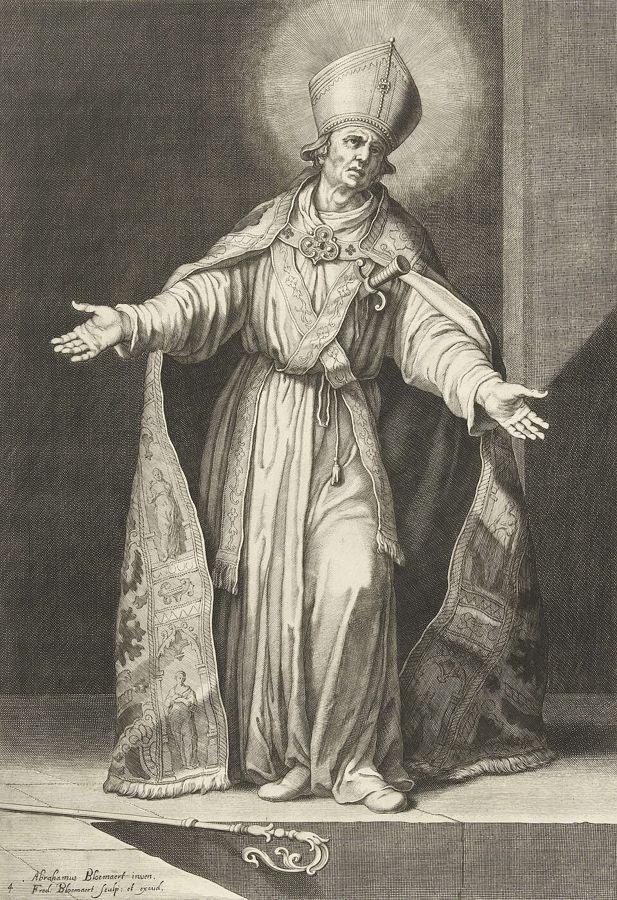
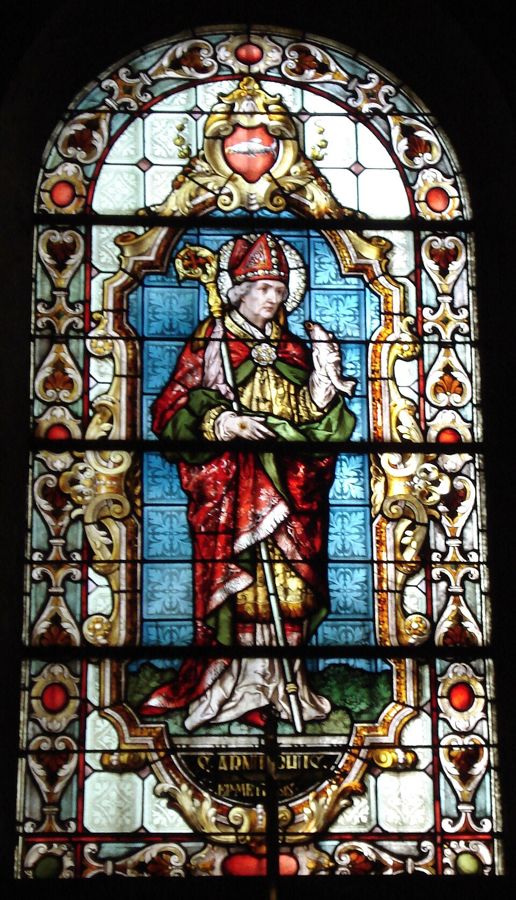
St. Arnulf of Metz

Arnulf was a statesman and bishop of the Merovingian (the first dynasty of Frankish kings) Franks, born about 580 into a distinguished family of Austrasia.

Read the essentials →
Feast July 18 · Bishop

St. Arnulf of Metz

Current feast

July 18
Secondary source · Wikipedia infobox

Traditional feast

July 18
1914 / pre-1969 calendar, per Baring-Gould (1897)

Represents

Bishop

Feast days

Feast: July 18

This Saint’s Story

He did well at school and, as was the custom, was sent to the court of Theodebert II, King of Austrasia. Under Gundulf, mayor of the palace, he became one of the king's chief ministers, served as a military commander and administrator, and at one time had six provinces under his care. He married a Frankish noblewoman (Baring-Gould names her Doda) and had two sons, Anseghisel and Clodulf.

Amid these honours he thought often of monasteries, and with his friend Romaricus, another court officer, planned a pilgrimage to Lérins (a famous island monastery off Cannes) to give his life to God. Instead the see of Metz fell vacant, and he was consecrated its bishop about 611 (Baring-Gould says about 599). A familiar tale, which Baring-Gould calls an old nursery story, tells that Arnulf threw his ring into the Moselle, saying he would not believe his sins forgiven until he saw it again, and that years later it was found in a fish served at his table.

As bishop he stayed at the centre of public life. In 613 he joined Pepin of Landen and other nobles in calling Clothaire II to Austrasia, and when Austrasia was given to the king's son Dagobert he became the young king's tutor and chief minister. In 625 he attended a council of Frankish bishops at Reims and worked to reconcile Clothaire and Dagobert.

Weary of court and fearful of his responsibilities, about 626 he obtained a successor at Metz and withdrew with Romaricus to a solitary place in the Vosges, near Remiremont, where he lived in communion with God until his death about 640. Romaricus buried him; about a year later Bishop Goeric moved his remains to the basilica of the Holy Apostles at Metz. His son Clodulf later became Bishop of Metz, and through Anseghisel, grandfather of Pepin of Heristal, Arnulf was an ancestor of the Carolingian (of Charlemagne's dynasty) kings.

Struggles & surrender

His struggles

  • Weary of court and office ·
    Though bishop and chief minister, he dreaded the responsibilities of his office and grew weary of court life, until he resigned and withdrew to the Vosges.

What he represents

How he teaches us to live

Drawn from themes in the original account

Make time for silence. Time alone in prayer is part of this story.

Build up the community you belong to. Community life is part of this story.

The full story

Baring-Gould’s account retold in modern English

Read the full story · 526 words · about 2 min

He remained at court with Clothair II after the defeat and assassination of Theodebert by his brother Thierry, the king of Burgundy. Thierry died of illness in 611, the year after the death of Theodebert, and his young son, Sigebert, was left in the care of the fierce Brunehaut, his great-grandmother. Clothair, the son of Fredegund and Chilperic, the king of Soissons, ascended the throne of Soissons in 584, following the murder of his father, likely by Fredegund, who had also assassinated the sons of Chilperic from his first marriage. In 613, after Thierry's death, Clothair banished or executed Thierry's sons and became the sole king of the Franks.

Saint Arnulf was married to Doda, a lady from Swabia, and they had two sons. One of these sons was Saint Chlodulph, also known as Clou, and the other was Ansigis. It is from Ansigis that the Carolingian line of kings is descended.

It can be easily imagined that Arnulf, a man who loved God, is said to have been the son of Arnoald and Oda. Arnoald was the son of Ansbert and Blithilda, who was the daughter of Clothair I. Saint Arnulf was born around A.D. 582 in Lorraine.

Theodebert, the son of Childebert, became king of Austrasia, Paris, and Orleans. He sought righteousness and felt uneasy being on the throne of a prince like Clothair, who was stained with much blood, including that of his brothers and father. He would have retired to the monastery of Lerins, but the king did not allow him to do so.

There is a story about him that while crossing a bridge over the Moselle River, he looked down into the rushing water. He took a gold ring from his finger and threw it into the stream, saying, "I shall not believe that my sins have been pardoned until I see this ring again." Years later, when he was a priest, a fisherman brought him a large fish. When the fish was being cleaned for dinner, the ring was found in its belly. However, this is just an old and popular nursery tale that appears repeatedly, in this case associated with S. Arnulf.

When the see of Metz became vacant, around A.D. 599, Arnulf was elected by the clergy and people to fill the position, and his election was approved by the king. In 622, Clothair II divided his territories and gave Austrasia to his son Dagobert, at which point S. Arnulf was appointed as his main adviser. He was thus drawn back into the political life that he had found distasteful, as it interfered with his spiritual work. He urged the king to allow him to retire from the court and from his see, but he was long refused. Eventually, he only managed to gain consent with great difficulty. Clothair threatened to behead his sons if Arnulf insisted on leaving, and then he drew his sword against him, but the gentle persistence of the bishop overcame him.

Arnulf retired to the Vosges mountains, near the monastery of Remiremont, where he prepared for his death, which occurred on August 16th, 640.

The reader will remember the ring of Polycraies.

Footnotes

  1. He is said to have been son of Arnoald, and Oda.
  2. Arnoald was the son of Ansbert and Blithilda, the daughter of Clothair I.

Baring-Gould’s own footnotes, in modern English.

Read the original 1870s text

Baring-Gould’s sources: Florus, in his additions to Bede, Usuardus, Ado, Hrabanus, Notker, Sarum, Scottish, Galilean, German and Roman Martyrologies. Authority; — A Life by a contemporary; and mention by Paul Warnefield in his. account of the Bishops of Metz; written A.D. 777.] Arnulf, a man of noble Frank birth, 1 was advanced in the court of Theodebert, by Gundulf, mayor of the palace, when he was only sixteen years old. He served the king in war and in peace, and became accomplished in every art then cultivated. He could read, but he could also fight, write, and also hunt.

He remained at court with Clothair II. after the defeat and assassination of Theodebert by his brother Thierry, king of Burgundy. Thierry died of sickness in 61 1, the year after the death of Theodebert, and his young son, Sigebert, was left in the hands of the ferocious Brunehaut, his great grandmother. Clothair, son of Fredegund and Chilperic, king of Soissons, ascended the throne of Soissons in 584, on the murder of his father, probably by Fredegund, who had assassinated the sons of Chilperic by his first wife. In 613, on the death of Thierry, Clothair banished, or put to death, the sons of Thierry, and became sole king of the Franks [the Germanic people who ruled Gaul and gave France its name].

S. Arnulf was married to Doda, a Swabian lady, and by her had two sons, one of whom was S. Chlodulph or Clou, and the other Ansigis; it is from the latter that the Carlovingian race of kings is sprung.

It may be easily imagined that Arnulf, a man loving God, 1 He is said to have been son of Arnoald, and Oda. Arnoald was the son of Ansbert and Blithilda, the daughter of Clothair 1. S- Arnulf was born about a.d. 582, in Lorraine.

2 Theodebert, son of Childebert, became king of Austrasia, Paris, and Orleans, seeking righteousness, should feel ill at ease in attendance on the throne of a prince like Clothair, stained with so much blood, and much of that the blood of brothers and father. He would have retired to the monastery of Lerins, but was not suffered to do so by the king. The story is told of him, that as he was crossing a bridge over the Moselle, he looked down into the rushing stream, and drawing a gold ring from his finger, cast it in, saying, 11 1 shall not believe that my sins have been pardoned till I see this ring again.” Years after, when he was a priest, a fisherman brought him a large fish, - and when it was being cleaned for table, the ring was found in its belly. But this is only an old and favourite nursery tale which reappears again and again, in this instance attaching itself to S. Arnulf. 1 On the see of Metz [a bishop’s “see” is his diocese, named from his seat (Latin sedes)] becoming vacant, in or about a.d. 599, Arnulf was elected by the clergy and people to the vacant see, and his election was ratified by the king. In 622, Clothair II. divided his dominions, and gave Austrasia to his son Dagobert, when S. Arnulf was appointed to be his principal adviser. He was thus drawn once more into the current of political life, which had grown distasteful to him, as it interfered with the work he had to do for his own soul. He urged the king to suffer him to retire from court, and from his see, but was long refused, and finally only extorted consent with difficulty. Clothair threatened to cut off the heads of his sons if he insisted, then drew his sword upon him, but was conquered by the gentle persistency of the bishop.

He retired to the Vosges mountains, near the monastery of Remiremont, and there prepared for his death, which took place on August 16th, 640.

1 The reader will remember the ring of Polycraies.
From the Catholic Encyclopedia

1913 · 634 words

Statesman, bishop under the Merovingians, born c. 580; died c. 640. His parents belonged to a distinguished Frankish family, and lived in Austrasia, the eastern section of the kingdom founded by Clovis. In the school in which he was placed during his boyhood he excelled through his talent and his good behaviour. According to the custom of the age, he was sent in due time to the court of Theodebert II, King of Austrasia (595-612), to be initiated in the various branches of the government. Under the guidance of Gundulf, the Mayor of the Palace [the chief officer who held real power under the later Frankish kings], he soon became so proficient that he was placed on the regular list of royal officers, and among the first of the kings ministers. He distinguished himself both as a military commander and in the civil administration; at one time he had under his care six distinct provinces. In due course Arnulf was married to a Frankish woman of noble lineage, by whom he had two sons, Anseghisel and Clodulf. While Arnulf was enjoying worldly emoluments and honours he did not forget higher and spiritual things. His thoughts dwelled often on monasteries, and with his friend Romaricus, likewise an officer of the court, he planned to make a pilgrimage to the Abbey of Lérins, evidently for the purpose of devoting his life to God. But in the meantime the Episcopal See of Metz became vacant. Arnulf was universally designated as a worthy candidate for the office, and he was consecrated bishop of that see about 611. In his new position he set the example of a virtuous life to his subjects, and attended to matters of ecclesiastical government. In 625 he took part in a council held by the Frankish bishops at Reims. With all this Arnulf retained his station at the court of the king, and took a prominent part in the national life of his people. In 613, after the death of Theodebert, he, with Pepin of Landen and other nobles, called to Austrasia Clothaire II, King of Neustria. When, in 625, the realm of Austrasia was entrusted to the kings son Dagobert, Arnulf became not only the tutor, but also the chief minister, of the young king. At the time of the estrangement between the two kings, and 625, Arnulf with other bishops and nobles tried to effect a reconciliation. But Arnulf dreaded the responsibilities of the episcopal office and grew weary of court life. About the year 626 he obtained the appointment of a successor to the Episcopal See of Metz; he himself and his friend Romaricus withdrew to a solitary place in the mountains of the Vosges. There he lived in communion with God until his death. His remains, interred by Romaricus, were transferred about a year afterwards, by Bishop Goeric, to the basilica of the Holy Apostles in Metz.

Of the two sons of Arnulf, Clodulf became his third successor in the See of Metz. Anseghisel remained in the service of the State; from his union with Begga, a daughter of Pepin of Landen, was born Pepin of Heristal, the founder of the Carlovingian dynasty. In this manner Arnulf was the ancestor of the mighty rulers of that house. The life or Arnulf exhibits to a certain extent the episcopal office and career in the Merovingian State. The bishops were much considered at court; their advice was listened to; they took part in the dispensation of justice by the courts; they had a voice in the appointment of royal officers; they were often used as the king's ambassadors, and held high administrative positions. For the people under their care, they were the protectors of their rights, their spokesmen before the king and the link uniting royalty with its subjects. The opportunities for good were thus unlimited; and Arnulf used them to good advantage.

Help us add to this saint's story

Everything is read by a person before anything appears. Facts are checked against trusted sources first.

Facts are welcome; a source link helps (optional).With your permission we may share it on this page.

Nine days · Free

Pray the novena
with us.

One short email a day for nine days. The day's prayer, a line from St. Arnulf of Metz's story, and a nudge to keep going.

Also on July 18
S

Sts. Symphorosa and Her…

July 18 · Martyrs
T

St. Thenew

July 18 · Feast
St. Frederick

St. Frederick

July 18 · Bishop, Martyr
← All 1970 saints in the library
Sources & notes

Feast-day sources

Story sources

Sources

Credits

Image: Saint Arnould.jpg · Graoully · CC BY-SA 3.0, via Wikimedia Commons

Image: Graoully, Wikimedia Commons (CC BY-SA 3.0)

From “Catholic Encyclopedia (1913)/St. Arnulf of Metz,” The Catholic Encyclopedia (New York: Robert Appleton Company, 1907–1914), via Wikisource. Public domain. Matched by name and feast date; text unedited except for our bracketed notes in grey.

Retold in plain modern English from Baring-Gould’s public-domain text, sentence by sentence, keeping the same facts and order. Short explanations in parentheses are ours.

From Sabine Baring-Gould, The Lives of the Saints, new edition in 16 vols. (London: John C. Nimmo, 1897–98); text from the Internet Archive scan (OCR, lightly cleaned; errors possible). Public domain in the United States. Reproduced unedited, except for short bracketed notes in grey that we added to explain names and terms (“S.” is the old abbreviation for Saint). Some history and judgments reflect 19th-century scholarship.

Notes

Story retold in our own words from the cited sources.