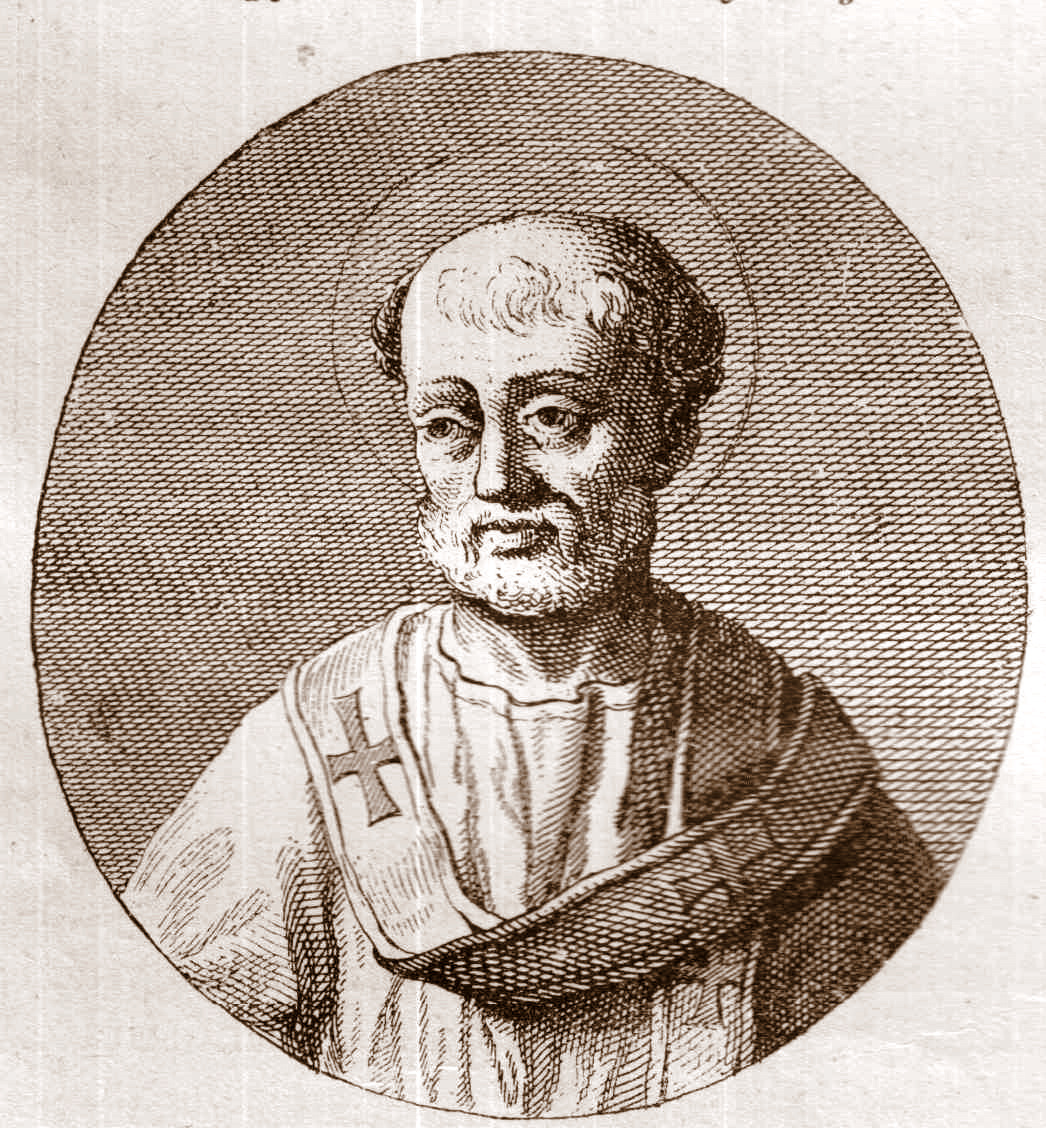
St. Alexander of Alexandria

Alexander, Patriarch of Alexandria, whose birth date is uncertain, died in 326.

Read the essentials →
Feast May 2 · Patriarch

St. Alexander of Alexandria

Current feast

May 2
Verified · General Roman Calendar

Traditional feast

February 26
1914 / pre-1969 calendar, per Baring-Gould (1897)

Represents

Patriarch

Feast days

Feast: May 2
Traditional: February 26

This Saint’s Story

Apart from his own greatness, the Catholic Encyclopedia notes, he is prominent because his appointment to the patriarchal see excluded the heresiarch Arius from that post. Arius had begun to teach his errors in 300 and was excommunicated by the patriarch Peter; reinstated by Achillas, Peter’s successor, he then schemed to become a bishop. When Achillas died, Alexander was elected, and Arius threw off all disguise. At first Alexander was so tolerant of Arius’s errors that the clergy nearly revolted. Finally the heresy was condemned in a council at Alexandria, and later in the general Council of Nicaea (the first worldwide council of bishops, 325, which defined that the Son is fully God), whose Acts Alexander is credited with having drawn up.

An additional merit of this great man, the Encyclopedia adds, is that during his priesthood he passed through the bloody persecutions of Galerius (Diocletian's co-emperor in the East and the driving force of the Great Persecution), Maximinus, and others. While Peter waited in prison for martyrdom, Alexander and Achillas reached him and pleaded for Arius’s reinstatement; Peter absolutely refused, declaring that Arius was doomed to perdition. The refusal had little lasting effect: under Achillas Arius was made a priest, and under Alexander he was still for a time tolerated. Baring-Gould, citing Sozomen, Socrates, Eusebius, and the Apology of St. Athanasius, recounts Alexander’s mildness, the excommunication after open denial of the eternal Godhead of Christ, a council at Alexandria about the end of 320 with nearly one hundred bishops, and Alexander’s presence at Nicaea in 325.

Dying, Alexander compelled the future doctor of the Church, St. Athanasius, to accept the succession. He is described as held in the highest honour by people and clergy—magnificent, liberal, eloquent, just, a lover of God and man, devoted to the poor, good and sweet to all, and so mortified that he never broke his fast while the sun was in the heavens. The Encyclopedia keeps his feast on 17 April; Baring-Gould places his death on 26 February 326, the date this page’s feast follows. No patronage is clearly assigned to him in the Catholic Encyclopedia.

Short entry · the summary here is 187 words; Baring-Gould’s fuller original text and its sources are below. We have not filled any gap with invented detail.

What he represents

How he teaches us to live

Drawn from themes in the original account

Share your faith, in words and by example. Preaching and conversion are part of this story.

Celebrate this saint’s feast day. Remember him on May 2 with a short prayer, and ask for his help.

The full story

Baring-Gould’s account retold in modern English

Read the full story · 186 words · about 1 min

Alexander was the patriarch of Alexandria when Arius, the arch-heretic, began to preach his denial of the eternal Godhead of Christ. Alexander, known for being one of the mildest of men, tried to bring the heretic back to the true belief through gentleness and kind discussion. However, when he realized that Arius was unchangeable, he called a meeting of his clergy and questioned Arius. When Arius boldly proclaimed his disbelief in the fundamental doctrine of the Catholic faith, Alexander excommunicated him.

A council was convened in Alexandria toward the end of the year 320, where Arius was tried again, and the sentence of excommunication was confirmed by nearly one hundred bishops who were present. Alexander also attended the famous General Council of Nicæa, which was assembled in 325 and ultimately condemned the heresy of Arius. After this victory for the faith, Alexander returned to Alexandria, where he recommended Athanasius as his successor. He died on February 26, in the year 326. For a more detailed account of the Arian heresy and the Council of Nicæa, the reader is referred to the life of Athanasius (May 2nd).

Footnotes

  1. For a fuller account of the Arian heresy, and the Council of Nicæa, the reader is referred to the life of S. Athanasius, (May 2nd.)

Baring-Gould’s own footnotes, in modern English.

Read the original 1870s text

Baring-Gould’s sources: Roman Martyrology, and those of Bede, Usuardus, Ado, Notker, &c. Authorities:—Sozomen, Socrates, Eusebius, and the Apology of S. Athanasius.

S. Alexander was patriarch [the title of the bishops of the great ancient sees: Rome, Constantinople, Alexandria, Antioch, Jerusalem] of Alexandria when Arius, the arch-heretic, began to preach his denial of the eternal Godhead of Christ. Alexander, one of the mildest of men, endeavoured by gentleness and kind expostulation to bring the heretic back to the true belief. But when he found that he was incorrigible, he summoned an assembly of his clergy, and therein questioned Arius, and on his boldly proclaiming his disbelief in the fundamental doctrine of the Catholic faith, he excommunicated him. A council was called at Alexandria about the end of the year 320, in which Arius was again tried, and the sentence of excommunication was ratified by nearly one hundred bishops, who were present. Alexander attended the famous General Council of Nicæa, assembled in 325, which finally condemned the heresy of Arius. S. Alexander, after this triumph of the faith, returned to Alexandria; where, after having recommended S. Athanasius [bishop of Alexandria (d. 373), great defender of the Nicene faith] for his successor, he died on the 26th February, in the year 326. For a fuller account of the Arian [followers of Arius, who taught that the Son is a created being, not fully God] heresy, and the Council of Nicæa, the reader is referred to the life of S. Athanasius, (May 2nd.)

From the Catholic Encyclopedia

1913 · 327 words

​Alexander, Saint, Patriarch of Alexandria, date of birth uncertain; d. 17 April, 326. He is, apart from his own greatness, prominent by the fact that his appointment to the patriarchial see excluded the heresiarch Arius from that post. Arius had begun to teach his heresies in 300 when Peter, by whom he was excommunicated, was Patriarch. He was reinstated by Achillas, the successor of Peter and then began to scheme to be made a bishop. When Achillas died Alexander was elected, and after that Arius threw off all disguise. Alexander was particularly obnoxious to him, although so tolerant at first of the errors of Arius that the clergy nearly revolted. Finally the heresy was condemned in a council held in Alexandria, and later on, as is well known, in the general Council of Nicæa, whose Acts Alexander is credited with having drawn up. An additional merit of this great man is that during his priesthood he passed through the bloody persecutions of Galerius [Diocletian’s co-emperor in the East and driving force of the Great Persecution], Maximinus, and others. It was while his predecessor Peter was in prison, waiting for martyrdom, that he and Achillas succeeded in reaching the pontiff, and interceded for the reinstatement of Arius, which Peter absolutely refused declaring that Arius was doomed to perdition. The refusal evidently had little effect, for when Achillas succeeded Peter, Arius was made a priest; and when in turn Alexander came to the see, the heretic was still tolerated. It is worth recording that the great Athanasius succeeded Alexander, the dying pontiff compelling the future doctor of the Church to accept the post. Alexander is described as "a man held in the highest honour by the people and clergy, magnificent, liberal, eloquent, just, a lover of God and man, devoted to the poor, good and sweet to all, so mortified that he never broke his fast while the sun was in the heavens." His feast is kept on 17 April.

Acts SS., III, February; Butler, Lives of the Saints, 17 February.

More about St. Alexander of Alexandria

Checked against at least two sources, in our own words

Help us add to this saint's story

Everything is read by a person before anything appears. Facts are checked against trusted sources first.

Facts are welcome; a source link helps (optional).With your permission we may share it on this page.

Nine days · Free

Pray the novena
with us.

One short email a day for nine days. The day's prayer, a line from St. Alexander of…'s story, and a nudge to keep going.

Also on February 26
N

St. Nestor

February 26 · Bishop, Martyr
D

St. Dionysius of Augsburg

February 26 · Bishop, Martyr
P

St. Porphyrius of Gaza

February 26 · Bishop
← All 1970 saints in the library
Sources & notes

Feast-day sources

Story sources

Sources

Credits

Image: Alexander-Alexandria-sepia.jpg · Dedek Crescens Lajos · Public domain, via Wikimedia Commons

Image: Dedek Crescens Lajos, Wikimedia Commons (Public domain)

From “Catholic Encyclopedia (1913)/St. Alexander (of Alexandria),” The Catholic Encyclopedia (New York: Robert Appleton Company, 1907–1914), via Wikisource. Public domain. Matched by name and feast date; text unedited except for our bracketed notes in grey.

Retold in plain modern English from Baring-Gould’s public-domain text, sentence by sentence, keeping the same facts and order. Short explanations in parentheses are ours.

From Sabine Baring-Gould, The Lives of the Saints, new edition in 16 vols. (London: John C. Nimmo, 1897), digitized text from Project Gutenberg. Public domain in the United States. Reproduced unedited, except for short bracketed notes in grey that we added to explain names and terms (“S.” is the old abbreviation for Saint). Some history and judgments reflect 19th-century scholarship.

Notes

Story retold in our own words from the cited sources.