Their Story
During the early 4th century, under the reign of Emperor Diocletian (Roman emperor 284–305, who launched the last and fiercest persecution of Christians in 303), a severe persecution of Christians began. Among the first to suffer were St. Gorgonius and his companions, Dorotheus, Peter, and several others, who were prominent figures in Nicomedia. Gorgonius, holding a significant position in the emperor's household, was arrested for refusing to renounce his faith. Despite enduring horrific tortures, he remained steadfast in his belief in Christ, ultimately leading to his strangulation along with his fellow martyrs.
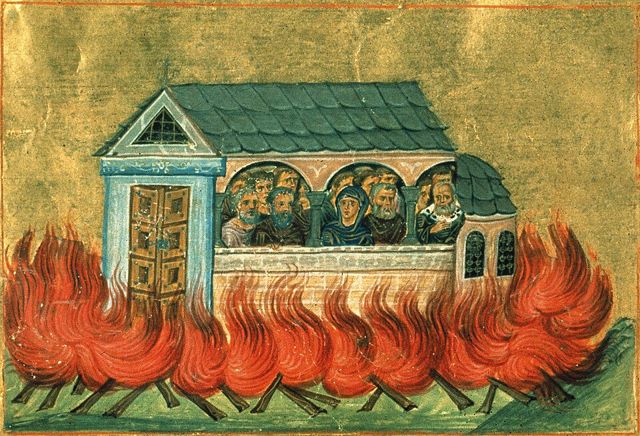
On December 25, 303, a large group of Christians had gathered in a church to celebrate the birth of Jesus. Diocletian, determined to suppress this gathering, ordered the church doors to be locked and set firewood around the building. He commanded that incense be offered to Jupiter, threatening those inside with death by fire if they did not comply. The martyrs, however, boldly declared their willingness to die rather than commit this act of sacrilege, choosing to honor their faith over their lives. When the flames were ignited, they were consumed, thus achieving martyrdom on the day traditionally celebrated as Christ's nativity.
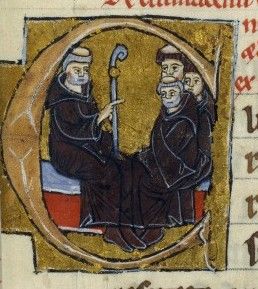
After their deaths, Diocletian sought to prevent the Christians from honoring the martyrs by ordering their bodies to be thrown into the sea. Nevertheless, the faithful managed to recover Gorgonius's remains, which were later transported to Rome. In the 8th century, St. Chrodegang, Bishop of Metz, translated Gorgonius's relics to the monastery of Gorze, where they were venerated until many were lost during the French Revolution.