This Saint’s Story
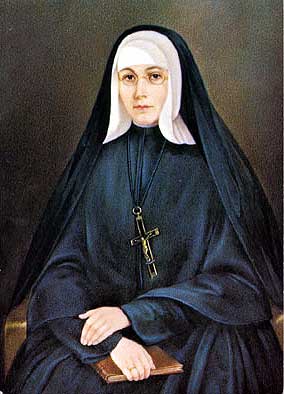
She was the tenth child in a large family, with three siblings dying in infancy. Her family was well-off, and she received a good education, initially being homeschooled by her grandfather. After his death, she attended a convent school, where she made her First Communion at age 12. Durocher's health issues prevented her from pursuing a religious vocation immediately, but she remained devoted to her faith and education.
At 18, after her mother's passing, Durocher moved to her brother's parish in Beloeil, where she served as housekeeper and parish worker for 13 years. During this time, she became known for her kindness and leadership, often referred to as 'the saint of Beloeil.' Her experiences highlighted the lack of educational resources in rural areas, prompting her to consider founding a religious community focused on education.
In 1841, discussions about establishing a new religious congregation in Quebec led Durocher to become involved with the Oblate Fathers. Encouraged by Bishop Ignace Bourget, she agreed to co-found a new community dedicated to the education of youth, alongside her friends Mélodie Dufresne and Henriette Céré. They began their formation in 1843, and by December 1844, they professed their vows, with Durocher becoming the mother superior of the new group.
Under her leadership, the congregation quickly expanded, establishing several convents and schools to serve both girls and boys. Despite her ongoing health struggles, Durocher remained dedicated to her mission until her death from illness on October 6, 1849, at the age of 38. Her funeral took place on the same day, with Bishop Bourget presiding.
Durocher's cause for canonization began in the late 19th century, with Bishop Bourget advocating for her recognition as a saint. After a thorough investigation into her life and virtues, she was beatified (declared 'Blessed', the step before sainthood) by Pope John Paul II on May 23, 1982. Her feast day is celebrated on October 6, the anniversary of her birth and death.