This Saint’s Story
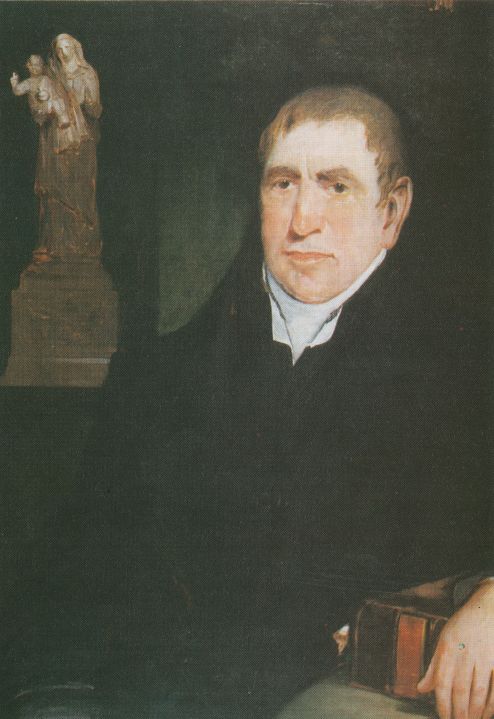
His early education was severely limited due to the oppressive Penal Laws against Catholics, which restricted their access to formal schooling. Despite these challenges, he received some education at home and in a Catholic school that managed to operate under the law. After becoming an apprentice in his uncle's successful trading business in Waterford, Rice established himself as a reputable merchant.
In 1789, tragedy struck when Rice's wife died shortly after giving birth to their daughter, who was born with disabilities. This loss profoundly impacted him, leading him to reflect on his life and consider a religious vocation. During a conversation with a friend, he was inspired to devote his life to the education of impoverished youth rather than retreating into a monastic life. This pivotal moment set him on a path of service to the marginalized in his community.
In 1802, Rice opened his first school in a converted stable in Waterford, initially facing challenges in managing the unruly children. However, his dedication attracted others, and he soon found support from two young men, Thomas Grosvenor and Patrick Finn, who joined him in his mission. By 1806, he had established several schools across the region, focusing on providing free education to boys, particularly those from poor backgrounds. His efforts led to the formal founding of the Presentation Brothers in 1808, marking a significant milestone as the first male religious congregation established in Ireland.
As the Presentation Brothers grew, Rice sought to expand their reach and influence. In 1820, he received papal approval from Pope Pius VII, allowing the congregation to operate under a more structured governance. This approval enabled the Brothers to move freely between dioceses, facilitating the establishment of schools in various locations, including England and Australia. Rice's leadership and vision transformed the lives of countless children, providing them with education and hope.
Edmund Rice passed away on August 29, 1844, at Mount Sion in Waterford, where he had spent his later years. His legacy continued through the communities he founded, which expanded globally. He was beatified (declared 'Blessed', the step before sainthood) by Pope John Paul II on October 6, 1996, recognizing his significant contributions to education and his unwavering commitment to serving the poor.