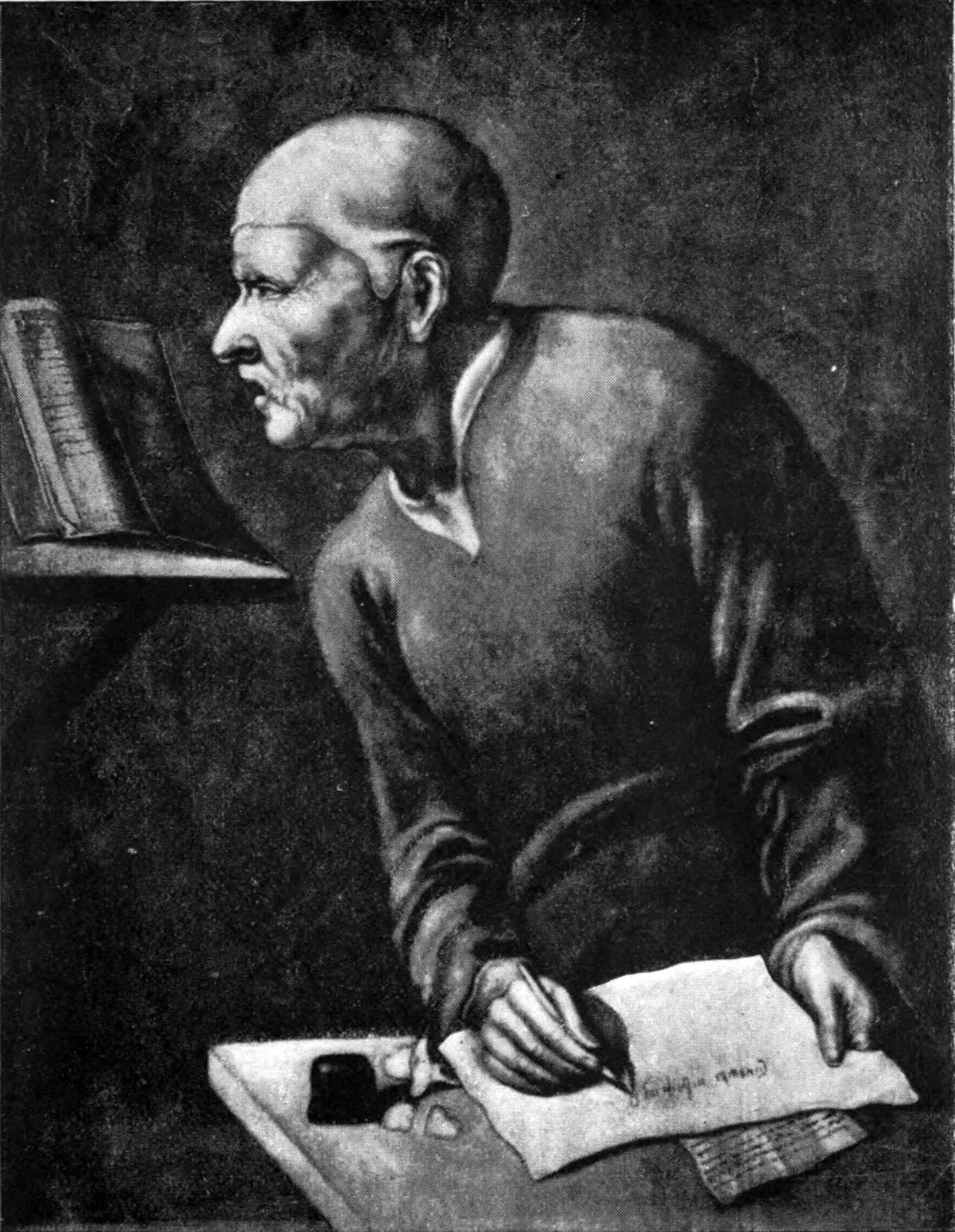
This Saint’s Story
John Duns Scotus was born around 1265 in Berwickshire, Scotland, into a prominent family. He joined the Order of Friars Minor ('lesser brothers', the Franciscans (the order of friars founded by St. Francis of Assisi)' official name) in Dumfries, where his uncle served as guardian. After receiving the Franciscan (the order of friars founded by St. Francis of Assisi) habit, he pursued his studies at notable institutions like Oxford and Paris, eventually becoming a priest in 1291.
Scotus's academic journey was marked by a deep engagement with the works of significant philosophers and theologians, including Augustine, Aquinas, and Aristotle. His independent thinking led him to develop original ideas, such as the univocity of being and haecceity, which explored the nature of existence and individuality. His teachings emphasized the importance of free will, challenging contemporary deterministic views.
In 1303, Scotus faced expulsion from the University of Paris due to his support for Pope Boniface VIII in a conflict with King Philip IV of France. Despite this setback, he returned to Paris and earned his doctorate in 1305. He continued to teach and defend the Immaculate Conception of Mary, a doctrine that would later be formally defined by Pope Pius IX in 1854.
In 1307, Scotus was assigned to a Franciscan school in Cologne, where he continued his scholarly work until his unexpected death on November 8, 1308. He was buried in a Franciscan church in Cologne.
The Church recognized Scotus's contributions posthumously, and he was declared Blessed by Pope John Paul II on March 20, 1993. His intellectual legacy, known as Scotism, remains influential in both Catholic and secular thought.
