This Saint’s Story
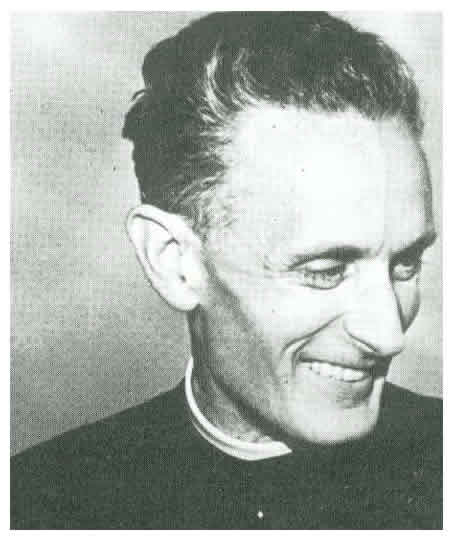
He was the youngest of three brothers in a devout family. Tragically, he lost his father at a young age and later both brothers, which deeply influenced his life. His early experiences of loss and faith were pivotal in shaping his desire to serve God. Encouraged by a local priest, he entered the seminary and was ordained in 1925, celebrating his first Mass in his childhood village.
From the beginning of his priesthood, Gnocchi was passionate about youth education and engagement with the Church. He served in various parishes, including Cernusco sul Naviglio and San Pietro in Sala in Milan, where he built strong relationships with his parishioners. His commitment to youth caught the attention of Cardinal Alfredo Ildefonso Schuster, who appointed him as spiritual director at the Gonzaga Institute in 1936, further solidifying his role as an educator.
With the onset of World War II, Gnocchi volunteered as a military chaplain for the Alpini, serving on the front lines. His experiences during the war were harrowing, especially during the retreat from Russia, where he witnessed immense suffering. Despite the dangers, he worked tirelessly to comfort the wounded and fulfill the last wishes of soldiers. He also aided refugees and helped Jews escape to safety, often at great personal risk, leading to multiple imprisonments. His wartime experiences deepened his resolve to support those affected by conflict.
After the war, Gnocchi focused on helping children orphaned or disabled due to the war. He founded the Pro Juventute organization, which provided care and education for these vulnerable children. His efforts led to the establishment of numerous institutions across Italy, including re-education centers for children affected by polio. His dedication to the cause was reflected in his writings, such as 'Pedagogia del dolore innocente,' where he articulated his vision for helping suffering children.
Carlo Gnocchi passed away on February 28, 1956, in Milan, after a battle with cancer. He died holding a crucifix, having donated his corneas to two blind children from his foundation. His legacy of compassion and service led to a growing reputation for holiness. The process for his beatification began in 1987, culminating in his beatification on October 25, 2009, by Cardinal Dionigi Tettamanzi, recognizing his virtuous life and dedication to the suffering.