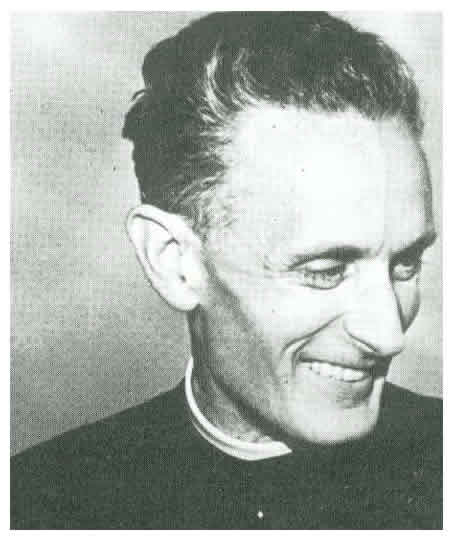
St. Boniface I., Pope

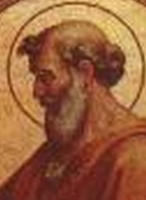
Boniface I, elected on 28 December 418, died at Rome on 4 September 422.

Read the essentials →
Feast October 25 · —

St. Boniface I., Pope

Current feast

October 25
Secondary source · Wikipedia infobox

Traditional feast

October 25
1914 / pre-1969 calendar, per Baring-Gould (1897)

Represents

Feast

Feast days

Feast: October 25

This Saint’s Story

Contemporary Roman records call him a Roman and the son of the priest Jocundus. He is believed to have been ordained by Pope Damasus I and to have served as representative of Innocent I at Constantinople about 405. When chosen he was an aged priest already respected for charity, learning, and character.

At the death of Pope Zosimus a faction of deacons seized the Lateran on 27 December 418 and elected the Archdeacon Eulalius. The next day the higher clergy, kept out of the Lateran, met in the church of Theodora and elected Boniface much against his will. Both were consecrated on 29 December - Boniface in the Basilica of St Marcellus by nine bishops and some seventy priests, Eulalius in the Lateran with the Bishop of Ostia. The prefect Symmachus secured imperial confirmation for Eulalius, and Boniface was expelled. A synod at Ravenna ordered both men to stay out of Rome. Achilleus of Spoleto was to keep Easter in the vacant see. Eulalius broke the order and seized the Lateran on Holy Saturday; the Emperor Honorius then recognized Boniface (3 April 419). The schism had lasted fifteen weeks. At Boniface's later request Honorius enacted that in a contested election neither claimant should be recognized and a new choice should be made.

As pope he reversed Zosimus's grant of special powers to Patroclus of Arles and restored metropolitan rights in Gaul. He handled the African appeal of Apiarius after Zosimus, and ardently supported St Augustine against the teaching of Pelagius; Augustine dedicated to him his four books Contra duas epistolas Pelagianorum. In the East he firmly defended Rome's jurisdiction over Illyricum through the papal vicar at Thessalonica against Constantinople, and prevailed on Honorius to urge Theodosius II to rescind a law transferring that dominion - though the law remained in later codes. He renewed legislation forbidding women to touch the sacred linens or minister incense, and barred slaves from the clerical office. Baring-Gould adds that he founded an oratory at the cemetery of St Felicitas. He was buried near her tomb on the Via Salaria. The Church keeps his feast on 25 October.

What he represents

How he teaches us to live

Drawn from themes in the original account

Stay faithful when it costs you. Holding firm under pressure is part of this story.

Celebrate this saint’s feast day. Remember him on October 25 with a short prayer, and ask for his help.

The full story

Baring-Gould’s account retold in modern English

Read the full story · 662 words · about 3 min

On the death of Zosimus, some of the clergy chose Archdeacon Eulalius in the Lateran Church. On the same day, a larger group met in the church of Saint Theodora and elected the priest Boniface. Three bishops, including the Bishop of Ostia, either compelled, it was said, or, yielding to the weakness of old age, consecrated Eulalius. Boniface was inaugurated by nine bishops in the presence of seventy priests in the church of Saint Marcellus. Rome might fear the return of those terrible and bloody days that marked the elevation of Damasus. The prefect of Rome was Symmachus, the son of the eloquent orator who had defended the lost cause of Saint Boniface against paganism.

He wrote to Honorius, the emperor, who was then in Milan, asking for instructions but showing an inclination towards Eulalius. Honorius, influenced by Placidia, who was enjoying the favor of her senseless brother and directing his counsels, ordered Boniface to appear before the imperial court in Ravenna immediately. The mandate reached him while he was performing his sacred duties outside the city. The people misunderstood the purpose of the officers of the prefect and mistreated them. The gates of Rome were closed to Boniface, and Eulalius, in great state and amid the acclamations of at least part of the people, took possession of Saint Peter’s.

However, the supporters of Boniface had found a spokesperson in the ambitious Placidia. A petition was sent to Ravenna from the priests supporting Boniface, announcing that they were ready to accompany him to the emperor's throne and submit the rival claims of the candidates to his judgment.

Honorius issued a rescript that required both Boniface and Eulalius to remain outside Rome until the matter could be decided by a synod of bishops from Italy, Gaul, and Africa.

In the meantime, since the Roman people could not be deprived of the solemn rites of Easter, Achilleus, Bishop of Spoleto, was ordered to officiate during the vacancy. Eulalius, acting hastily, burst into the Lateran church at night, leading his supporters, and, in defiance of the emperor’s orders, celebrated the Easter rites there. This act sealed his fate. It was too blatant a disregard for imperial commands to be overlooked. Symmachus abandoned the cause of someone he viewed as rebellious, forcibly drove Eulalius from the city, and threatened his followers with confiscation, banishment, and death. Eulalius's supporters quickly dispersed out of fear of the penalties, and Boniface took possession of the papal throne without further contest. He was the son of a Roman priest named Jueundus, known for being amiable and mild, advanced in age, and blameless in his life. Wisely concerned about preventing, as much as possible, the scandals and even crimes he had nearly been involved in, he addressed the emperor, urging him to enact a law, a civil law, that would restrain ecclesiastical ambition and control those who sought to gain power through intrigue rather than through piety and holiness. Honorius issued an edict stating that in the case of a contested election, both rival candidates should be excluded from office, and a new appointment should be made.

Boniface issued a decree that no woman or nun should touch the altar cloth or handle a censer. No slave or debtor was thereafter to be invested with clerical office. He founded an oratory in the cemetery of S. Felicitas and adorned her tomb with marble, providing it with crowns of light and silver vessels for the Eucharist. After a brief papacy of three years and eight months, he died and was buried in the oratory of S. Felicitas that he had built. S. Boniface was the first to introduce the “Gloria in Excelsis” into the Mass, to be said on Maundy Thursday in thanksgiving for the reconciliation of penitents that took place on that day. In the Sacramentary of Gregory the Great, it was later ordered to be said only by a bishop on Sundays and festivals, and by priests only at Easter.

Footnotes

  1. Symmachus was the prefect of Rome during this conflict.
  2. Honorius was the emperor of the Western Roman Empire at this time.
  3. S. Felicitas: a Christian martyr and saint.
  4. S. Boniface: a title referring to Saint Boniface, an important figure in Christian history.

Baring-Gould’s own footnotes, in modern English.

Read the original 1870s text

Baring-Gould’s sources: Modem Roman Martyrology. The Martyrology of Jerome has only the day of his Ordination, Dec. 29. Not in Ado or Usuardus. Authorities: — Anastasius Bibliothecarius, a rescript of Symmachus, &c.] The death of Pope Zosimus, December 26, 418, gave occasion to the third contested election for the see of Rome. The unsettled form of the election, and the undefined rights of the electors, could not but give rise to strife. The absolute nomination by the clergy would have been no security against contested elections; for in every double election a large party of the clergy was ranged on either side, and formed the rival factions. A certain assent of the people was still considered necessary, but to some extent their right as electors had probably been curtailed since the bloody and unseemly conflicts which had desecrated the election of Damasus. But still the people exercised great power in an election, had a voice, and used both at times with violence and noise.

On the death of Zosimus, some of the clergy chose the Archdeacon Eulalius in the Lateran [St. John Lateran, the pope’s cathedral in Rome] Church; on the same day, a larger number met in the church of S. Theodora, and elected the priest Boniface. Three bishops, among whom was the Bishop of Ostia, either compelled, it was said, or yielding through the weakness of old age, consecrated Eulalius. Boniface was inaugurated by nine bishops in the presence of seventy priests, in the church of S. Marcellus. Rome might apprehend the return of those terrible and bloody days which marked the elevation of Damasus. The prefect of Rome was Symmachus, son of the eloquent orator who had defended with so much energy the lost cause S. Boniface [English missionary to Germany, martyred 754].

of paganism. He wrote to Honorius, the emperor, then at Milan, asking instructions, but showing an inclination towards Eulalius. Honorius, swayed by Placidia, then enjoying the smiles of her senseless brother and directing his counsels, ordered Boniface at once to appear before the imperial court at Ravenna. The mandate reached him when he was performing his sacred functions outside the city. The people mistook the purpose of the approach of the officers of the prefect, and maltreated them. The gates of Rome were closed upon Boniface, and Eulalius, in great state, amid the acclamations of part, at least, of the people, took possession of S. Peter’s.

But the party of Boniface had found a mouthpiece in the ambitious Placidia. A petition was forwarded to Ravenna from the priests of the party of Boniface, announcing that they were ready to accompany him to the throne of the emperor and submit to his judgment the rival claims of the candidates.

Honorius issued a rescript, which required both Boniface and Eulalius to remain outside Rome till the cause could be decided by a synod of bishops from Italy, Gaul [roughly modern France and Belgium], and Africa.

In the meantime, as the Roman people could not be deprived of the solemn rites of Easter, Achilleus, Bishop of Spoleto, was ordered to officiate during the vacancy. Eulalius, with ill-considered precipitancy, burst by night into the Lateran church, at the head of his party, and, in contempt of the emperor’s orders, celebrated therein the Easter rites. This act sealed his fate. It was too flagrant a defiance of imperial commands to be passed over. Symmachus abandoned the cause of one whom he regarded as rebellious, forcibly drove him from the city, and threatened his followers with confiscation, banishment, and death. The party of Eulalius melted away through fear of the penalties, and Boniface took possession of the pontifical throne without further contest. He was the son of a Roman priest, Jocundus, amiable and mild, advanced in age, and blameless of life. Wisely anxious to prevent, as far as possible, the scandals, and even crimes, in which he had been so nearly involved, he addressed the emperor, urging him to enact a law, a civil law, which should restrain ecclesiastical ambition, and coerce those who aspired to obtain by intrigue what ought to be the reward of piety and sanctity. Honorius issued an edict, that in the case of a contested election, both the rival candidates should be excluded from office, and a new appointment be made.

Boniface promulgated a decree that no woman or nun should touch the altar-pall or handle a censer. No slave or debtor was thenceforth to be invested with the clerical office. He founded an oratory in the cemetery of S. Felicitas, and adorned her sepulchre with marble, and supplied it with crowns of light and silver vessels for the Eucharist. After a brief pontificate of three years and eight months he died, and was buried in the oratory of S. Felicitas he had built. S. Boniface first introduced the “ Gloria in Excelsis ” into the mass, to be said on Maundy Thursday in thanksgiving for the reconciliation of penitents which took place on that day. In the Sacramentary of Gregory the Great it was afterwards ordered to be said only by a bishop on Sundays and festivals, and by priests never except at Easter. S. Mar nock —.S’. Goeznou.

From the Catholic Encyclopedia

1913 · 1373 words

Boniface I, Saint, Pope; elected 28 December, 418; d. at Rome, 4 September, 422. Little is known of his life antecedent to his election. The "Liber Pontificalis" calls him a Roman, and the son of the presbyter Jocundus. He is believed to have been ordained by Pope Damasus I (366-384) and to have served as representative of Innocent I at Constantinople (c. 405).

At he death of Pope Zosimus, the Roman Church entered into the fifth of the schisms, resulting from double papal elections, which so disturbed her peace during the early centuries. Just after Zosimus's obsequies, 27 December, 418, a faction of the Roman clergy consisting principally of deacons seized the Lateran [St. John Lateran, the pope’s cathedral in Rome] basilica and elected as pope the Archdeacon Eulalius. The higher clergy tried to enter, but were violently repulsed by a mob of adherents of the Eulalian party. On the following day they met in the church of Theodora and elected as pope, much against his will, the aged Boniface, a priest highly esteemed for his charity, learning, and good character. On Sunday, 29 December, both were consecrated, Boniface in the Basilica of St. Marcellus, supported by nine provincial bishops and some seventy priests; Eulalius in the Lateran basilica in the presence of the deacons, a few priests and the Bishop of Ostia, who was summoned from his sickbed to assist at the ordination. Each claimant proceeded to act as pope, and Rome was thrown into tumultuous confusion by the clash of the rival factions. The Prefect of Rome, Symmachus, hostile to Boniface, reported the trouble to the Emperor Honorius at Ravenna, and secured the imperial confirmation of Eulalius's election. Boniface was expelled from the city. His adherents, however, secured a hearing from the emperor who called a synod of Italian bishops at Ravenna to meet the rival popes and discuss the situation (February, March, 419). Unable to reach a decision, the synod made a few practical provisions pending a general council of Italian, Gaulish, and African bishops to be convened in May to settle the difficulty. It ordered both claimants to leave Rome until a decision was reached and forbade return under penalty of condemnation. As Easter, 30 March, was approaching , Achilleus, Bishop of Spoleto, was deputed to conduct the paschal services in the vacant Roman See. Boniface was sent, it seems, to the cemetery of St. Felicitas on the Via Salaria, and Eulalius to Antium. On 18 March, Eulalius boldly returned to Rome, gathered his partisans, stirred up strife anew, and spurning the prefect's orders to leave the city, seized the Lateran basilica on Holy Saturday (29 March), determined to preside at the paschal ceremonies. The imperial troops were required to dispossess him and make it possible for Achilleus to conduct the services. The emperor was deeply indignant at these proceedings and refusing to consider again the claims of Eulalius, recognized Boniface as legitimate pope (3 April, 418). The latter re-entered Rome 10 April and was acclaimed by the people. Eulalius was madeBishop either of Nepi in Tuscany or of some Campanian see, according to the conflicting data of the sources of the "Liber Pontificalis". The schism had lasted fifteen weeks. Early in 420, the pope's critical illness encouraged the artisans of Eulalius to make another effort. On his recovery Boniface requested the emperor (1 July, 420) to make some provision against possible renewal of the schism in the event of his death. Honorius enacted a law providing that, in contested Papal elections, neither claimant should be recognized and a new election should be held.

Boniface's reign was marked by great zeal and activity in disciplinary organization and control. He reversed his predecessor's policy of endowing certain Western bishops with extraordinary papal vicariate powers. Zosimus had given to Patroclus, Bishop of Arles, extensive jurisdiction in the provinces of Vienna and Narbonne, and had made him an intermediary between these provinces and the Apostolic See. Boniface diminished these primatial rights and restored the metropolitan [the archbishop who heads a group of dioceses] powers of the chief bishops of provinces. Thus he sustained Hilary, Archbishop of Narbonne, in his choice of a bishop of the vacant See of Lodeve, against Patroclus, who tried to intrude another (422). So, too, he insisted that Maximus, Bishop of Valence, should be tried for his alleged crimes, not by a primate [the leading bishop of a country], but by a synod of the bishops of Gaul [roughly modern France and Belgium], and promised to sustain their decision (419). Boniface succeeded to Zosimus's difficulties with the African Church regarding appeals to Rome and, in particular, the case of Apiarius. The Council of Carthage, having heard the representations of Zosimus's legates, sent to Boniface on 31 May, 419, a letter in reply to the commonitorium of his predecessor. It stated that the council had been unable to verify the canons which the legates had quoted as Nicene, but which were later found to be Sardican. It agreed, however, to observe them until verification could be established. This letter is often cited in illustration of the defiant attitude of the African Church to the Roman See. An unbiased study of it, however, must lead to no more extreme conclusion than that of Dom Chapman: "it was written in considerable irritation, yet in a studiously moderate tone" (Dublin Review. July, 1901, 109-119). The Africans were irritated at the insolence of Boniface's legates and incensed at being urged to obey laws which they thought were not consistently enforced at Rome. This they told Boniface in no uncertain language; yet, far from repudiating his authority, they promised to obey the suspected laws, thus recognizing the pope's office as guardian of the Church's discipline. In 422 Boniface received the appeal of Anthony of Fussula who, through the efforts of St. Augustine, had been deposed by a provincial synod of Numidia, and decided that he should be restored if his innocence be established. Boniface ardently supported St. Augustine in combating Pelagianism [followers of Pelagius, who taught people could be good without God’s grace]. Having received two Pelagian letters calumniating Augustine, he sent them to him. In recognition of this solicitude Augustine dedicated to Boniface his rejoinder contained in "Contra duas Epistolas Pelagianoruin Libri quatuor".

Read the rest of the article

In the East he zealously maintained his jurisdiction over the ecclesiastical provinces of Illyricurn, of which the Patriarch of Constantinople was trying to secure control on account of their becoming a part of the Eastern empire. The Bishop of Thessalonica had been constituted papal vicar in this territory, exercising jurisdiction over the metropolitans and bishops. By letters to Rufus, the contemporary incumbent of the see, Boniface watched closely over the interests of the Illyrian church and insisted on obedience to Rome. In 421 dissatisfaction expressed by certain malcontents among the bishops, on account of the pope's refusal to confirm the election of Perigines as Bishop of Corinth unless the candidate was recognized by Rufus, served as a pretext for the young emperor Theodosius [name of Roman emperors; Theodosius I (379–395) made Christianity the state religion] II to grant the ecclesiastical dominion of Illyricurn to the Patriarch of Constantinople (14 July, 421). Boniface remonstrated with Honorius against the violation of the rights of his see, and prevailed upon him to urge Theodosius to rescind his enactment. The law was not enforced, but it remained in the Theodosian (439) and Justinian [Byzantine emperor 527–565] (534) codes and caused much trouble for succeeding popes. By a letter of 11 March, 422, Boniface forbade the consecration in Illyricum of any bishop whom Rufus would not recognize. Boniface renewed the legislation of Pope Soter, prohibiting women to touch the sacred linens or to minister at the burning of incense. He enforced the laws forbidding slaves to become clerics. He was buried in the cemetery of Maximus on the Via Salaria, near the tomb of his favorite, St. Felicitas, in whose honor and in gratitude for whose aid he had erected an oratory over the cemetery bearing her name. The Church keeps his feast on 25 October.

Liber Pontificalis, ed. DUCHESNE (Paris, 1886), 1, pp. lxii, 227-229; JAME, Regesta Romanorum Pontificum (Leipzig, 1885), 1, 51-54; Acta SS., XIII, 62*; LIX, 605—616; BARONIUS, Annales (Bar-le-Duc, 1866), VII, 152-231; TILLEMONT, Mémoires (Venice, 1732), XII, 385-407; 666-670; P.L., XVIII, 397-406; XX, 745-792; HEFELE, Conciliengeschichte and translation, §§ 120, 122; DUCHESNE, Fastes Episcopaux de l'Ancienne Gaul (Paris, 1894), I 84-109; Les Eglíses Séparées (Paris, 1905), 229-279; BUCHANAN in Dict. Christ. Biog., s.v.; GREGORIUS-HAMILTON, Hist. of Rome in the Middle Ages (London, 1894), I, 180-181.
Help us add to this saint's story

Everything is read by a person before anything appears. Facts are checked against trusted sources first.

Facts are welcome; a source link helps (optional).With your permission we may share it on this page.

Nine days · Free

Pray the novena
with us.

One short email a day for nine days. The day's prayer, a line from St. Boniface I.'s story, and a nudge to keep going.

Also on October 25
Sts. Chrysanthus and Daria

Sts. Chrysanthus and…

October 25 · Martyrs
Bl. Carlo Gnocchi

Bl. Carlo Gnocchi

October 25 · Priest, Educator, Founder
M

St. Margaret Clitherow

October 25 · Laywoman, Martyr
← All 1970 saints in the library
Sources & notes

Feast-day sources

Story sources

Sources

Credits

Image: Pope Boniface I.jpg · Wikimedia Commons · Public domain, via Wikimedia Commons

Image: Wikimedia Commons, Wikimedia Commons (Public domain)

From “Catholic Encyclopedia (1913)/Pope St. Boniface I,” The Catholic Encyclopedia (New York: Robert Appleton Company, 1907–1914), via Wikisource. Public domain. Matched by name and feast date; text unedited except for our bracketed notes in grey.

Retold in plain modern English from Baring-Gould’s public-domain text, sentence by sentence, keeping the same facts and order. Short explanations in parentheses are ours.

From Sabine Baring-Gould, The Lives of the Saints, new edition in 16 vols. (London: John C. Nimmo, 1897–98); text from the Internet Archive scan (OCR, lightly cleaned; errors possible). Public domain in the United States. Reproduced unedited, except for short bracketed notes in grey that we added to explain names and terms (“S.” is the old abbreviation for Saint). Some history and judgments reflect 19th-century scholarship.

Notes

Story retold in our own words from the cited sources.