This Saint’s Story
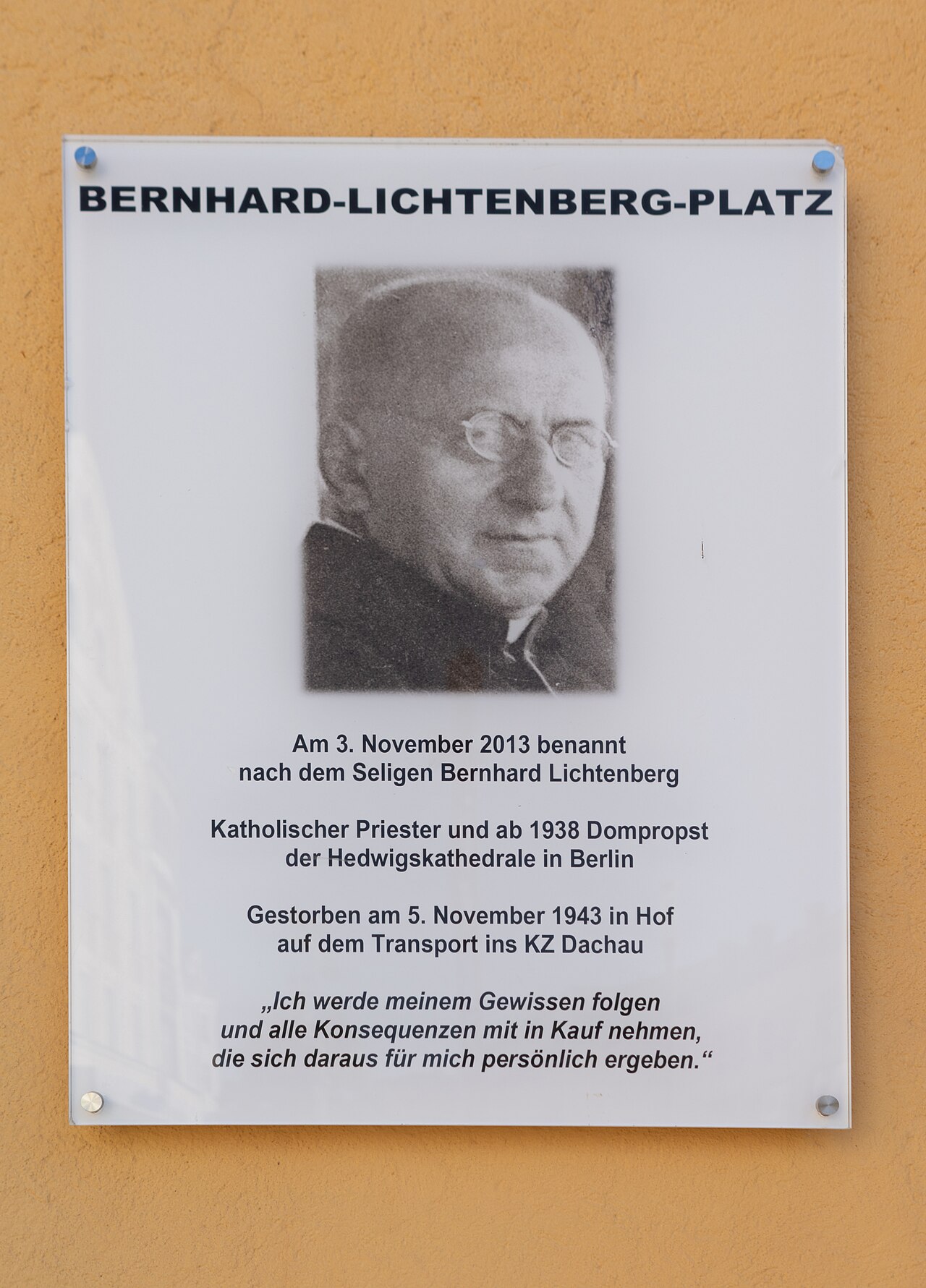
Bernhard Lichtenberg was born on December 3, 1875, in Ohlau in Prussian Silesia, now Oława in Poland, the second of five children. He studied theology in Innsbruck and in Breslau (Wrocław) and was ordained a priest on June 21, 1899. In 1900 he began ministry in Berlin. For many years he served at the Church of the Sacred Heart in Charlottenburg, and he worked as a military chaplain in the First World War.
In 1932 the Bishop of Berlin named him a canon of the cathedral chapter of St. Hedwig. In 1938 he became cathedral provost. As the Nazi regime tightened its grip, he spoke and acted for people the state marked out for harm. In 1935 he went to Hermann Göring to protest cruelties at the Esterwegen concentration camp. After Kristallnacht in November 1938, he warned from St. Hedwig's that the burning synagogue was also a house of God. Until his arrest he prayed publicly at daily Vespers for persecuted Jews. He also helped run the Berlin episcopate's relief work that assisted Catholics of Jewish descent who sought to emigrate.
In 1941 he protested the killing of the sick and mentally ill under the regime's so-called euthanasia programme, writing to the Reich's chief physician, Leonardo Conti, and calling the crimes to account before God. He prepared a pulpit statement against the persecution of the Jews. On October 23, 1941, the Gestapo arrested him. He was sentenced to two years in prison for violating the Pulpit Law and the Treachery Act of 1934. He asked to be allowed to accompany Jewish deportees to the East in order to comfort them.
When his sentence ended in 1943, the Gestapo judged him incorrigible and ordered him taken to the Dachau concentration camp. Already ill from mistreatment and prison, he collapsed on the journey and died of pneumonia in a hospital in Hof, Bavaria, on November 5, 1943.
Pope John Paul II beatified (declared 'Blessed', the step before sainthood) him as a martyr on June 23, 1996, together with Blessed Karl Leisner, at a Mass in Berlin's Olympic Stadium. His liturgical memorial is November 5, the day of his death. In 2004 Yad Vashem recognized him as Righteous Among the Nations for his efforts to aid Jews during the Holocaust.
