This Saint’s Story
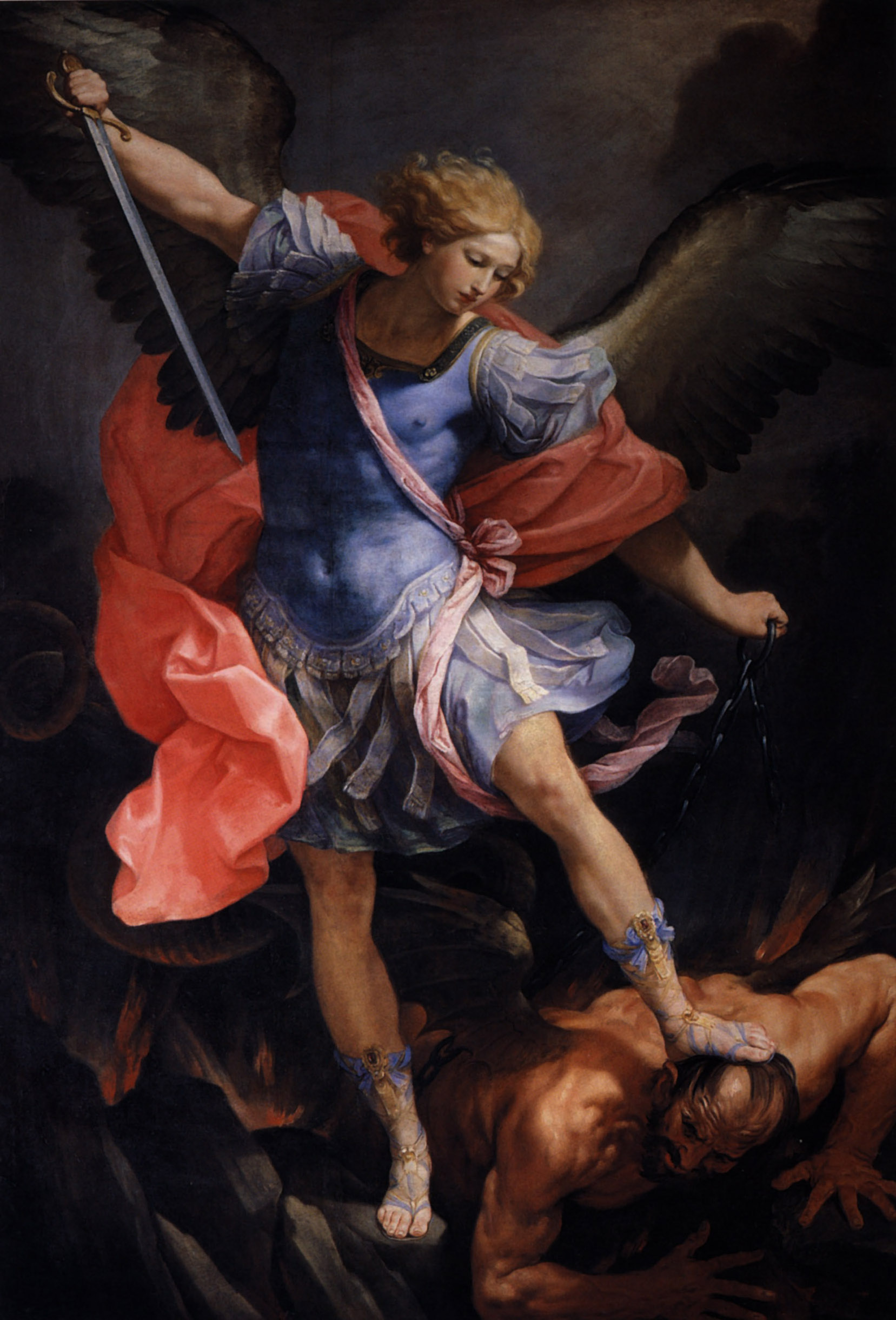
His Hebrew name is a question: Mi-ka-El, “Who is like God?” Scripture names him four times. In Daniel he is “one of the chief princes” who comes to help against the prince of Persia, and “the great prince who stands for the children of your people” (Daniel 10:13, 12:1). In the Letter of Jude he disputes with the devil over the body of Moses but will not insult him, saying only, “The Lord rebuke you” (Jude 9). In Revelation he and his angels fight the dragon and throw him out of heaven (Revelation 12:7–9).
Following those passages, Christian tradition gives Michael four offices: to fight against Satan; to rescue the faithful from the enemy, especially at the hour of death; to be champion of God's people; and to bring souls to judgment. The Catholic Encyclopedia notes that early Christians often turned to him as a heavenly healer at shrines in Phrygia and elsewhere, while later Western devotion also stressed his role as warrior. Tradition holds that he appeared on Monte Gargano in southern Italy in the late fifth century; Mont-Saint-Michel in Normandy was founded after Bishop Aubert of Avranches reported apparitions in 708. A medieval legend links Rome's Castel Sant'Angelo to a vision of Michael sheathing his sword during a plague procession under Pope Gregory the Great.
The Western feast on September 29 began as the dedication of a basilica of the Archangel on the Via Salaria north of Rome, recorded before the mid-fifth century. Since the calendar reform of 1969 the Church keeps that day for Michael, Gabriel and Raphael together.