This Saint’s Story
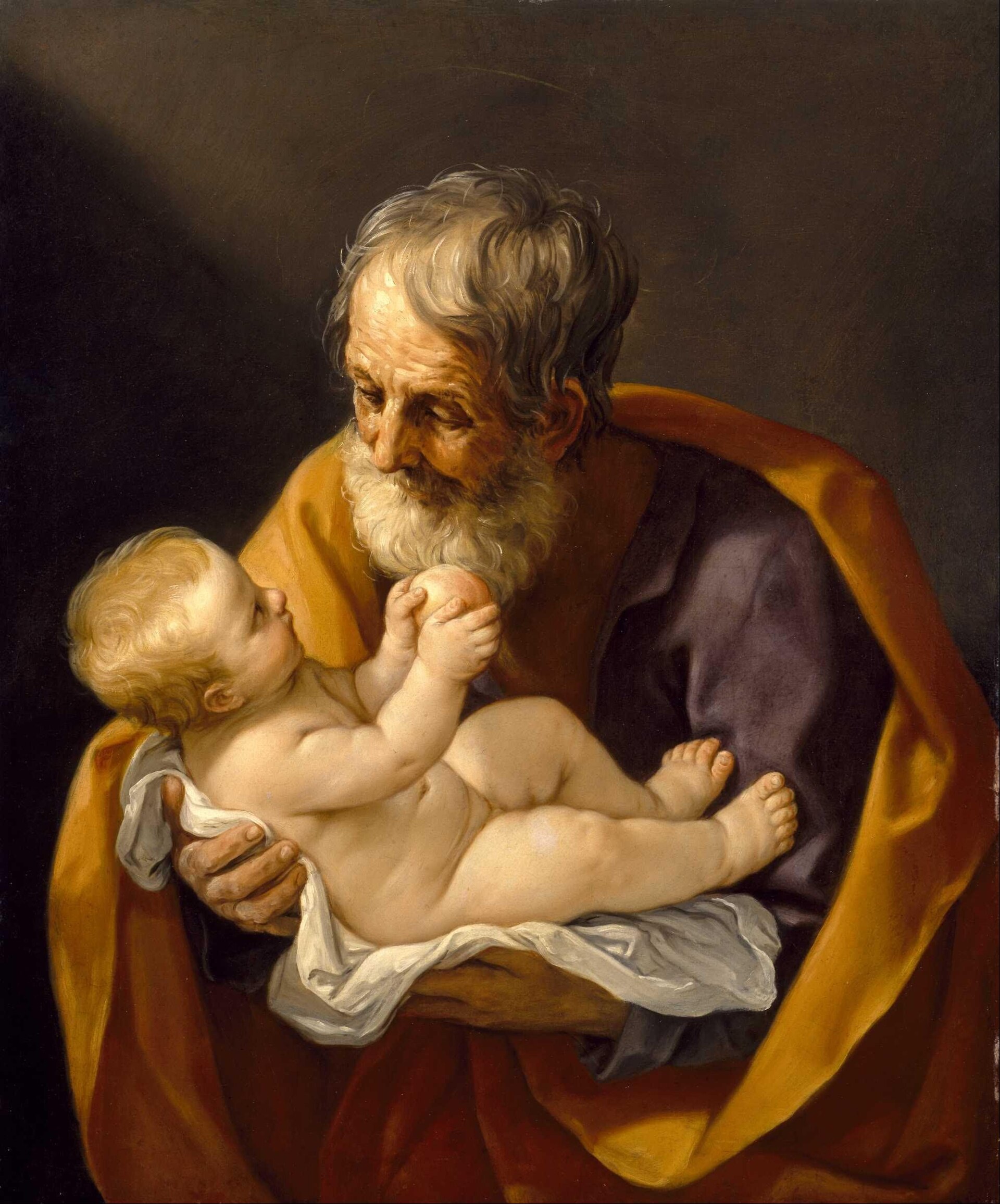
Everything we know for certain about Joseph comes from the Gospels of Matthew and Luke, and he never speaks a single word in them. He was a descendant of David living in Nazareth and worked as a tektōn: a builder or carpenter (Matthew 13:55). He was betrothed to Mary. When he learned she was pregnant, he decided to end the betrothal quietly rather than expose her, and Matthew calls him “a just man.” Then an angel in a dream told him to take her as his wife (Matthew 1:19–24).
Four times in Matthew, Joseph receives a message in a dream, and each time he gets up and acts without delay. He takes Mary to Bethlehem for the census, gives the child the name Jesus, presents Him in the Temple, flees with Mary and the child to Egypt to escape Herod, returns, and settles in Nazareth. The last scene we have of him is the anxious three-day search for the twelve-year-old Jesus in the Temple (Luke 2:41–51). He is absent from the accounts of Jesus' public ministry, and tradition holds that he had died before it began, in the arms of Jesus and Mary.
Devotion to Joseph grew slowly. Early Christians wrote little about him, but by the Middle Ages preachers and writers such as St. Bernardine of Siena and Jean Gerson promoted his honor, and St. Teresa of Ávila spread devotion to him through the Carmelite (an order that began with hermits on Mount Carmel in the Holy Land) convents she founded, writing that she never asked him for anything without receiving it.
Pius IX declared him Patron of the Universal Church in 1870; Leo XIII wrote the encyclical Quamquam Pluries about him in 1889. In 2020 Francis marked the 150th anniversary with the apostolic letter Patris Corde (“With a Father's Heart”), describing Joseph as a beloved, tender, obedient, accepting, creatively courageous and working father, one who stayed “in the shadows.” People follow Joseph because he shows what faith looks like for most of us: no speeches, just getting up in the night and doing the next right thing to protect the people entrusted to him.