Find the right novena
Nine days of prayer for what you are carrying. Answer a few questions and we will suggest a novena to pray.
Most popular novenas
All novenas →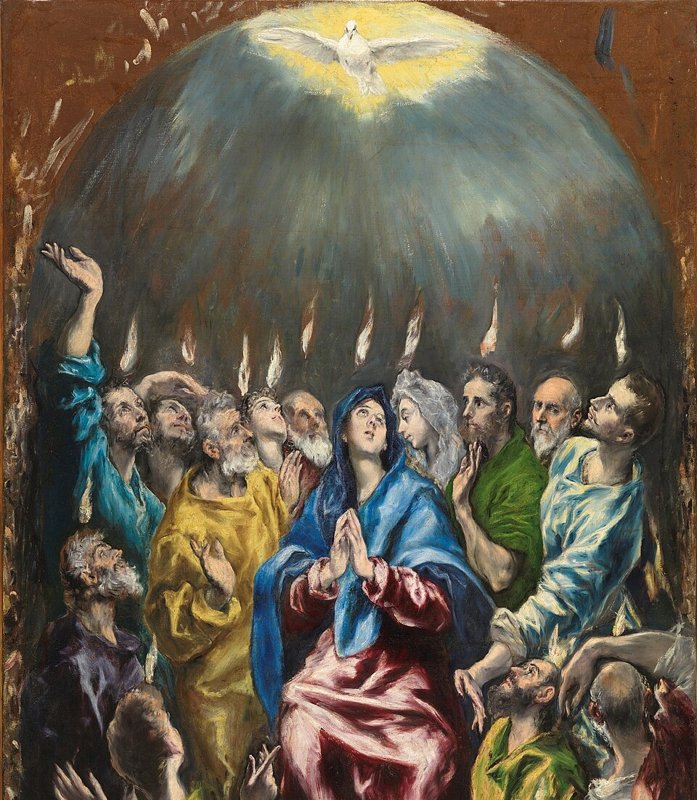
Why pray a novena?
A novena is not a deal with God, nine days of effort traded for a result. It is a relationship: nine days of coming back to the same request, and to the One we are asking.
Read more
By tradition, the first novena was the nine days between the Ascension and Pentecost, when the apostles waited in Jerusalem for the Holy Spirit:
“All these were persevering with one mind in prayer with the women, and Mary the mother of Jesus, and with His brethren.”
Acts 1:14 (Douay-Rheims)
Christ told us plainly to ask:
“Ask, and it shall be given you: seek, and you shall find: knock, and it shall be opened to you.”
Matthew 7:7 (Douay-Rheims)
God is not stingy, and He does not need nine days to be persuaded. We are the ones who change. Asking again and again stretches our desire, so that when a gift comes we can receive it fully, with joy and thanks, knowing it comes from His hand. St. Augustine put it this way:
“The Lord our God requires us to ask not that thereby our wish may be intimated to Him, for to Him it cannot be unknown, but in order that by prayer there may be exercised in us by supplications that desire by which we may receive what He prepares to bestow.”
St. Augustine, Letter 130 to Proba (tr. J. G. Cunningham, ed. Schaff)
St. Thomas Aquinas adds that prayer does not bend God's plan; it is part of it:
“For we pray not that we may change the Divine disposition, but that we may impetrate that which God has disposed to be fulfilled by our prayers.”
St. Thomas Aquinas, Summa Theologiae II-II, q. 83, a. 2
(To “impetrate” means to obtain by asking.)
Over nine days our desire is also purified. We start asking for a thing and slowly learn to want it in relation to God and eternal life. Sometimes we discover that what we asked for pointed to something deeper we wanted all along.
“Draw nigh to God, and He will draw nigh to you.”
James 4:8 (Douay-Rheims)
A novena promises no particular outcome. What it reliably builds is a habit: a few minutes with God every day, kept faithfully. That steady piety often outlasts the novena itself.
History & origin
A novena (from Latin novem, nine) is a prayer repeated on nine days in a row for one intention. The model is the nine days between the Ascension and Pentecost, when the apostles “were persevering with one mind in prayer with… Mary the mother of Jesus” (Acts 1:14, Douay-Rheims).
Ancient Romans kept nine days of mourning (novendialis); Christians kept nine days of prayer for the dead, a custom that survives in the novemdiales, the nine days of Masses after a pope’s death. Novenas before feasts, such as the Christmas novena from December 16, spread widely from the 17th century.
How to pray it
- Choose an intention and a novena. You can start any day; some people time it to end on a saint’s feast.
- Pray the novena prayer once each day for nine days in a row, at a time you can keep.
- If you miss a day, simply continue. A novena is not a contract.
- Add the Our Father, Hail Mary and Glory Be if you like.
What the Church teaches
The Directory on Popular Piety and the Liturgy (2001) §103 (Christmas novena) and 155 (Pentecost novena) commends novenas that prepare for liturgical feasts. A novena is not a formula that obliges God; the number nine is a custom, not a condition (CCC 2111).