The Epiphany

The Epiphany is kept on January 6. Below is how Sabine Baring-Gould told it.

Read the essentials →
Feast January 6 · Feast

The Epiphany

Current feast

January 6
Verified · General Roman Calendar (Wikipedia list)

Traditional feast

January 6
1914 / pre-1969 calendar, per Baring-Gould (1914)

Represents

Feast

The Story

Adapted in modern English from Baring-Gould (1914) · original text below

This entry describes the feast rather than a saint. The Epiphany ("manifestation") celebrates the showing of the Gospel to the Gentiles, that is, the non-Jewish world. Baring-Gould names three manifestations of Christ remembered on this day, which St. Chrysostom said happened on the same date in different years: the star that led the Magi, the revelation of the Trinity at his Baptism, and the miracle of water turned into wine at Cana.

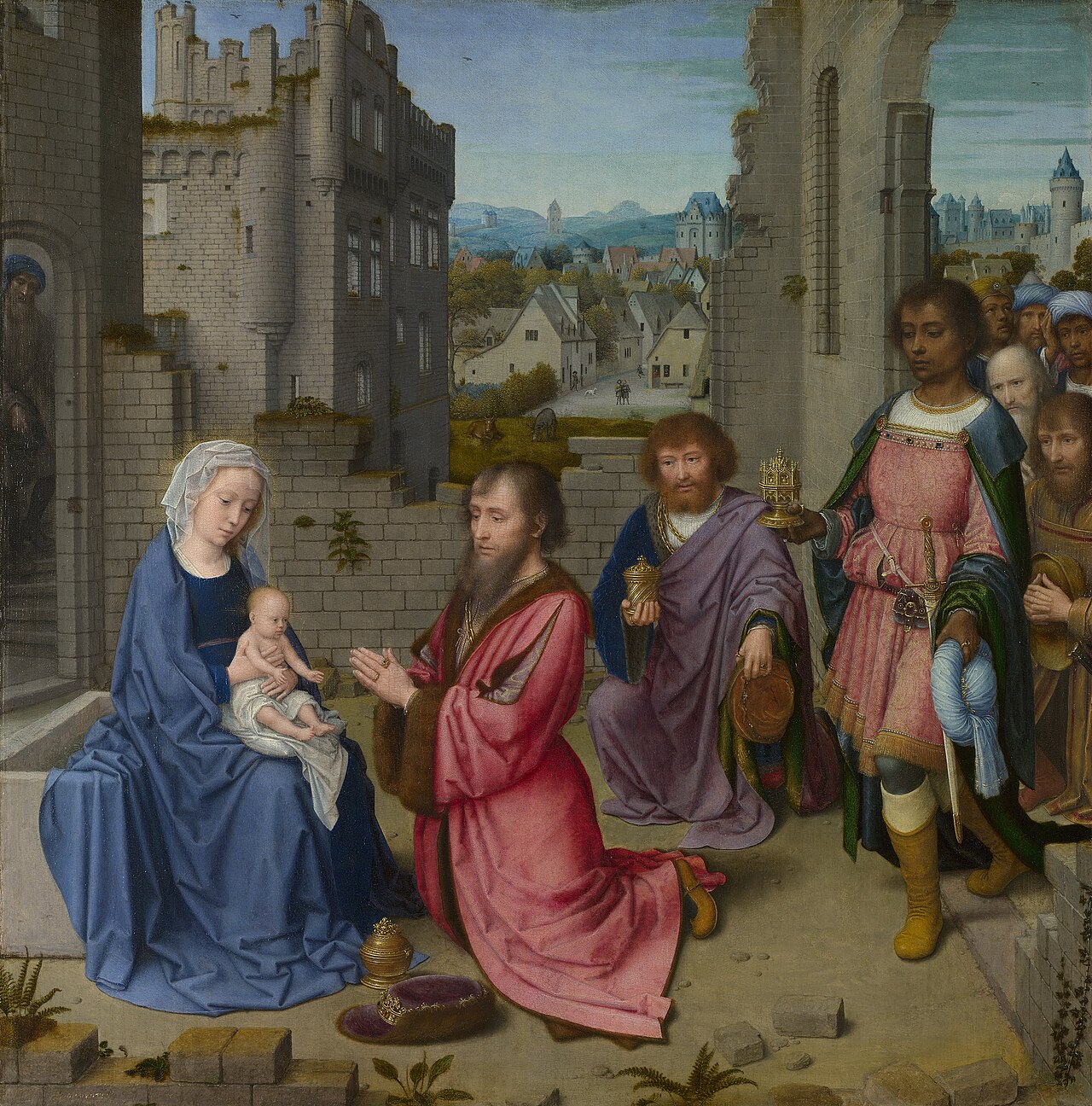
The chief event is the visit of the Wise Men, or Magi, doubtless men of high rank. Tradition calls them kings named Gaspar, Melchior and Balthasar, though these names do not appear before the twelfth century, and says they were baptized by the Apostle Thomas and preached in Persia. Their bodies were said to have been taken to Constantinople, then Milan, and in 1162 the Emperor Frederick I carried them off to Cologne, where they remain. Before Pope Leo the Great spoke of three, some thought there were as many as twelve. Other traditions, which Baring-Gould says have no authority, called them Shem, Ham and Japhet awakened from sleep; another makes each a descendant of a different son of Noah.

Some suggested the star was the same light that shone on the shepherds; an old commentary describes it as a radiant child bearing a cross, as some early Italian frescoes show. The feast has many names: the "Apparition of the Lord" in the Mozarabic (old Spanish) rite and "Three Kings' Day" in Germany. The Greeks keep the Nativity and the Magi together on 25 December and celebrate Christ's Baptism on 6 January.

The first historical mention is in St. Clement of Alexandria around 200; by Chrysostom's time, around 400, it was an ancient feast in Asia. In the West it appears first in Gaul in the mid-fourth century, when Ammianus Marcellinus records that Julian kept it at Paris in 361 shortly before renouncing Christianity. It was called the Day of Lights, as the supposed day of Christ's baptism, and in the Greek Church is still one of the three solemn times for baptism.

What this feast celebrates

How this feast teaches us to live

Drawn from themes in the original account

Share your faith, in words and by example. Preaching and conversion are part of this story.

Take one thing from this life into your own. It is the feast of everyone who comes to faith from far away.

The full story

Baring-Gould’s account retold in modern English

Read the full story · 795 words · about 3 min

The main purpose of the Church in celebrating this feast is for its members to express gratitude to God for revealing the Gospel to the Gentile world and granting it the same privileges as the Jews, who had previously been His chosen people. The first instance of this divine favor was the appearance of Christ to the Wise Men from the East. However, there are three significant manifestations of our Savior commemorated on this day. According to S. Chrysostom, all of these occurred on the same day, although not in the same year. The first manifestation was marked by a star that guided the Magi to come and worship Him. The second manifestation was that of the Blessed Trinity at His Baptism. The third was the manifestation of Christ's Divinity at Cana, where He miraculously changed water into wine.

The main event celebrated on this day is the appearance of our Lord to the Wise Men from the East. These men, referred to as Magi in Greek, were likely of high rank. Tradition suggests they were princes or kings, and they are named Gaspar, Melchior, and Balthasar. It is said that they were baptized by the Apostle Thomas and preached the Gospel in Persia. Their remains were brought by the first Christian emperors from the East to Constantinople, and later transported to Milan. However, in 1162, Emperor Frederick I took them to Cologne, where they still reside.

Many interesting but unverified traditions have developed around these three holy men. They were said to be Shem, Ham, and Japhet, who had fallen asleep in a cave and only awoke at the Nativity of Christ, when they came to worship Him, and then returned to their cave to die. A more credible tradition suggests that each wise man came from a different lineage: one from the line of Shem, another from the family of Japhet, and the third, often depicted as black, from the descendants of Ham. The names Gaspar, Melchior, and Balthazar do not appear in any writings before the twelfth century. Before Pope S. Leo the Great referred to them as three, the number was sometimes thought to be as many as twelve. Barhebræus states, "Magi came from the East. Some affirm that three princes came with a thousand men; but James, the bishop of Edessa, said that there were twelve princes who, having left seven thousand soldiers at the Euphrates, came on with a thousand men to Jerusalem."

Some authors have suggested that the bright star, which appeared to the Magi in the East, might be the glorious Light that shone upon the shepherds of Bethlehem when the angel came to announce the birth of our Savior. From a distance, this Light might have looked like a star. According to an ancient commentary on Matthew, this star, when it first appeared to the wise men, took the form of a radiant child holding a scepter or cross. In some early Italian frescoes, it is depicted this way:

"In a trice a star shone forth

Oh! so brightly shining!

Nearer, nearer yet it came,

Still towards earth inclining;

And 'twas shaped—O! wondrous sight!

Like a child with visage bright,

Holding sign of kindly might,

With a Cross combining."

It is to be expected that the Epiphany, which includes three distinct festivals, would be known by a variety of names. In the Mozarabic ritual, it is called the "Apparition of the Lord." In Germany, it is known as "Three-Kings' Day."

The Greeks celebrate the Nativity and the Manifestation to the Wise Men on the same day, December 25th, and observe January 6th as the festival of the Baptism of our Lord.

The first historical mention of the Epiphany is found in Clement of Alexandria, around A.D. 200. By the time of Chrysostom, around A.D. 400, it was recognized as an ancient and major festival of the Asiatic Church. The earliest clear evidence of it in the West is found in Gaul in the middle of the fourth century. Ammianus Marcellinus relates that Julian the Apostate, in A.D. 361, celebrated the feast of the Epiphany in the Christian Church at Paris shortly before he publicly renounced Christianity. The festival was called the Day of Lights because it commemorated the earthly manifestation of the Light of the World. It was also believed to be the day of the Baptism of our Lord, which was particularly associated with the term "illumination." Therefore, it became, and still is in the Greek Church, one of the three significant times for baptism.

Greek Hymn.—O Christ, the True Light, which enlightens every person who comes into the world, let the Light of Your Countenance shine upon us, so that we may see the unapproachable Light, and guide our steps to fulfill Your Commandments.

Footnotes

  1. Barhebræus was a 13th-century Syriac Christian scholar.
  2. Ammianus Marcellinus was a Roman historian.
  3. Julian the Apostate was a Roman Emperor known for his rejection of Christianity.
  4. The Mozarabic ritual is a liturgical tradition from the Iberian Peninsula.

Baring-Gould’s own footnotes, in modern English.

Read the original 1870s text

The principal design of the Church in celebrating this feast is, that her members may show gratitude to God for manifesting the Gospel to the Gentile world, and vouchsafing to it the same privileges as to the Jews, who had hitherto been His chosen and peculiar people; the first instance of this divine favour was the Manifestation of Christ to the Wise Men of the East. But, in all, there are three great manifestations of our Saviour commemorated on this day; all of which, S. Chrysostom [St. John Chrysostom, archbishop of Constantinople (d. 407)] says, happened on the same day, though not in the same year. The first of these was His manifestation by a star, which conducted the Magi to come and worship Him. The second Manifestation was that of the Blessed Trinity, at His Baptism. The third was the Manifestation of the Divinity of Christ, at Cana, by miraculously changing water into wine.

But the principal event which is this day celebrated, is the Manifestation of our Lord to the Wise Men of the East. These, who are called Magi in Greek, were doubtless men of high rank. Tradition holds them to have been princes or kings; and they are given the names of Gaspar, Melchior, and Balthasar. They are said to have been baptized by the Apostle Thomas, and to have preached the Gospel in Persia. Their bodies were brought by the first Christian emperors from the East to Constantinople, whence they were conveyed to Milan. But the Emperor Frederick I. carried them off to Cologne, in 1162, where they still remain.

Many very curious traditions, of no authority, have attached to these three holy men. They were said to have been Shem, Ham, and Japhet, who had fallen asleep in a cave, and to have woke only at the Nativity of Christ, when they came to adore Him; and then to have returned to their cave and died. A much more trustworthy tradition is to the effect that each wise man belonged to a different stock; that one was of the seed of Shem, another of the family of Japhet, and that the third, represented in art as black, belonged to the descendants of Ham. The three names Gaspar, Melchior, and Balthazar, are not found in any writers earlier than the twelfth century. Before Pope S. Leo the Great spoke of them as three, the number was sometimes supposed to have been as many as twelve. Barhebræus says, "Magi came from the East. Some affirm that three princes came with a thousand men; but James, the bishop (of Edessa,) said that there were twelve princes, who, having left seven thousand soldiers at the Euphrates, came on with a thousand men to Jerusalem."

Some authors have suggested that the seeming star, which appeared to the Magi in the East, might be that glorious Light which shone upon the shepherds of Bethlehem, when the angel came to impart to them the tidings of our Saviour's birth, which, at a distance, might appear like a star. According to an ancient commentary on S. Matthew, this star, on its first appearance to the wise men, had the form of a radiant child, bearing a sceptre or cross; and in some early Italian frescoes it is thus depicted:—

"In a trice a star shone forth

Oh! so brightly shining!

Nearer, nearer yet it came,

Still towards earth inclining;

And 'twas shaped—O! wondrous sight!

Like a child with visage bright,

Holding sign of kindly might,

With a Cross combining."

It is to be expected that the Epiphany, containing in itself, as has been observed, three distinct festivals, would be known by a variety of distinct names. In the Mozarabic ritual it is called the "Apparition of the Lord;" in Germany it is the "Three-Kings' Day."

The Greeks keep the Nativity and the Manifestation to the Wise Men on the same day, the 25th December, and keep the 6th January as the festival of the Baptism of our Lord.

The first historical notice of the Epiphany is found in S. Clement of Alexandria, a.d. 200; in the time of S. Chrysostom, a.d. 400, it is mentioned as an ancient and principal festival of the Asiatic Church. The earliest distinct trace of it in the West is found in Gaul [roughly modern France and Belgium], in the middle of the fourth century. Ammianus Marcellinus (xxi. 2), relates of Julian the Apostate [Roman emperor 361–363 who tried to restore paganism], that in a.d. 361, he celebrated in the Christian Church at Paris, the feast of the Epiphany in January, shortly before he publicly renounced the Christian religion. The title of Day of Lights was given to this festival as commemorating the earthly manifestation of the Light of the World, and also because it was the supposed day of the Baptism of our Lord, to which rite the term "illumination" was especially given. Hence it became, and in the Greek Church it is still, one of the three solemn times of baptism.

Greek Hymn.—O Christ, the True Light, which lighteth every man that cometh into the world, let the Light of Thy Countenance shine upon us, that thereby we may behold the unapproachable Light, and guide Thou our steps to fulfil Thy Commandments.
Feast days

Feast: January 6

Nine days · Free

Pray the novena
with us.

One short email a day for nine days. The day's prayer, a line from The Epiphany's story, and a nudge to keep going.

Also on January 6
M

St. Macra

January 6 · Virgin, Martyr
M

St. Melanius of Rennes

January 6 · Bishop
P

St. Peter of Canterbury

January 6 · Abbot
← All 1970 saints in the library
Sources & notes

Feast-day sources

Story sources

Sources

Credits

Image: Gerard David - Adoration of the Kings - Google Art Project.jpg · Gerard David · Public domain, via Wikimedia Commons

Image: Gerard David, Wikimedia Commons (Public domain)

Retold in plain modern English from Baring-Gould’s public-domain text, sentence by sentence, keeping the same facts and order. Short explanations in parentheses are ours.

From Sabine Baring-Gould, The Lives of the Saints, new and revised edition (Edinburgh: John Grant, 1914; first edition 1872). Public domain in the United States. Reproduced unedited, except for short bracketed notes in grey that we added to explain names and terms (“S.” is the old abbreviation for Saint). Some history and judgments reflect 19th-century scholarship.