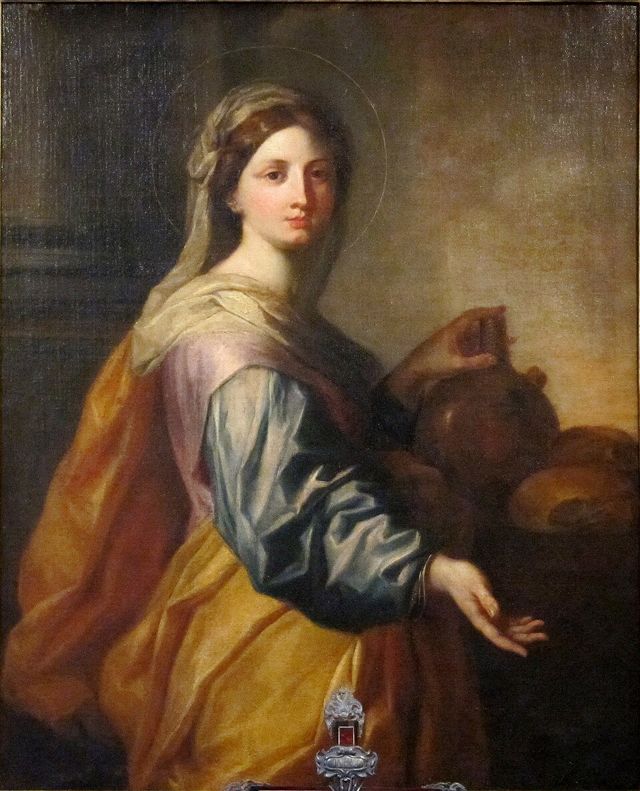
On another occasion, she set out on a long pilgrimage to a church near the sea, five miles beyond Pisa, which is about ten miles from Lucca. She began her journey with a companion, who, however, left her in Pisa. After completing her devotions, Zita had to return alone to Lucca. As she passed through Pisa, evening fell, and a friend invited her to stay the night. However, Zita had work to do the following morning for her master and mistress, and she was determined not to let her pilgrimage interfere with that, so she continued on her way.
When she reached the baths, which were further along, an acquaintance who lived there also urged her to stay, but she again declined. As she crossed the mountain of S. Giuliano and night fell, an elderly hermit who lived there advised her not to continue her journey at night and offered her shelter. But her strong sense of duty compelled her to keep going. Further along, she passed a castle, and the sentinels, feeling sorry for her and knowing that the road was dangerous due to robbers, offered her hospitality. She refused their offer and pressed on, even though her limbs were weak and she was faint from having eaten very little all day.
Eventually, she collapsed, exhausted, by a small spring at the first light of dawn. She dipped her mouth into the water and took a refreshing drink. At that moment, a woman appeared beside her and asked if she was going further. Zita got up, happy to have a companion, and walked alongside her. Now, her exhaustion seemed to fade, and her strength returned as she continued her journey with this unknown companion. When they reached the covered bridge over the Ozzorio, the gate was locked, but it opened for them. The same happened with the city gate. Zita headed for her home, and as she turned on the doorstep to thank her companion, she had vanished. Then she hoped, and in her hope believed, that the Virgin Mother had been by her side.
Zita died in her sixtieth year, beloved by everyone in the house where she had served so faithfully for forty-eight years. It is said that when she died, a bright star shone over Lucca. Some of her relics are kept in her chapel on Monte Motrone, near Lucca; others are in Genoa, in a church dedicated to her; and others are in Parma. A toe was given by the bishop of Lucca to Sir William Langstow, who built a chapel in Ely in her honor in 1456. Other relics are in Portugal.
Footnotes
- A toe was given by the bishop of Lucca to Sir William Langstow, who built a chapel in Ely in her honor in 1456.
Baring-Gould’s own footnotes, in modern English.
Read the original 1870s text
Baring-Gould’s sources: Roman Martyrology. Beatified by Innocent XII. in 1696, and canonized by Leo X. Authority: — A life written by a contemporary.] S. Zita was the child of poor parents at Bozzanello, a village on the slopes of Monte Sagrate, three leagues from Lucca. She was born in 1218, and at the age of twelve was sent into domestic service to Pagano de Fatinelli, a nobleman of Lucca. She remained all her life in the same house, endearing herself to her master and mistress and afterwards to their son and his wife. Every morning she rose early to attend the first mass, and open her heart to her Lord and God. One Christmas Eve the cold was intense, and she was preparing to go to church, when her master, compassionating her thin gown, threw his furred mantle over her shoulders, and bade her wrap herself in that against frost and snow, but to be sure to bring it him back again. At the church door, since then called the angel door, she saw a poor man crouching, numb with cold, who held up to her a ghastly white face, and extended his shaking hands for an alms. She instantly wrapped the warm mantle round him, bidding him wear it till she came out of church. When the service was over she could not find the beggar. He had made off with the cloak, and she returned home, alarmed and distressed. As may be expected, she met with a severe rebuke, which grieved her, however, less than having caused annoyance to a kind master, and violated, unintentionally, his confidence. But next morning a stranger came to the door, and without a word of explanation left the mantle in the hands of Zita, and she, amazed and grateful, could not but regard him as an angel Many pretty stories are told of this poor and pious servant maid, who walked in such close communion with the unseen world, that her story abounds in marvels, and we are not altogether sure where natural events end and marvels begin. One eve of S. Mary Magdalene’s Day she made a pilgrimage to a church under that invocation, two miles from Lucca; household affairs detained her till evening, and she was surprised by night However, she pressed on to the church; but when she reached it, the darkness was complete, the sky overcast with rain-clouds, and the doors of the little pilgrimage-shrine were closed. She was very tired, and sinking on her knees before the door, began to pray. But the long and toilsome mountain walk, at the end of a hard day’s work, had exhausted her, and she fell asleep. The rain poured down, and the wind moaned about the eaves of the solitary church; but still she slept on, with a little votive candle she had brought with her, standing by her side. Suddenly she awoke, the wan day was breaking in the East, and at her side twinkled the candle, lit by unknown hands, and angel wings had been spread over her, so that her garments were not soaked by the heavy rain.
On another occasion she started for a long pilgrimage to a church near the sea, five miles beyond Pisa, and Pisa is some ten miles from Lucca. She started with a companion, who, however, left her at Pisa, and when her devotions were ended Zita had to return alone to Lucca. In passing through Pisa, as evening fell, she was invited by a friend to sleep there; but Zita had her work to do the following morning for her master and mistress, and was resolved not to allow her pilgrimage to interfere with that; so she pushed on. On reaching the baths, some way further, an acquaintance who lived there also pressed her to stay, but she again refused. As she traversed the mountain of S. Giuliano, and night gathered in dark, an aged hermit who dwelt there advised her not to risk prosecuting her journey by night, and offered her shelter. But no, her strong sense of duty thrust her on. Further on she passed a castle, and the sentinels compassionating her, and knowing that the road was unsafe, on account of robbers, offered her hospitality. This was refused, and she pressed on, though her limbs tottered, and she was faint, having scarcely eaten anything all day. At length she sank down, dead-beat, on the side of a little spring, at the first cock-crow, and dipping her mouth into the water took a refreshing draught At that moment a woman stood beside her, and touching her asked if she were going further. Zita rose, and, rejoiced to meet with a companion, walked on at her side. And now her exhaustion seemed to go, and her vigour to be recruited, as she made the rest of her journey with her unknown companion. When they reached the covered bridge over the Ozzorio, the gate to it was locked, but it opened before them. It was the same with the gate of the city. Zita sought her home, and as she turned on the doorsteps to thank her companion, she had vanished; then she hoped, and hoping believed, that the Virgin Mother had been at her side. Zita died in her sixtieth year, beloved by all in the house where she had served so faithfully for forty-eight years, and it is said that when she died a bright star shone over Lucca. Some of her relics [the bodily remains of a saint, or objects they used, kept with honor] are preserved in her chapel on Monte Motrone, near Lucca; others at Genoa, in a church dedicated to her; others at Parma. A toe was given by the bishop of Lucca to Sir William Langstow, who built a chapel at Ely to her honour, in 1456. Other relics are in Portugal.:ed by GoO^lC