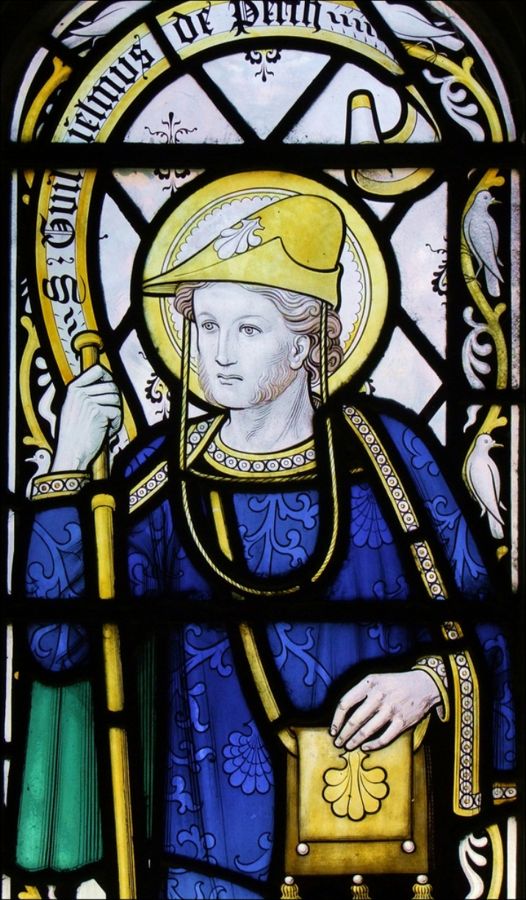
Saint William was a baker in Perth who, in his early life, lived a careless and godless life. However, he later changed and became a model of virtue, serving as a good father to his household. Of every ten loaves he baked, he gave one to the poor. One early morning, as he was going to Mass, he found a little baby crying on the doorstep of the church. He picked up the poor child, had him baptized with the name David, and raised him as his own.
The foundling grew up to be a man and earned the nickname Cockerman, which, according to a medieval author, is the Scottish term for foundling. However, the kindness of the good baker was poorly repaid by David Cockerman, whose heart was filled with envy and spite. He looked at the baker's children with jealousy. When William was well advanced in years, he decided to make a pilgrimage to Jerusalem and chose only David to be his companion.
For a while, everything went smoothly. But wicked thoughts began to stir in the foundling's mind. He grew tired of the journey and decided to rob his adopted father so he could live independently away from Scotland and the memory of his origins. Meanwhile, each day saw William’s purse grow lighter. Finally, when they reached Rochester, David Cockerman resolved to murder and rob the baker without delay. As they left the city, he led William into a narrow lane, then fell behind him, struck him down with a hatchet, took his purse, and ran away.
When miracles occurred after the body was brought into Rochester, the people concluded that he was a saint, and he received widespread veneration in the diocese.
Footnotes
- Cockerman is a Scottish term for foundling.
Baring-Gould’s own footnotes, in modern English.
Read the original 1870s text
S. William was a baker at Perth, who in his early life lived a careless and godless life, but afterwards changed and became a model of virtue, as a good father of a household. Of every ten loaves he baked he gave one to the poor. One morning early as he went to mass he found a little babe crying on the door-step of the church. He took the poor child up, had it baptized by the name of David, and brought it up as his own. The foundling grew up to man’s estate, and obtained the nickname of Cockerman, which, says the mediaeval author, is the Scottish for foundling. But the kindness of the good baker was ill-repaid by David Cockerman, whose heart was full of envy and spite, and he looked with jealousy on the children of the baker. When William was well advanced in years, he resolved to make a pilgrimage to Jerusalem, and he chose only David to be his companion. All went smoothly for some time. But wicked thoughts were working in the foundling’s mind. He wearied of the journey, and determined to rob his adopted father and live independently away from Scotland, and the remembrance of his condition. In the meantime every day saw William’s purse grow lighter. At last, when they had reached Rochester, David Cockerman resolved to murder and rob the baker without further delay. As they left the city, he led William into a narrow lane, and dropping behind him, felled him with a hatchet, took his purse and ran away. As miracles were wrought when the body was brought into Rochester, the people concluded he was a saint, and he received general veneration in the diocese.