This Saint’s Story
His earliest biographies—two Latin and two German—did not appear until after 1417, and the Encyclopedia warns that it is difficult to say how far they can be trusted. Their narrative is that he was the son of a Scottish king, left home secretly after a pious youth on pilgrimage to Rome, and on his return settled as a hermit in Westricht in the Diocese of Trier. When a great landowner blamed him for an idle life, he entered that lord’s service as a herdsman until, tradition holds, a miracle obliged the master to release him. He then gathered hermits from whose company later writers derive the Benedictine (monks following the Rule of St. Benedict) Abbey of Tholey; the legends make him abbot about 597, though Tholey appears to have been founded as a collegiate body about 630.
Baring-Gould is still more reserved: Scottish or Irish origin is asserted without evidence, and all that is really known is that Wendelin was a pious shepherd whose body rested at St. Wendel on the Nahe, where miracles were believed to be wrought. He notes a great fire at Saarbrücken in 1417 checked after invocation of the saint, which spread the cult.
What stands on firmer ground is the later devotion. A chapel was built over his grave, and the town of St. Wendel grew nearby. His intercession was sought in pestilence and in contagious disease among cattle. When a pestilence was checked in 1320, Archbishop Baldwin of Trier had the chapel rebuilt; Baldwin’s successor Boemund II built the present Gothic church, dedicated in 1360, to which the relics were transferred, and since 1506 they have rested in a stone sarcophagus. Wendelin is the patron of country people and herdsmen and is still venerated in Germany, Austria, and Switzerland. He is not in the Roman Martyrology (the Church's official list of saints for each day); his feast is observed in the Diocese of Trier on 22 October.
From the Catholic Encyclopedia
1913 · 347 words
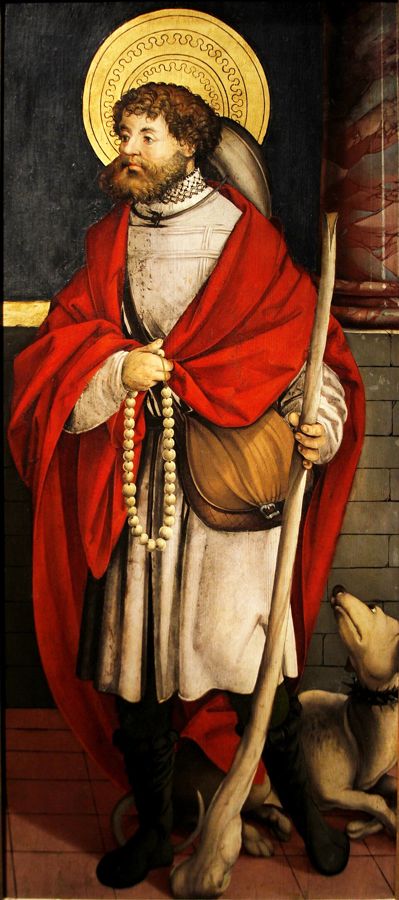
Born about 554; died probably in 617. His earliest biographies, two in Latin and two in German, did not appear until after 1417. Their narrative is the following: Wendelin was the son of a Scottish king; after a piously spent youth he secretly left his home on a pilgrimage to Rome. On his way back he settled as a hermit in Westricht in the Diocese of Trier. When a great landowner blamed him for his idle life he entered this lord's service as a herdsman. Later a miracle obliged this lord to allow him to return to his solitude. Wendelin then established a company of hermits from which sprang the Benedictine [monks following the Rule of St. Benedict] Abbey of Tholey. He was consecrated abbot about 597, according to the later legends. Tholey was apparently founded as a collegiate body about 630. It is difficult to say how far the later biographers are trustworthy. Wendelin was buried in his cell, and a chapel was built over the grave. The small town of St. Wendel grew up nearby. The saint's intercession was powerful in times of pestilence and contagious diseases among cattle. When in 1320 a pestilence was checked through the intercession of the saint, Archbishop Baldwin of Trier had the chapel rebuilt. Baldwin's successor, Boemund II, built the present beautiful Gothic church, dedicated in 1360 and to which the saint's relics [the bodily remains of a saint, or objects they used, kept with honor] were transferred; since 1506 they have rested in a stone sarcophagus. Wendelin is the patron saint of country people and herdsmen and is still venerated in Germany, Austria, and Switzerland. He is represented in art as a youth, or as a bearded man, with a shepherd's bag and a book in one hand and a shepherd's crook in the other; about him feed lambs, cattle, and swine, while a crown and a shield are placed at his feet. St. Wendelin is not mentioned in the Roman Martyrology, but his feast is observed in the Diocese of Trier on 22 October.
Acta SS., October, IX, 342-51; MOHR, Die Heiligen der Diozese Trier (Trier, 1892); LESKER, St. Wendelinus (Donauworth, 1898); ZURCHER, St. Wendelinus-Buch (Menzingen, 1903).