This event destroyed all of Vulmar’s happiness. The biographer has not provided a description of the farewell between the young husband and wife, their tears, and his despair. But that is probably for the best, as anyone can imagine it and feel the sorrow of the young heart when his passionately loved wife was taken from him, leaving the house silent. This event shattered all of Vulmar’s confidence in life and diminished his concern for the happiness that this world can offer. He left his home, now filled with painful memories, and fled to the monastery of Hautmont in Hainault, where he was assigned to tend cows.
Every night, when the brothers were asleep, Vulmar would rise and clean their shoes for them, then return them to the sides of the beds from which he had taken them. The monks wondered who had performed this kind act. One evening, after the abbot had discarded a pair of very muddy shoes, he heard soft footsteps approaching his bed and picking up the shoes. “Who is there?” asked the abbot, reaching out his hand and catching Vulmar by the arm. There was no answer. “On your obedience, tell me?” “I am your little son Vulmar,” the young man whispered in reply. “Go in peace, my son,” said the abbot, and he never revealed to the monks who cleaned their shoes for them. Eventually, Vulmar was ordained as a priest, and then he felt a desire, like many others of his time, to hide in the green woods and serve God under the shadows of the broad oaks, with no visitors except for the fawns and squirrels. He therefore took his priestly vestments and vessels, a hatchet, and ran away. He hid himself in the forest of Eeken and lived there for many years. But when the location of his retreat became known, he returned to his hometown and built a hermitage in the woods near Samer.
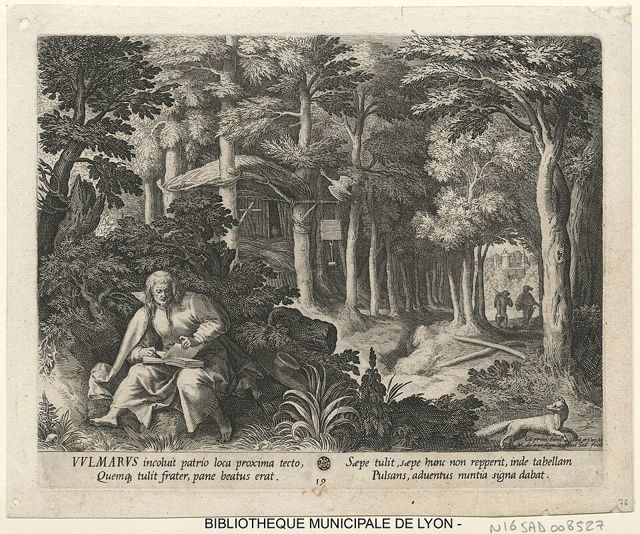
One day, his brother Vuilmar was hunting in the forest when he stumbled upon a small hut made of woven branches and a roof of ferns, standing in a clearing where sunlight broke through the dense canopy of leaves. Before the door stood a bearded man, busy digging. Vuilmar approached him and asked for his name. Vulmar stood up, leaned on his spade, looked him in the face, and said, “Brother!”
When the initial greetings were over, Vuilmar urged Vulmar to return with him to the castle to see their mother, who had mourned for him for a long time. However, the hermit shook his head. How could he leave his pleasant solitude for the company of people? All he requested was that his brother occasionally bring him some simple food. Vuilmar did this.
One day, not seeing Vulmar, he called out to him. The hermit came running up, looking very distressed. “My brother! I beg you, do not make the forest echo with your shouting. Look! If you need me at any time, call me like this,” and he hung a wooden tablet and a hammer on a tree branch. “Knock on the tablet, but please, do not shout!”
Over time, followers of both genders gathered around the holy man, and he built two monasteries in the forest: one for men, which he managed himself, and the other for women, which he placed under the leadership of his niece, Eremberta. In 688, he was visited by Ceadwalla, the king of the West Saxons, who was on his way to Rome. Ceadwalla gave him thirty sous and asked for his prayers. Vulmar blessed him and promised to pray for him. Ceadwalla continued on to Rome, where he was baptized by Pope Sergius and later died.
Vulmar died at a ripe old age, either at the end of the 7th century or the beginning of the 8th century, and was buried at Samer. His bones were scattered by the Huguenots.
Footnotes
- Hainault (a region in present-day Belgium)
- Samer (a commune in northern France)
- Ceadwalla gave him thirty sous, which were likely gold coins.
Baring-Gould’s own footnotes, in modern English.
Read the original 1870s text
Baring-Gould’s sources: Roman, Gallican, and Belgian Martyrologies. Authority An ancient life, “ venerabilium hominum nafratione comperta/’ hot therefore by a contemporary, but sufficiently near to the time to be full of life-like, interesting particulars.] In the middle of the seventh Century, there lived in the neighbourhood of Boulogne, at Samer, a nobleman of Frank origin, named Vulbert, married to a wife named Duda, who bore him two sons, Vulmar and Vuilinar. In his youth Vulmar was married to a girl, named Osterhilda, \Vhb had, however, been betrothed in childhood, by her parents, to someone else. This man complained to the King of the Franks of the wrong done him by Vnlmar, and the king ordered the separation of the young couple, and that Osterhilda should be given to him to whom she had been previously betrothed.
This blow destroyed all Vulmar’s happiness. The biographer has given us no picture of the parting of the young husband and wife, their tears, and his despair. But it is just as well, for anyone can imagine it, and feel the desolation of the young heart, when the passionately loved wife was torn from him, and the house was left silent The blow destroyed all Vulmar’s confidence in life, all his care for the happiness this world can give. He left his home, now too full of painful reminiscences, and fled to the monastery of Hautmont in Hainanlt, where he was set to tend cows.
Every night when the brethren slept, Vnlmar rose and cleaned their shoes for them, then restored thtm to the sides of the beds whence he had taken them. The monks wondered who had done them this kind office. One evening that the abbot had cast off a pair of very muddy shoes, he heard soft steps creep to the side of his bed, and pick up the shoes. “ Who is there ?” asked the abbot, putting out his hand, and catching Vulmar by the arm. No answer. “ On your obediemce tell me ?” “ I am your little son Vulmar,” answered the young man in a whisper. “ Go in peace, my son,” said the abbot; and he never told the monks who cleaned their shoes for them. At last he was ordained priest, and then a desire came on him, as it did on so many others of his period, to hide in the green wood, and serve God under the shadows of the broad oaks, with no other visitors than the fawns and the squirrels. He therefore took his priestly vestments and vessels, a hatchet, and ran away. He hid himself in.S'. Vulmar.
the forest of Eeken, and lived there many years. But when the place of his retreat became known, he returned to his native place, and built a hermitage in the wood near,Samer. One day his brother Vuilmar was hunting in the forest, when he lighted on a little cot of wattled walls, and fern thatched roof, standing in a gap of the forest, where the sun pierced the great canopy of leaves. Before the door was a bearded man, busily engaged in digging. Vuilmar went up to him and asked his name. Vulmar rose, and leaning on his spade, looked him in the face, and said, “ Brother I”
When the first greetings had passed, Vuilmar entreated Vulmar to return with him to the castle, to see his mother, who had long mourned him. But the hermit shook his head. How should he leave his delightful solitude for the haunts of men ? All he asked was that his brother would occasionally bring him some plain food. Vuilmar did this. One day, not seeing Vulmar, he shouted to him. The hermit came running up, with his face a picture of distress. “ My brother ! I implore you, do not make the forest resound with your clamour. See ! if you want me at any time, call me thus,” and he hung a wooden tablet and a hammer on a tree bough. “ Knock on the tablet, but, in mercy, do not shout 1” In time disciples of both sexes gathered about the holy man, and he built two monasteries in the forest, one for men, which he directed himself, • the other for women, which he placed under the government of his niece, Eremberta. There he was visited, in 688, by Ceadwalla, king of the West Saxons, then on his way to Rome. Ceadwalla gave him thirty sous, 1 and asked his prayers. Vulmar gave him his blessing, and promised his prayers. Cead1 “ Triginita solidos contulit,” gold sous no doubt. walla went on to Rome, where he was baptised by Pope Sergius, and died. 1 S. Vulmar died at a green old age, either at the end of the 7th, or the beginning of the 8th century, and was buried at Samer. His bones were scattered by the Huguenots.