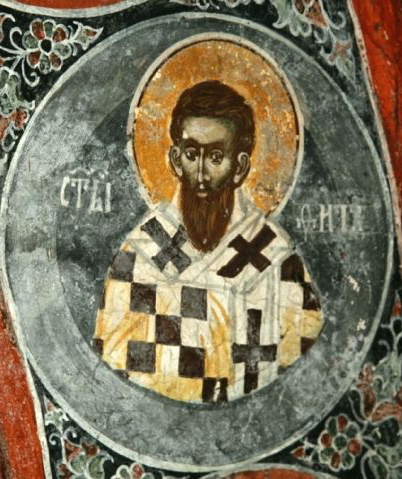
St. Titus

Titus was a companion of Paul and, by later tradition, the first bishop of Crete.

Read the essentials →
Feast January 26 · Bishop

St. Titus

Current feast

January 26
Verified · General Roman Calendar (Wikipedia list)

Traditional feast

January 4
1914 / pre-1969 calendar, per Baring-Gould (1914)

Represents

Bishop

Feast days

Feast: January 26
Traditional: January 4

This Saint’s Story

In our own words, from the sources listed below.

He was a Gentile. Paul calls him his child in the faith, his brother, and his partner. Paul took him to Jerusalem about the year 51 and refused to have him circumcised, which Paul later cites as a test case. Titus carried Paul's painful letter to Corinth and helped collect the money for the poor in Jerusalem. The Letter to Titus sends him to appoint elders in the towns of Crete.

Jerome says Titus served as Paul's secretary for one of the Corinthian letters. A later tradition fills in a long episcopate and a peaceful death on Crete. The New Testament does not give his death. The Roman calendar keeps him with Timothy on 26 January.

The Letter to Titus is short. It tells him to appoint elders, to reject empty disputes, and to teach slaves, older women, and younger men how to live. Paul asks him to come to Nicopolis. That is the last New Testament notice. Crete is the island named in the letter. The tradition that he died there as bishop is later. Jerome's note that Titus wrote down one of the Corinthian letters makes him Paul's scribe as well as his courier. The shared feast with Timothy is 26 January.

For today: Titus's work in the letters is organizing churches and carrying a hard message. You can take one difficult note to the person who needs it, and you can leave the later legend of his death labeled as later.

What he represents

How he teaches us to live

Drawn from themes in the original account

Feed your mind with Scripture and good books. Learning and the Scriptures matter in this life.

Give to people in need. The account records care for the poor.

The full story

Baring-Gould’s account retold in modern English

Read the full story · 1,065 words · about 5 min

Saint Titus was born to Gentile parents and was descended from the ancient royal family of Crete. He was a favored companion of Saint Paul, who referred to him as his son in Christ. Titus's virtue earned him the special esteem of this Apostle, as he was often employed as a secretary and interpreter by Saint Paul, who also called him his brother. On one occasion, when Saint Paul was feeling very down, he found comfort in the presence of Titus: "God, who comforts those that are cast down, comforted us by the coming of Titus." He also expressed that he found no peace in his spirit because he had not met Titus while in Troas.

In the year 51, Titus accompanied Saint Paul to the Council that was held in Jerusalem regarding the Mosaic rites. Although the Apostle agreed to have Timothy circumcised to make his ministry more acceptable to the Jews, he refused to allow the same for Titus. He was concerned that this would give support to the faction that insisted on combining the rites of the Law with the Sacraments of the Gospel.

Towards the end of the year 56, Saint Paul sent Titus from Ephesus to Corinth with full authority to address several issues of scandal and to calm the divisions in that Church. He was received with great respect there and was pleased with the penance and submission of the offenders. However, he would not accept any gifts from them, not even for his own support. His love for that Church was very strong, and at the request of the Corinthians, he pleaded with Saint Paul for the forgiveness of the incestuous man whom he had excommunicated. That same year, the Apostle sent him again to Corinth to bring the donations from that Church to Jerusalem to help the poor Christians in need there. All these details are found in Saint Paul's two letters to the Corinthians.

Paul, after his first imprisonment, returned from Rome to the East and stayed for a while on the island of Crete. The governor of Crete, Rustilius, was married to the sister of Titus. Paul consecrated his beloved disciple, Titus, to be the bishop of that island and left him there to complete the work he had started.

"We may form a judgment," says John Chrysostom, "from the importance of the charge, how great was the esteem of Paul for his disciple." However, the Apostle, on his return to Europe the following year, found the loss of such a companion too significant. He ordered Titus to meet him at Nicopolis in Epirus, where he planned to spend the winter, as soon as Artemas or Tychicus, whom Paul was about to send to take the place of the bishop during his absence, arrived. When he came, Paul instructed him to assist Zenas, the lawyer, and Apollos on their journey.

From Zenas, we have certain incidents of the life of Titus, which have been preserved in a fragmentary form in the Greek Menæa.

Zenas recounts the conversion of Titus as follows: Titus, living on the island of Crete, was well-versed in Greek literature, having studied diligently in his youth. However, the dreams of poets and philosophers did not satisfy the deep longing of his soul for truth. One day, when he was twenty years old, he heard a voice say to him, "Titus, depart hence and save your soul, for the learning of the Greeks will not profit you for salvation." Pondering what this could mean, he was instructed by the same voice to take up a Hebrew book that he had long ignored and open it. The book was the Prophet Isaiah, and the passage that caught his eye was this: "Keep silence before me, O islands; and let the people renew their strength: let them come near; then let them speak," and what follows.

He seems to have read much of that chapter, which contains a promise to the isles, and he applied to himself the words, "You whom I have taken from the ends of the earth, and called you from the chief men thereof, and said to you, You are my servant; I have chosen you, and not cast you away. Do not fear; for I am with you: do not be dismayed; for I am your God: I will strengthen you; yes, I will help you; yes, I will uphold you with the right hand of my righteousness.... When the poor and needy seek water, and there is none, and their tongue fails for thirst, I the Lord will hear them; I the God of Israel will not forsake them." These were words very different from those of the poets of Greece and presented an idea of God quite different from that formed by Homer, whose writings he had enjoyed. So, Titus left his Greek studies and his native island and sought Jerusalem, the chief city of the people of whom the prophet spoke such great things. When he was there, he saw Jesus and heard Him teach. Perhaps he was one of those Greeks whom Saint Andrew brought to Christ. He believed and became one of the first disciples. He remained in Jerusalem after the ascension and the descent of the Holy Spirit. After he joined Saint Paul, he accompanied him on most of his journeys. In 65, Saint Paul sent him to preach the Word of God in Dalmatia, after he had visited him in Nicopolis; but he probably was there for only a short time, although the Dalmatians honor him as their Apostle.

Peter de Natalibus relates that when death approached, he saw angels coming from heaven in a glorious procession to fetch his soul, and that his face lit up with joy at their approach and shone with supernatural brilliance. He committed his people to God in long and earnest prayer, and then peacefully yielded up his spirit to Christ his Savior.

The body of Saint Titus was kept with great reverence in the Cathedral of Gortyna; but that city was ruined by the Saracens in 823, and the metropolitan see was transferred to Candia, seventeen miles from the ancient Gortyna. There, the head of Saint Titus was preserved until it was taken by the Venetians and is now among the sacred treasures of Saint Mark's in Venice.

He is the patron of Candia, or Crete.

Footnotes

  1. God, who comforts those that are cast down, comforted us by the coming of Titus.
  2. All these details are found in Saint Paul's two letters to the Corinthians.
  3. "We may form a judgment," says John Chrysostom, "from the importance of the charge, how great was the esteem of Paul for his disciple."
  4. "Keep silence before me, O islands; and let the people renew their strength: let them come near; then let them speak," and what follows.
  5. Peter de Natalibus was a 15th-century Italian priest and historian.
  6. Saint Andrew was one of the twelve apostles of Jesus.
  7. The Saracens were Muslim invaders in medieval Europe.

Baring-Gould’s own footnotes, in modern English.

Read the original 1870s text

Baring-Gould’s sources: S. Titus is commemorated on this day in the Roman, and all the Latin Martyrologies. But the Greeks observe the feast of S. Titus on August 25th. Much of his history can be gathered from the first and second epistles of S. Paul to the Corinthians, and from his epistle to S. Titus; also from the Greek Menologium, and his life, written by Zenas, the lawyer, in the Menæa; and that by Peter de Natalibus, compiled from Greek sources.

Saint Titus was born of Gentile parents, being descended from the ancient royal family of Crete. [18] He was a favourite companion of S. Paul, who calls him his son in Christ. His virtue gained him the particular esteem of this Apostle; for we find him employed as secretary and interpreter by S. Paul; and the Apostle styles him his brother. [19] On one occasion, when much depressed, he was consoled by the presence of Titus: "God, that comforteth those that are cast down, comforted us by the coming of Titus;" [20] and he testified, on another occasion, that he found no rest in his spirit, because at Troas he had not met Titus. [21]

In the year 51, Titus accompanied S. Paul to the Council that was held at Jerusalem, on the subject of the Mosaic rites. Though the Apostle had consented to the circumcision of Timothy, in order to render his ministry more acceptable among the Jews, he would not allow the same in the case of Titus, apprehensive of giving thereby a sanction to the faction which held to the necessity of combining the rites of the Law with the Sacraments of the Gospel.

Towards the close of the year 56, S. Paul sent Titus from Ephesus to Corinth, with full commission to remedy several subjects of scandal, and to allay the dissensions in that Church. He was there received with great respect, and was satisfied with the penance and submission of the offenders; but could not be prevailed upon to accept from them any present, not even so much as his own maintenance. His love for that Church was very great, and at the request of the Corinthians, he interceded with S. Paul for the pardon of the incestuous man whom he had excommunicated. He was sent the same year by the Apostle, a second time, to Corinth, to bring the alms of that Church to Jerusalem, for the relief of the necessity of the poor Christians there. All these particulars we learn from S. Paul's two epistles to the Corinthians.

S. Paul, after his first imprisonment, returning from Rome into the East, made some stay in the island of Crete, of which Rustilius, the governor, was married to the sister of S. Titus. He consecrated his beloved disciple, Titus, to be bishop of that island, and left him there to finish the work he had begun. [22] "We may form a judgment," says S. Chrysostom [St. John Chrysostom, archbishop of Constantinople (d. 407)], "from the importance of the charge, how great was the esteem of S. Paul for his disciple." [23] But the Apostle, on his return into Europe the year after, finding the loss of such a companion too material, ordered him to meet him at Nicopolis, in Epirus, where he intended to pass the winter, as soon as Artemas or Tychicus, whom the Apostle was about to send to him, to take the place of the bishop during his absence, should arrive. [24] And when he came, he bade him assist Zenas, the lawyer, and Apollos on their journey. [25] From this Zenas we have certain incidents of the life of S. Titus, which have been preserved in a fragmentary condition in the Greek Menæa.

Zenas relates the conversion of S. Titus thus:—Titus, living in the island of Crete, was learned in Greek literature, having been studious in youth. But the dreams of the poets and philosophers did not satisfy the inward craving of his soul after truth. One day, when twenty years old, he heard a voice say to him, "Titus, depart hence and save thy soul, for the learning of the Greeks will not profit thee unto salvation." Wondering in himself what this could mean, he was bidden by the same voice to take up a Hebrew volume that he had long disregarded, and open it. And the book was the Prophet Isaiah, and the place of the Scriptures that his eye rested on was this, "Keep silence before me, O islands; and let the people renew their strength: let them come near; then let them speak," [26] and what follows.

He seems to have read on much of that chapter, with its promise to the isles, and to have applied to himself the words, "Thou whom I have taken from the ends of the earth, and called thee from the chief men thereof, and said unto thee, Thou art my servant; I have chosen thee, and not cast thee away. Fear thou not; for I am with thee: be not dismayed; for I am thy God: I will strengthen thee; yea, I will help thee; yea, I will uphold thee with the right hand of my righteousness.... When the poor and needy seek water, and there is none, and their tongue faileth for thirst, I the Lord will hear them, I the God of Israel will not forsake them." [27] These were words very different from those of the poets of Greece, and gave an idea of God quite other from that formed by Homer, in whose writings he had found delight; so Titus left his Greek studies and his native island, and sought Jerusalem, the chief city of that people of whom the prophet spake such great things. And when he was there he saw Jesus, and heard Him teach. Perhaps he was one of those Greeks whom S. Andrew brought to Christ. [28] He believed, and was of the number of the first disciples. He remained at Jerusalem after the ascension and the descent of the Holy Ghost. After he joined S. Paul, he accompanied him in most of his journeys. In 65, S. Paul sent him to preach the Word of God in Dalmatia, after he had visited him in Nicopolis; [29] but he probably was there for no great length of time, though the Dalmatians honour him as their Apostle.

Peter de Natalibus relates that when death approached, he saw angels coming from heaven in a glorious train to fetch his soul, and that his face lit up with joy at their approach, and shone with supernatural splendour. He committed his people to God in long and earnest prayer, and then yielded up his spirit in peace to Christ his Saviour.

The body of S. Titus was kept, with great veneration, in the Cathedral of Gortyna; but that city having been ruined by the Saracens [medieval Christian name for Arab and Muslim peoples], in 823, the metropolitan [the archbishop who heads a group of dioceses] see was transferred to Candia, seventeen miles from the ancient Gortyna; there the head of S. Titus was preserved, till it was carried off by the Venetians, and is now among the sacred treasures of S. Mark's, at Venice.

Patron of Candia, or Crete.
Help us add to this saint's story

Everything is read by a person before anything appears. Facts are checked against trusted sources first.

Facts are welcome; a source link helps (optional).With your permission we may share it on this page.

Nine days · Free

Pray the novena
with us.

One short email a day for nine days. The day's prayer, a line from St. Titus's story, and a nudge to keep going.

Also on January 4
D

St. Dafrosa

January 4 · Widow, Confessor
R

St. Rumon

January 4 · Bishop, Confessor
G

St. Gregory of Langres

January 4 · Bishop
← All 1970 saints in the library
Sources & notes

Feast-day sources

Story sources

Sources

Credits

Image: Saint Titus (Kosovo, 14th c. Pech Patriarch., S. Nicholas church).jpg · AnonymousWikimedia Commons · Public domain, via Wikimedia Commons

Image: AnonymousWikimedia Commons, Wikimedia Commons (Public domain)

Retold in plain modern English from Baring-Gould’s public-domain text, sentence by sentence, keeping the same facts and order. Short explanations in parentheses are ours.

From Sabine Baring-Gould, The Lives of the Saints, new and revised edition (Edinburgh: John Grant, 1914; first edition 1872). Public domain in the United States. Reproduced unedited, except for short bracketed notes in grey that we added to explain names and terms (“S.” is the old abbreviation for Saint). Some history and judgments reflect 19th-century scholarship.