St. Theobald

Theobald was born in 1017 at Provins in Champagne, into a noble family.

Read the essentials →
Feast June 30 · Priest, Hermit

St. Theobald

Current feast

June 30
Secondary source · Wikipedia infobox

Traditional feast

June 30
1914 / pre-1969 calendar, per Baring-Gould (1897)

Represents

Priest
Hermit

Feast days

Feast: June 30

This Saint’s Story

Adapted in modern English from the Catholic Encyclopedia (1913) · original text below

In 1054, without telling his parents, he and his friend Walter became hermits, first at Sussy in the Ardennes and then at Pettingen in the Diocese of Trier. From there they went on pilgrimage to Compostela and later to Rome. On the way back they meant to go on to Palestine by way of Venice, but near Salanigo in the Diocese of Vicenza Walter's strength gave out, and the two settled in a lonely spot there.

Two years later Walter died. Many disciples gathered around Theobald, who withdrew more and more from earthly things, and the bishop ordained him a priest. His mother came to visit, would not leave him again, and lived a religious life under his direction from then on. Shortly before his death he became a Camaldolese monk. He died at Salanigo on 30 June 1066, and Pope Alexander II allowed his public veneration. He is the patron of charcoal-burners.

What he represents

How he teaches us to live

Drawn from themes in the original account

Make time for silence. Time alone in prayer is part of this story.

Celebrate this saint’s feast day. Remember him on June 30 with a short prayer, and ask for his help.

The full story

Baring-Gould’s account retold in modern English

Read the full story · 455 words · about 2 min

There are German Martyrologies that mention this day, but some French ones list it on July 1st, misled by Peter de Natalibus. A life of S. Theobald was written by a contemporary.

S. Theobald was a Frenchman from Provins, near Sens. He was the son of noble and wealthy parents, but he chose a life of solitude and poverty over one filled with worldly abundance.

Following the advice of a hermit named Burkhard, who lived by the Seine River, he left home with a like-minded companion, a knight named Gauthier, or Walter, along with a group of horsemen, all well-dressed. However, when they reached Rheims, they left their horses and baggage at the hotel and fled on foot, destitute. They did not stop until they arrived in Piltung, in Swabia. There, they worked as day laborers, reaping corn, mowing grass, and carrying stones for masons. Their virtues led others to regard them as saints, prompting them to leave the area and make a pilgrimage to Compostella.

One night, Theobald stumbled over a man lying across the road. The man jumped up and disappeared over the hedge, and Theobald believed he had been tripped by the devil himself. In Treves, he unexpectedly encountered his father, who looked anxious and aged. The good old noble was troubled by the disappearance of his son.

Theobald thought it best to leave his father in his anxiety and to retreat without revealing his identity. He likely feared that his father would use his parental authority to force him to return to Provins and the life he had been born into. He later made a pilgrimage to Rome and settled down in 1056 with his friend Gauthier at a secluded place called Salanigo, near Vicenza. There, he discovered the ruins of a church dedicated to SS. Hermagoras and Fortunatus. Sindichar, the bishop of Vicenza, ordained Theobald as a priest. When the news of the saint reached Provins, his father and mother visited him. His mother, unable to part with her beloved son again, built a cell near his and spent the rest of her days there.

He died at Salanigo, but his body was later moved to Metz. Portions of his remains are displayed in Provins, while others are in the parish church of S. Thibault, near Lagny. He is sometimes depicted with a pair of swans because there is a story that two fishermen near Rheims saw a flock of wild swans. One exclaimed, “Would to S. Thibault that some of them would let me catch them!” At that moment, two swans landed on the water, allowing him to catch them and carry them off, one under each arm, to the bishop, declaring the miracle performed by the blessed Theobald.

Footnotes

  1. A life of S. Theobald was written by a contemporary.
  2. S. Theobald was a Frenchman from Provins, near Sens.
  3. Sindichar, the bishop of Vicenza, ordained Theobald as a priest.
  4. Portions of his remains are displayed in Provins, while others are in the parish church of S. Thibault, near Lagny.

Baring-Gould’s own footnotes, in modern English.

Read the original 1870s text

…fin German Martyrologies on this day, but in some French ones on July xst, misled by Peter de Natalibus. Authority A life written by a contemporary.] S. Theobald, a Frenchman of Provins, near Sens, the son of noble and wealthy parents, preferred a life of solitude and poverty to one in the world surrounded with plenty.

Following the advice of a hermit named Burkhard, who lived on the banks of the Seine, he left home with a companion of like mind, a knight Gauthier, or Walter, in company with a band of horsemen, and well apparelled. But when they reached Rheims, they left their horses 6". Theobald.

and baggage at the hotel, and fled on foot and destitute, and did not rest till they reached Piltung, in Swabia. There they worked as day labourers, reaping corn, mowing grass, and carrying stones for masons, till their virtues caused them to be regarded as saints, when they left the place, and made a pilgrimage to Compostella. One night Theobald stumbled over a man who was lying across the road. The fellow jumped up, and disappeared over the hedge, and Theobald was convinced that he had been tripped up by the devil himself. At Treves [Trier in Germany] he suddenly came across his father, looking anxious and aged, for the good old noble was troubled at the disappearance of his son.

Theobald thought proper to leave him in his anxiety, and retire without making himself known; doubtless fearing lest his father should use his parental authority to force him to return to Provins, and the state of life to which he had been born. He afterwards made a pilgrimage to Rome, and settled down in 1056, with his friend Gauthier, at a solitary place named Salanigo, near Vicenza, where he found the ruins of a church dedicated to SS. Hermagoras and Fortunatus. Sindichar, bishop of Vicenza, ordained Theobald priest; and the renown of the saint having reached Provins, his father and mother visited him, and the latter, unable to part again with a son she dearly loved, built a cell near his, and spent the remainder of her days there.

He died at Salanigo, but his body was translated to Metz. Portions are exhibited at Provins, others in the parish church of S. Thibault, near Lagny. He is sometimes represented with a couple of swans, because the story is told that two fishermen near Rheims saw one day a flight of wild swans, whereupon one exclaimed, “ Would to S. Thibault some of them would let me catch them !” whereupon two swans settled down on the water, and he caught them, and carried them off, one under each arm, to the bishop, and declared the marvel wrought by the blessed Theobald.
From the Catholic Encyclopedia

1913 · 261 words

Born at Provins in the Province of Champagne, France, in 1017; died at Salanigo in Italy 30 June, 1066. He was a member of a noble family. In 1054 without the knowledge of his parents he and his friend Walter gave themselves to the life of hermits at Sussy in the Ardennes, then at Pittingen (now Pettingen) in the Diocese of Trier, a district that today belongs to the Grand Duchy of Luxemburg. From this place the two made a pilgrimage to Compostella in Spain, and afterwards returned into the territory of Trier. They made a second pilgrimage to Rome. As they returned they desired to go to Palestine by way of Venice, but Walter's strength failed near Salanigo in the Diocese of Vicenza. They therefore settled in a solitary place near Salanigo. After two years Walter died. A large number of disciples eager for salvation gathered around Theobald, who severed himself more and more from all earthly things. The bishop ordained him priest. His mother, who came to visit him, did not wish to leave him again, and led thenceforth under his direction a religious life.

Shortly before his death he entered the Camaldolese Order. Numerous miracles, some occurring before and some after his death, are reported of him. Alexander II (1061-1073) permitted the public veneration of St. Theobald. His veneration spread especially in Italy, France, Belgium, and Luxemburg. He is the patron saint of charcoal-burners.

Acta SS., June, V, 588-606; Bibliotheca hagiogr. lat. (Brussels, 1898-1900), 1163-4; WEICHERDING, Der hl. Theobald (Luxemburg, 1879); ALLOU, Vie de saint Thibaud (Meaux, 1873).

Help us add to this saint's story

Everything is read by a person before anything appears. Facts are checked against trusted sources first.

Facts are welcome; a source link helps (optional).With your permission we may share it on this page.

Nine days · Free

Pray the novena
with us.

One short email a day for nine days. The day's prayer, a line from St. Theobald's story, and a nudge to keep going.

Also on June 30
E

St. Emma

June 30 · Widow
L

St. Lucina

June 30 · Feast
A

Bl. Arnulf of Villars

June 30 · Feast
← All 1970 saints in the library
Sources & notes

Feast-day sources

Story sources

Sources

Credits

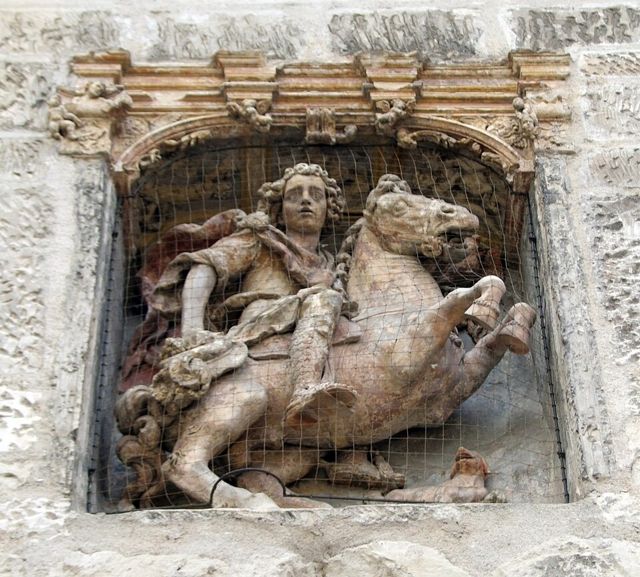
Image: Joigny - Eglise Saint-Thilbault - statue de Juan de Juni.jpg · Christophe.Finot · CC BY-SA 2.5, via Wikimedia Commons

Image: Christophe.Finot, Wikimedia Commons (CC BY-SA 2.5)

From “Catholic Encyclopedia (1913)/St. Theobald,” The Catholic Encyclopedia (New York: Robert Appleton Company, 1907–1914), via Wikisource. Public domain. Matched by name and feast date; text unedited except for our bracketed notes in grey.

Retold in plain modern English from Baring-Gould’s public-domain text, sentence by sentence, keeping the same facts and order. Short explanations in parentheses are ours.

From Sabine Baring-Gould, The Lives of the Saints, new edition in 16 vols. (London: John C. Nimmo, 1897–98); text from the Internet Archive scan (OCR, lightly cleaned; errors possible). Public domain in the United States. Reproduced unedited, except for short bracketed notes in grey that we added to explain names and terms (“S.” is the old abbreviation for Saint). Some history and judgments reflect 19th-century scholarship.