Longinus Dlugoss is not very reliable about dates; his account contains some strange mistakes in chronology.
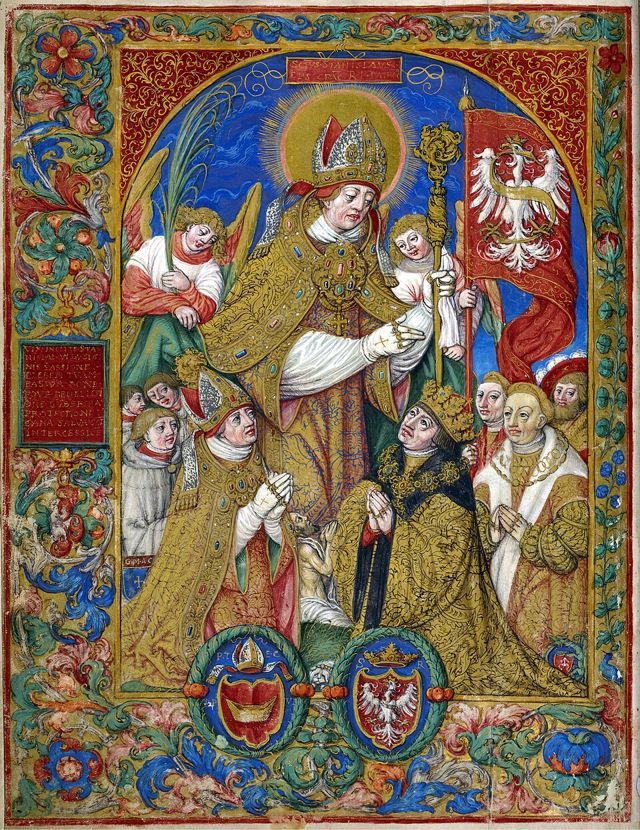
On May 7, we remember Saint Stanislaus. He was educated in Gnesen (a city in Poland) and in Paris. After the death of his parents, he decided to devote his considerable wealth to the service of the Church. He was ordained by Lambert Zula, the bishop of Cracow, who gave him a canonry in his cathedral. After Lambert's death in 1072, Stanislaus was chosen to be the bishop of Cracow. At that time, Boleslaus II was the King of Poland. This king made himself hated by his subjects because of his terrible cruelty and uncontrolled lust. No one had the courage to speak out against him. Eventually, when he abducted the beautiful wife of one of his nobles, Stanislaus boldly intervened, protesting and threatening him with excommunication.
There is a story from this period of his life that should be taken with caution, as we have no contemporary evidence to support it. The bishop had purchased some land from a man named Peter, who was now deceased, and had built a church on it. The king persuaded Peter's heirs to reclaim the land. Stanislaus did not have a receipt for the money, as the transaction had been conducted in good faith between him and the deceased, but he produced witnesses to prove that he had paid the money. However, the king decided to judge the case himself and intimidated the witnesses so much that they were afraid to tell the truth.
The king was about to rule against the bishop when Stanislaus suddenly exclaimed, “Sire! Delay your judgment for three days, and the dead man shall speak for himself.” He then went away and spent three days and nights fasting and praying. On the appointed day, he went to Peter's tomb and ordered it to be opened. When they uncovered the dead man, Stanislaus exclaimed, “Peter, arise!” while touching him with his pastoral staff. Then the dead man, looking ghastly with his decaying grave clothes flapping around him, rose and followed the bishop through the awestruck crowd to the court of justice. There, he stood in place of the witnesses, gave his testimony, and then returned to his grave, lifeless as before.
At last, the cruelty and immorality of Boleslaus exceeded all limits, and he matched the wickedness of some of the old Roman emperors. Then the bishop confronted him again, this time threatening excommunication. In a fit of rage, the king sent servants after him to kill him; however, intimidated by the holiness of the bishop, they returned without carrying out the act. Boleslaus, blinded by fury, rushed to punish the bold bishop and found him in the chapel of Saint Michael, some distance from the walls of Cracow. He attacked him with his sword, struck his head, and in his brutal rage disfigured the face of the dying man. Then his attendants mutilated the body and threw it into the field, where three eagles are said to have protected it from wild dogs until some faithful individuals found a way to secretly retrieve it and bury it.
The story of Saint Stanislaus cannot be fully trusted in all its details. Longinus Dlugoss not only makes chronological errors, but when he recounts such stories, the reader loses confidence in his judgment, if not in his common sense. In 1243, the body of Saint Stanislaus was solemnly elevated in the cathedral to a new shrine. A pious family from Hungary traveled in a coach drawn by a horse to attend the ceremony. On the way, the horse collapsed from exhaustion and died. The coachman then got down, skinned the horse, hung the skin over his stick, and carried it while walking ahead. However, the master stubbornly sat down on the bank and refused to continue. His wife urged him to trust in the merits of Saint Stanislaus and move forward. But he insisted on returning. Then she resorted to tears, and eventually he relented, with her carrying the children and him carrying the food for the party on his back. After they had traveled some distance, they heard a horse neighing behind them. The wife looked back and exclaimed, “Here is our old horse coming after us at a trot, or I am very much mistaken.” “You fool,” said the husband, “hasn’t the horse been skinned? Look! There is the driver carrying the skin on his stick.” But lo! when he looked, the skin was gone, and the coachman could not explain its disappearance. Indeed, by the merits of Saint Stanislaus, the horse had regained its skin and its life, and the family was able to harness it again to their wagon and continue their journey, singing loud praises to the saint. Upon their arrival in Cracow, they offered a wax horse at his shrine.
Gregory VII excommunicated the tyrant and all his accomplices in this sacrilegious act. He placed a ban on the kingdom and released all his subjects from their loyalty to him. Boleslaus fled to Hungary, where he died, according to some accounts, by his own hand. Saint Stanislaus was canonized by Innocent IV in 1253.
The body of the saint is contained in a silver sarcophagus, supported by silver cherubim, in the cathedral of Cracow. Some portions of his remains are also in Prague and Pilsen.
Footnotes
- Dlugoss is a historian from the 15th century.
- A canonry is a position within a cathedral.
- The story of Saint Stanislaus cannot be trusted in all its details.
- Longinus Dlugoss not only makes chronological errors, but when he tells such stories as the following, the reader loses all confidence in his judgment, if not in his common sense.
- Saint Stanislaus was canonized by Innocent IV in 1253.
Baring-Gould’s own footnotes, in modern English.
Read the original 1870s text
Baring-Gould’s sources: Roman Martyrology. But the Prague Martyrology, those of Cologne, and Lubek, Greven, Molanns and Canisius, &c., on May 8th. The reason that the feast of S. Stanislaus was transferred back to the 7th, was so as not to obscure the feast of the Apparition of S. Michael. But May 8th, the day of his martyrdom, is that on which anciently the feast was celebrated. Authorities: — A life in the Polish History of John Longinus Dlugoss, canon of Cracow (d. 1480); 1 also a life written in 1252, and another life, ancient, but of uncertain date.] S. Stanislaus was born on the 26th of July, 1030, at Szczepanow, near Bochnia, a town in Austrian Galicia, formerly part of the kingdom of Poland.
He was educated at Gnesen, and in Paris, and on the death of his parents, he resolved to devote his great wealth to the service of the Church. He was ordained by Lambert Zula, bishop of Cracow, who gave him a canonry in his cathedral. On the death of Lambert, in 1072, he was chosen to the bishopric of Cracow. At this time Boleslaus II. was King of Poland. This prince made himself abhorred by his subjects on account of his atrocious cruelty and unbridled lust. No one had courage to remonstrate against him, and at last, when he had carried off the beautiful wife of one of his nobles, Stanislaus boldly interfered, remonstrating, and threatening him with excommunication. A story is told of this period of his life, which must be received with caution, as we have nothing like contemporary evidence to substantiate it. The bishop had bought some land of a man named Peter, who was now dead, and had built on it a church. The king persuaded the heirs of Peter to reclaim the land. Stanislaus had not a receipt for the money, as the transaction had been conducted in good faith between him and the deceased, but he produced witnesses to prove that he had paid the money. The king, however, determined to judge the case, and he so browbeat the witnesses that they were afraid to speak the truth. The king was about to give judgment against the bishop, when Stanislaus suddenly exclaimed, “ Sire ! delay thy judgment three days, and the dead man shall himself speak." Then he went forth and spent three days and nights fasting and in prayer. And on the appointed day he went to the tomb of Peter, and bade it to be opened, and when they had discovered the dead man, “ Peter, arise !” exclaimed the bishop, touching him with his pastoral staff. Then the dead man, ghastly, with his mouldering grave clothes flapping about him, rose and followed the bishop between awestruck crowds to the court 1 12 Lives of the Samts. [May?.
of justice, where he stood in the place of witnesses, and gave his testimony, and then went back to his grave, and was stark as before.
At length the cruelty and profligacy of Boleslaus surpassed all bounds, and he rivalled the fiendish wickedness of some of the old Roman emperors. Then the bishop again confronted him, and this time with the threat of excommunication. The king in a paroxysm of rage sent servants after him to murder him; but overawed by the sanctity of the prelate, they returned without having accomplished the deed. Boleslaus, blind with fury, himself rushed to chastise the daring prelate, and found him in the chapel of S. Michael at some distance from the walls of Cracow; he fell upon him with his sword, cut open his head, and in his brutal rage mutilated the face of the dying man. Then his attendants hacked the body and cast it into the field, where three eagles are said to have defended it from the wild dogs till some of the faithful found means to remove it secretly and bury it.1 Pope 1 The story of S. Stanislaus cannot be trusted in all its details. Longinus i Dlugoss not only makes chronological errors, but when he tells such stories as the following, the reader loses all confidence in his judgment, if not in his common sense. In 12^4 the body of S. Stanislaus was solemnly elevated in the cathedral to a new shrine. From Hungary came a pious family in a coach drawn by a horse, to be present at the ceremony. On the way, the horse fell down exhausted, and died. Thereupon the coachman descended and flayed the horse, hung the skin over his stick, and shouldering it, marched ahead. But the master sat down stubbornly on the bank and refused to proceed. His wife implored him to trust in the merits of S. Stanislaus, and go forward. But he declared his intention to Teturn. Then she had recourse to tears, and finally he gave way, she carrying the children, and he with the food of the party on his back. After they had gone some way, they heard the neighing of a horse behind them, and the wife looking back, exclaimed, “Here is our old horse coming after us at a trot, or I am very much mistaken.” “You fool/’ said the husband, “has not the horse been flayed? Look ! there is the driver carrying the skin on his stick.” But Io ! when he looked, the skin was gone, and the coachman could not account for the loss. So it was. By the merits of S. Stanislaus the horse had recovered its skin and its life, and the worthy family were able to harness it again in their waggon, and continue their journey, singing loud praises to the saint j and on their arrival at Cracow they offered a wax horse at his shrine.
Gregory VII. excommunicated the tyrant and all his accomplices in this sacrilegious act, placed a ban upon the kingdom, and released all his subjects from their allegiance to him. Boleslaus fled into Hungary where he died, according to some, by his own hand. S. Stanislaus was canonized by Innocent IV., in 1253.
The body of the saint is contained in a silver sarcophagus, borne by silver cherubim, in the cathedral of Cracow. Some portions also at Prague and Pilsen.