St. Sixtus II., Pope

Sixtus II (also Xystus), origin unknown, was elected bishop of Rome on 31 August 257 and martyred on 6 August 258.

Read the essentials →
Feast August 7 · —

St. Sixtus II., Pope

Current feast

August 7
Verified · General Roman Calendar

Traditional feast

August 6
1914 / pre-1969 calendar, per Baring-Gould (1897)

Represents

Feast

Feast days

Feast: August 7
Traditional: August 6

This Saint’s Story

An early papal chronicle calls him a Greek, but the Catholic Encyclopedia judges that a probable mistake from confusing him with a Greek philosopher of the same name. Under Stephen a sharp quarrel with Africa and Asia Minor over rebaptising heretics had nearly broken communion. Pontius, biographer of Cyprian, styles Sixtus a good and peaceful priest. He was more conciliatory than Stephen and restored friendly relations, though he still upheld the Roman practice of not rebaptising those already baptised outside the Church. Baring-Gould preserves letters of Dionysius of Alexandria to Sixtus on related cases of conscience; Sixtus’s replies have not survived.

Shortly before this pontificate the emperor Valerian ordered Christians to join the national cult and forbade cemetery assemblies. In early August 258 a harsher edict—preserved by Cyprian—commanded that bishops, priests, and deacons be put to death at once. Sixtus was among the first victims. To escape notice he gathered his flock on 6 August in the less-known cemetery of Praetextatus on the Appian Way. Seized while addressing them, he was probably first sentenced and then led back for execution; Pope Damasus’s later inscription can be read either way. Four deacons—Januarius, Vincentius, Magnus, and Stephanus—died with him; Felicissimus and Agapitus suffered the same day. The meeting with the archdeacon Lawrence on the way to death, told in unauthentic Acts and by Ambrose and Prudentius, is probably a legend; Prudentius’s claim that Sixtus died on a cross is contrary to the evidence. Christians moved his remains to the papal crypt of Callistus; an oratory marked the place of martyrdom and was still visited by pilgrims centuries later. The Encyclopedia places the feast of Sixtus and the six deacons on 7 August; this page keeps 6 August. He is not the author of the so-called Sentences of Xystus. No patronage is clearly assigned to him in the Catholic Encyclopedia.

What he represents

How he teaches us to live

Drawn from themes in the original account

Share your faith, in words and by example. Preaching and conversion are part of this story.

Celebrate this saint’s feast day. Remember him on August 7 with a short prayer, and ask for his help.

The full story

Baring-Gould’s account retold in modern English

Read the full story · 516 words · about 2 min

Dionysius of Alexandria wrote letters to Sixtus (Pope Sixtus I) about the disputed subject, expressing a tone of moderation and a desire for peace and truth. Regarding his own practice, he mentioned that he did not baptize people who returned to the Church after having once belonged to it and having fallen into heresy. He stated that he had received this custom from his predecessor, Heracles. He also wrote to Sixtus, asking for his advice about a man who had been a member of the Alexandrian Church for over twenty years but was now experiencing great doubts because he had not been baptized according to the forms of the Catholic Church. This man was very eager to be baptized again, but Dionysius refused to do so, considering that he had held the true faith for so many years and had often participated in the Eucharist.

It should be noted that neither of these cases directly addresses the question at issue between the Churches of Rome and Carthage. That question was whether a man, who was known to have been baptized by heretics and who wished to join the Church, needed to be baptized before his admission. In the first of the two cases mentioned by Dionysius, baptism had once been genuinely and validly administered in the Church. In the second case, a man had for many years been in communion with the Church without it being known that he had been baptized by heretics. Unfortunately, the responses of Sixtus to these letters have not been preserved.

Saint Sixtus II. A persecution began in Rome in the summer of 258 after an order was received from Valerian, who was then marching against the Persians. This order stated that bishops, priests, and deacons should be punished with death. Senators, men of rank, and knights would be degraded and lose their property, and if they continued to identify as Christians, they would face capital punishment. Women would lose their property and be exiled. Any individuals connected with the imperial household who had previously confessed or would confess now that they were Christians would have their property confiscated and be sent abroad as prisoners. Such was the nature of this brutal edict, and the magistrates of Rome showed no hesitation in enforcing it. Confiscations and executions were very common, and Sixtus, along with two of his deacons, Felicissimus and Agapitus, were arrested. As the elderly pope was being taken to the Mamertine prison, his archdeacon, Laurence, called out to him, “Oh my father! Where are you going without your son? Why, oh holy priest, are you going without your deacon?” Sixtus turned to him and said, “Do not weep, my son! After three days, you shall follow me.” According to the Acts, Sixtus and his two deacons were beheaded, and Sixtus was buried in the cemetery of Saint Calixtus; however, a hymn by Prudentius states that he was crucified. The Acts are likely correct, although we do not have them in their original form, and they are not entirely reliable. Felicissimus and Agapitus were buried in the cemetery of Prastextatus.

Footnotes

  1. Sixtus: Pope Sixtus I, an early pope in the Christian Church.
  2. Heracles: A predecessor of Dionysius, likely a bishop of Alexandria.
  3. Sixtus and his two deacons were arrested.
  4. The Acts are most probably right, though we have not got them in anything like their original condition, and they are not altogether trustworthy.

Baring-Gould’s own footnotes, in modern English.

Read the original 1870s text

Baring-Gould’s sources: Roman, Carthaginian, and all Latin Martyrologies. By the Greeks on Aug. 10. Authorities: — The letters of Dionysius of Alexandria, Eusebius, Prudentius, and the Acts of his Martyrdom, which are not, however, genuine; they represent Valerian as in Rome when he was engaged in the Persian war, and Decius as being emperor, whereas he died six years before.] Sixtus, or, more properly, Xystus, an Athenian, succeeded Pope Stephen on the throne of S. Peter, in the midst of the controversy on heretical baptisms. The first part of the pontificate of Sixtus seems to have been tranquil; and Pontius, the biographer of S. Cyprian, speaks of him as a good and pacific prelate; expressions which were perhaps used in allusion to the unconciliating conduct of his predecessor Stephen, who had excommunicated S. Cyprian for affirming that the baptisms of heretics were invalid.

Dionysius of Alexandria wrote letters to S. Sixtus on the disputed subject, marked by a tone of moderation, and a desire for peace and the truth. With respect to his own practice, he mentioned that he did not baptize persons who returned to the Church, after having once belonged to it, and having fallen into heresy; and he stated that he had received this custom from his predecessor Heracles. He also wrote to Sixtus, asking for his advice in the case of a man who had been a member of the Alexandrian Church for above twenty years, but who was now suffering great scruples because he had not been baptized according to the forms of the Catholic Church. He was very desirous to be baptized over again, but Dionysius declined doing it, in consideration of his having held the true faith for so many years, and having so often partaken of the Eucharist. It will be observed that neither of these cases bears directly upon the question at issue between the Churches of Rome and Carthage. That question was whether a man, who was known to have been baptized by heretics, and who wished to come over to the Church, was to be baptized before his admission; but in the first of the two cases mentioned by Dionysius, baptism had once been really and validly administered in the Church; and in the second case, a man had for many years held communion with the Church without it having been known that he had been baptized by heretics. The answers of S. Sixtus to these letters have, unfortunately, not been preserved.

S. Sixtus II. Persecution broke out in Rome in the summer of 258, on the receipt of an order from Valerian [Roman emperor 253–260, who persecuted bishops and clergy], then marching against the Persians. The terms of this order were, that the bishops, priests, and deacons should be punished with death; but that senators, and men of rank, and knights should be degraded and lose their property, and if they still persisted in being Christians they were to suffer capitally. Women were to lose their property, and be sent into banishment. If any persons connected with the imperial household had confessed before, or should confess now, that they were Christians, they were to have their property confiscated, and to be sent abroad as prisoners.1 Such was the purport of this sanguinary edict, and the magistrates of Rome showed no reluctance to execute it. Confiscations and death were very frequent; and Sixtus, with two of his deacons, Felicissimus and Agapitus, were arrested. As the aged pontiff was being led to the Mamertine prison, his archdeacon, Laurence, cried to him, “ 0 my father ! whither goest thou without thy son? Why, O holy priest, goest thou, without thy deacon?” Sixtus turned to him and said “ Weep not, my son ! after three days shalt thou follow me.” According to the Acts, Sixtus and his two deacons were decapitated, and Sixtus buried in the cemetery of S. Calixtus; but according to a hymn of Prudentius, he was crucified. The Acts are most probably right, though we have not got them in anything like their original condition, and they are not altogether trustworthy. Felicissimus and Agapitus were laid in the cemetery of Praetextatus.

From the Catholic Encyclopedia

1913 · 1018 words

Elected 31 Aug., 257, martyred at Rome, 6 Aug., 258. His origin is unknown. The "Liber Pontificalis" says that he was a Greek by birth, but this is probably a mistake, originating from the false assumption that he was identical with a Greek philosopher of the same name, who was the author of the so-called "Sentences" of Xystus. During the pontificate of his predecessor, St. Stephen, a sharp dispute had arisen between Rome and the African and Asiatic Churches, concerning the rebaptism of heretics, which had threatened to end in a complete rupture between Rome and the Churches of Africa and Asia Minor (see SAINT CYPRIAN OF CARTHAGE). Sixtus II, whom Pontius (Vita Cyprian, cap. xiv) styles a good and peaceful priest (bonus et pacificus sacerdos), was more conciliatory than St. Stephen and restored friendly relations with these Churches, though, like his predecessor, he upheld the Roman usage of not rebaptizing heretics.

Shortly before the pontificate of Sixtus II the Emperor Valerian [Roman emperor 253–260, who persecuted bishops and clergy] issued his first edict of persecution, which made it binding upon the Christians to participate in the national cult of the pagan gods and forbade them to assemble in the cemeteries, threatening with exile or death whomsoever was found to disobey the order. In some way or other, Sixtus II managed to perform his functions as chief pastor of the Christians without being molested by those who were charged with the execution of the imperial edict. But during the first days of August, 258, the emperor issued a new and far more cruel edict against the Christians, the import of which has been preserved in a letter of St. Cyprian to Successus, the Bishop of Abbir Germaniciana (Ep. lxxx). It ordered bishops, priests, and deacons to be summarily put to death ("episcopi et presbyteri et diacones incontinenti animadvertantur"). Sixtus II was one of the first to fall a victim to this imperial enactment ("Xistum in cimiterio animadversum sciatis VIII. id. Augusti et cum eo diacones quattuor"-Cyprian, Ep. lxxx). In order to escape the vigilance of the imperial officers he assembled his flock on 6 August at one of the less-known cemeteries, that of Prætextatus, on the left side of the Appian Way, nearly opposite the cemetery of St. Callistus. While seated on his chair in the act of addressing his flock he was suddenly apprehended by a band of soldiers. There is some doubt whether he was beheaded forthwith, or was first brought before a tribunal to receive his sentence and then led back to the cemetery for execution. The latter opinion seems to be the more probable.

The inscription which Pope Damasus (366-84) placed on his tomb in the cemetery of St. Callistus may be interpreted in either sense. The entire inscription is to be found in the works of St. Damasus (P.L., XIII, 383-4, where it is wrongly supposed to be an epitaph for Pope Stephen I), and a few fragments of it were discovered at the tomb itself by de Rossi (Inscr. Christ., II, 108). The "Liber Pontificalis" mentions that he was led away to offer sacrifice to the gods ("ductus ut sacrificaret demoniis"-I, 155). St. Cyprian states in the above-named letter, which was written at the latest one month after the martyrdom of Sixtus, that "the prefects of the City were daily urging the persecution in order that, if any were brought before them, they might be punished and their property confiscated". The pathetic meeting between St. Sixtus II and St. Lawrence, as the former was being led to execution, of which mention is made in the unauthentic "Acts of St. Lawrence" as well as by St. Ambrose (Officiorum, lib. I, c. xli, and lib. II, c. xxviii) and the poet Prudentius (Peristephanon, II), is probably a mere legend. Entirely contrary to truth is the statement of Prudentius (ibid., lines 23-26) that Sixtus II suffered martyrdom on the cross, unless by an unnatural trope the poet uses the specific word cross (" Jam Xystus adfixus cruci") for martyrdom in general, as Duchesne and Allard (see below) suggest. Four deacons, Januarius, Vincentius, Magnus, and Stephanus, were apprehended with Sixtus and beheaded with him at the same cemetery. Two other deacons, Felicissimus and Agapitus, suffered martyrdom on the same day. The feast of St. Sixtus II and these six deacons is celebrated in the Roman Rite on 7 August, the day after their martyrdom. The remains of Sixtus were transferred by the Christians to the papal crypt in the neighbouring cemetery of St. Callistus. Behind his tomb was enshrined the bloodstained chair on which he had been beheaded. An oratory (Oratorium Xysti) was erected above the cemetery of St. Prætextatus, at the spot where he was martyred, and was still visited by pilgrims of the seventh and the eighth century.

Read the rest of the article

For some time Sixtus II was believed to be the author of the so-called "Sentences", or "Ring of Sixtus", originally written by a Pythagorean philosopher and in the second century revised by a Christian. This error arose because in his introduction to a Latin translation [the solemn moving of a saint’s relics to a new shrine] of these "Sentences". Rufinus ascribes them to Sixtus of Rome, bishop and martyr. It is certain that Pope Sixtus II is not their author (see Conybeare, "The Ring of Pope Xystus now first rendered into English, with an historical and critical commentary", London, 1910). Harnack (Texte und Untersuchungen zur altchrist. Literatur, XIII, XX) ascribes to him the treatise "Ad Novatianum", but his opinion has been generally rejected (see Rombold in "Theol. Quartalschrift", LXXII, Tübingen, 1900). Some of his letters are printed in P.L., V, 79-100. A newly discovered letter was published by Conybeare in "English Hist. Review", London, 1910.

Acta SS., Aug., II, 124-42; DUCHESNE, Liber Pontificalis, I, 155-6; BARMBY in Dict. Christ. Biog., s. v. Xystus; ROHAULT DE FLEURY, Les Saints de la messe, III (Paris, 1893): HEALY, The Valerian Persecution (Boston and New York, 1905); 176-9; ALLARD, Les dernières persécutions du troisième siècle (Paris, 1907), 80-92, 343-349; DE ROSSI, Roma Sotteranea, II (Rome; 1864-77), 87-97; WILPERT, Die Papstgräber und die Cäciliengruft in der Katakombe des hl. Callistus, supplement to De Rossi's Roma Sotteranea (Freiburg im Br., 1909).
More about St. Sixtus II., Pope

Checked against at least two sources, in our own words

Help us add to this saint's story

Everything is read by a person before anything appears. Facts are checked against trusted sources first.

Facts are welcome; a source link helps (optional).With your permission we may share it on this page.

Nine days · Free

Pray the novena
with us.

One short email a day for nine days. The day's prayer, a line from St. Sixtus II.'s story, and a nudge to keep going.

Also on August 6
H

St. Hormisdas

August 6 · Feast
S

Bl. Schetzelo

August 6 · Hermit
← All 1970 saints in the library
Sources & notes

Feast-day sources

Story sources

Sources

Credits

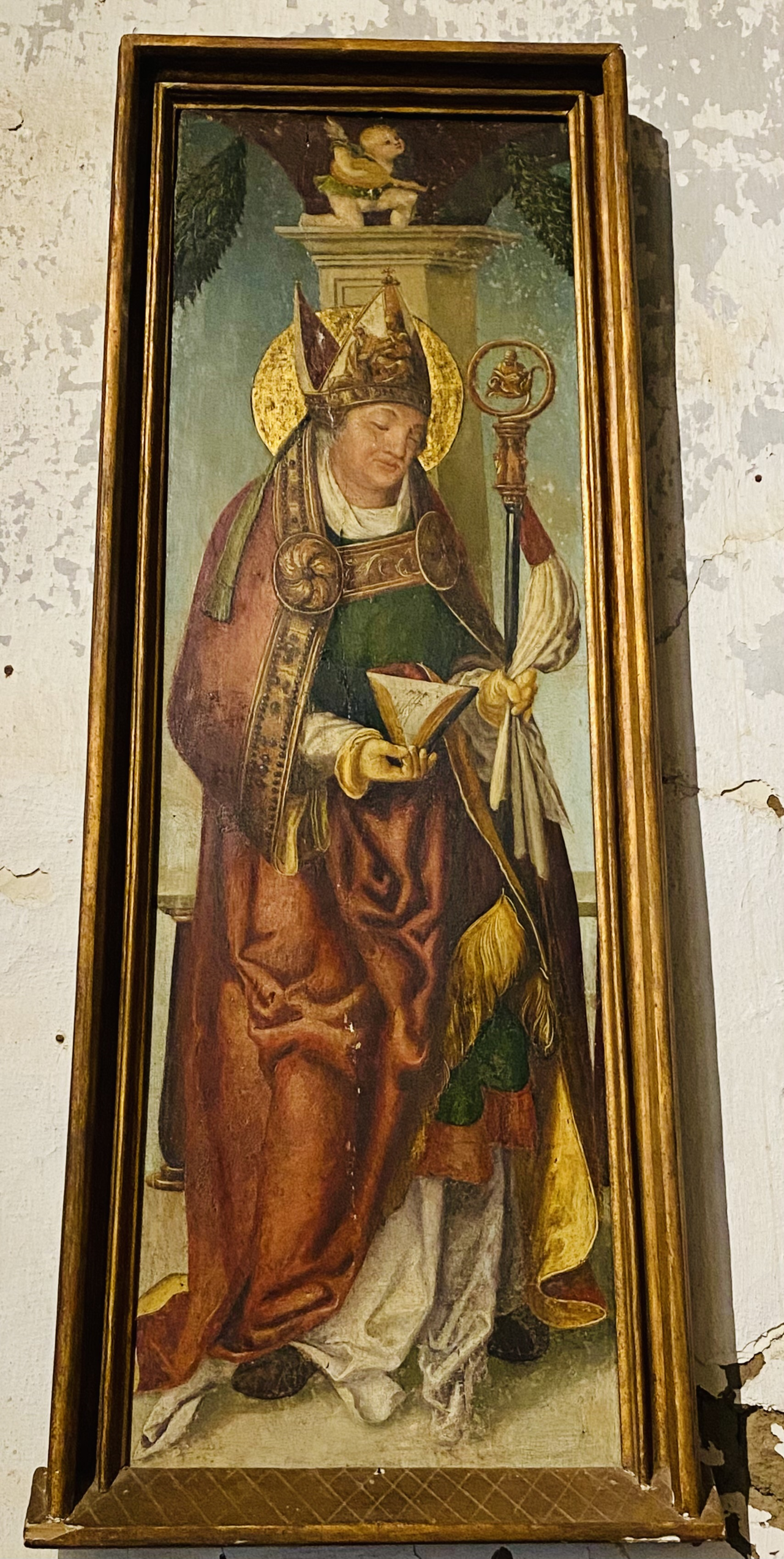
Image: Pope St. Sixtus II -Mission San Miguel.png · Polylerus · CC0, via Wikimedia Commons

Image: Polylerus, Wikimedia Commons (CC0)

From “Catholic Encyclopedia (1913)/Pope St. Sixtus II,” The Catholic Encyclopedia (New York: Robert Appleton Company, 1907–1914), via Wikisource. Public domain. Matched by name and feast date; text unedited except for our bracketed notes in grey.

Retold in plain modern English from Baring-Gould’s public-domain text, sentence by sentence, keeping the same facts and order. Short explanations in parentheses are ours.

From Sabine Baring-Gould, The Lives of the Saints, new edition in 16 vols. (London: John C. Nimmo, 1897–98); text from the Internet Archive scan (OCR, lightly cleaned; errors possible). Public domain in the United States. Reproduced unedited, except for short bracketed notes in grey that we added to explain names and terms (“S.” is the old abbreviation for Saint). Some history and judgments reflect 19th-century scholarship.

Notes

Story retold in our own words from the cited sources.