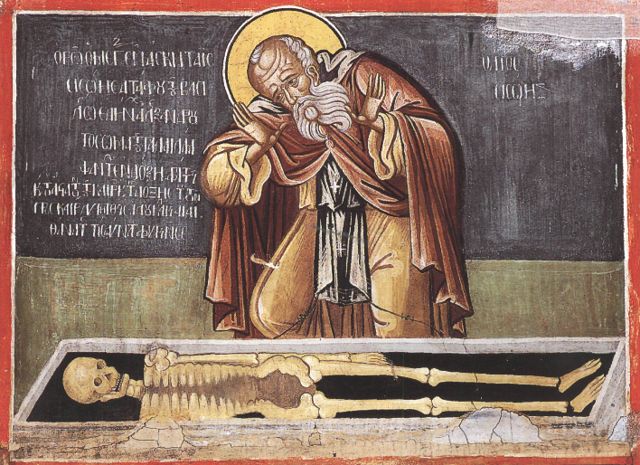
Now the three men were leaving, feeling dissatisfied because they thought he had not given them a good answer. Then he noticed their unhappiness and called out to them, "Alas! My brothers, I would have been a better man if I had thought like you." This showed his humility and great gentleness, which would not allow him to let these men leave feeling embarrassed.
A hermit came to him repeatedly, confessing that he had fallen back into sin. Each time, Sisoes told him to get up and move forward without losing hope. Finally, the man asked, "My father! Is there no end to this? How many times must I be told to rise after a fall?" Sisoes replied, "Always, until death finds you either fallen or struggling to rise." Some brothers asked him if a monk who had sinned should not be punished with penance for a whole year. "Oh! My sons, that is a very long time," he said. "Well, father, then for six months." "That also seems very long to me." "Well, then, for forty days." "Forty days! That is too long." "What, father, would you have a monk who has sinned receive Holy Communion right after he has fallen?"
"I do not say that," Sisoes answered gently; "but I believe God is so loving and merciful that one sincere pang of conscience may be enough for Him, without a longer absence from the Sacred Mysteries than—let's say three days."
A hermit asked him if he could scold a guide who led him astray. "I do not think it would do much good," Sisoes replied. "I know of twelve brothers who had a guide. The guide lost his way, and they walked all night in the desert. Only when morning came did the guide realize he had led them wrong. He apologized with shame. But they said, 'We noticed you were going the wrong way long ago, but we did not speak up to reproach you.' I believe this was more helpful than scolding."
"For thirty years," Sisoes said, "I have been asking my Lord Jesus Christ to give me the power to control my tongue, yet every day my tongue trips me up." Eventually, weakened by old age, he moved to Clysma, near the Red Sea. There, he was visited by some people seeking advice. As they were leaving, someone quietly mentioned, "That old man rarely eats." "I eat whenever necessary," the abbot replied.
He found no peace in a town, and despite being very old, he returned to his beloved desert. When he was dying, the brothers heard him murmur, "The abbot Anthony is coming to me." And soon after, he said, "I see the choir of angels."
the prophets.” And then, “The apostles come to me.” After that, he murmured, “Look! the angels come to bear my soul away!” Suddenly, a thrill ran through his aged body, his face lit up with joy, and stretching forth his trembling arms, he cried, “My Lord, my Lord, comes to me!” Then he sank back on his pallet and died. He died around the year 420, at the age of about eighty-eight. He should not be confused with Sisoes the Theban, who lived at Celamon in Arsinoe, or with another Sisoes, who inhabited a cell at Petra; both were his contemporaries.
It is said of the former that when a brother told him of his intention to take revenge for a wrong done to him, Sisoes urged him to leave vengeance to God. “I will not, I cannot,” said the man. Then Sisoes knelt down, and the brother knelt with him, and Sisoes prayed, saying, “O God, we pray Thee, take no more concern about our affairs; be no longer our protector; we are going to manage for ourselves from now on; avenge ourselves and do all the rest that You have done for us until now!” Then the man felt ashamed of himself and abandoned his plan.
Footnotes
- The abbot Anthony refers to Saint Anthony the Great, an early Christian monk.
Baring-Gould’s own footnotes, in modern English.
Read the original 1870s text
Baring-Gould’s sources: Greek Menasa and Menology of the Emperor Basil Not in any Western Martyrologies. The Acta Sanctorum on this day, and Alban Butler on July 4th. Authority An account of him in the Laves of the Fathers of the Desert. ] Sisoes the Great renounced the world when quite a youth, and retired into the monastery of Scete, in Lower Egypt, west of the Delta, and near Mount Nitria. But after some years he departed to the mountain of S. Anthony on the further side of the Nile. There is little of incident to relate in his life. In a lawless and self-seeking age, his dove-like gentleness impressed itself on men’s minds and set them wondering Three solitaries came to visit him one day. The first said, 44 My father, I think of the fires of hell, and they fill me with horror. How shall I escape them ? ” The old abbot answered not a word. Then the second said, 44 My father, I think of the gnashing of teeth and the never-dying worm, and am haunted by that thought. What shall I do ? ” But he answered not. Then said the third, 44 And I, O my father, have ever before me the awful outer darkness, and the unspeakable horror thereof oppresses me.” After a pause Sisoes lifted his face up and said, 44 I have never given them a thought. I think how good my God is, and I know He will have pity on me.”
Now the three were retiring discontented, thinking he had not given them much of an answer. Then he saw their dissatisfaction, and he cried after them, 44 Alas ! my brethren, I should have been a better man, had I thought like you.” And so he shewed his humility, and his great gentleness, which would not suffer him to let these men go away abashed.
A solitary came to him time after time, confessing that he had relapsed; and always Sisoes bade him rise and go forward undiscouraged. At last the man said, 44 My father ! is there to be no end to this ? How often am I to be bidden rise after a fall ? ” 44 Ever, till death catches you fallen or struggling to rise.” Some brethren asked him if a monk who had fallen into sin ought not to be put to penance for a whole year. 44 Oh ! my sons, that is a very long time.” 44 Well father, then for six months.”
14 And that also seems to me to be very long.” “ Well, then, for forty days.” “ Forty days ! that is too long.” “What, father, would you have a monk who has fallen into sin received to Holy Communion directly after he has fallen ?”
“I say not that,” answered Sisoes gently; “but I think God is so loving and merciful that one bitter pang of conscience may avail with Him, without longer privation from the Sacred Mysteries than — say three days.”
A solitary asked him whether if a guide led him wrong he was at liberty to scold him. “ I do not think it would do much good,” answered Sisoes. “ I know the case of twelve brethren who had a guide; and the guide missed his way, and they walked all night in the desert, and only when morning broke did the guide discover he had led them all wrong. Then he excused himself with shame. But they said, 4 We noticed you were going wrong long ago, but we did not speak and reproach you.* And I think this did more good than a scolding.”
44 For thirty years,” said Sisoes, 44 have I been asking my Lord Jesus Christ to give me power to control my tongue, yet every day that tongue of mine is tripping.” After a while, broken by old age, he moved to Clysma, near the Red Sea. There was he visited by some folk, who desired advice. As they were going away, some one said to them in a low voice, 44 That old man rarely eats.” 44 1 eat whenever necessary,” answered the abbot.
He found no rest in a town, and, though very old, went back to his beloved desert. When he was dying, the brethren heard him murmur, “ The abbot Anthony is coming to me.” And presently, 44 1 see the choir of Jttly 6.3 *£. Palladium.
the prophets.” And then, 44 The apostles come to me.” After that he murmured, u Lo ! the angels come to bear my soul away!” And then, suddenly, a thrill ran through his aged body, his face lit up with joy; and stretching forth his trembling arms, he cried, 44 My Lord, my Lord, comes to me ! ” and he sank back on his pallet dead. He died about the year 420, at the age of about eighty-eight. He is not to be confounded with Sisoes the Theban, who lived at Celamon in Arsinoe, or with Sisoes, who inhabited a cell at Petra, both his contemporaries.
It is related of the former that a brother having told — him of his intention to revenge a wrong done him, Sisoes urged him to leave vengeance to God. 41 1 will not, I cannot,” said the man. Then Sisoes knelt down, and the brother with him, and Sisoes prayed, saying, 44 O God take, we pray Thee, no more concern about our affairs; be no longer our protector; we are going henceforth to manage for ourselves; avenge ourselves and do all the rest that hitherto Thou hast done for us ! ” Then the man was ashamed of himself, and abandoned his purpose.