This Saint’s Story
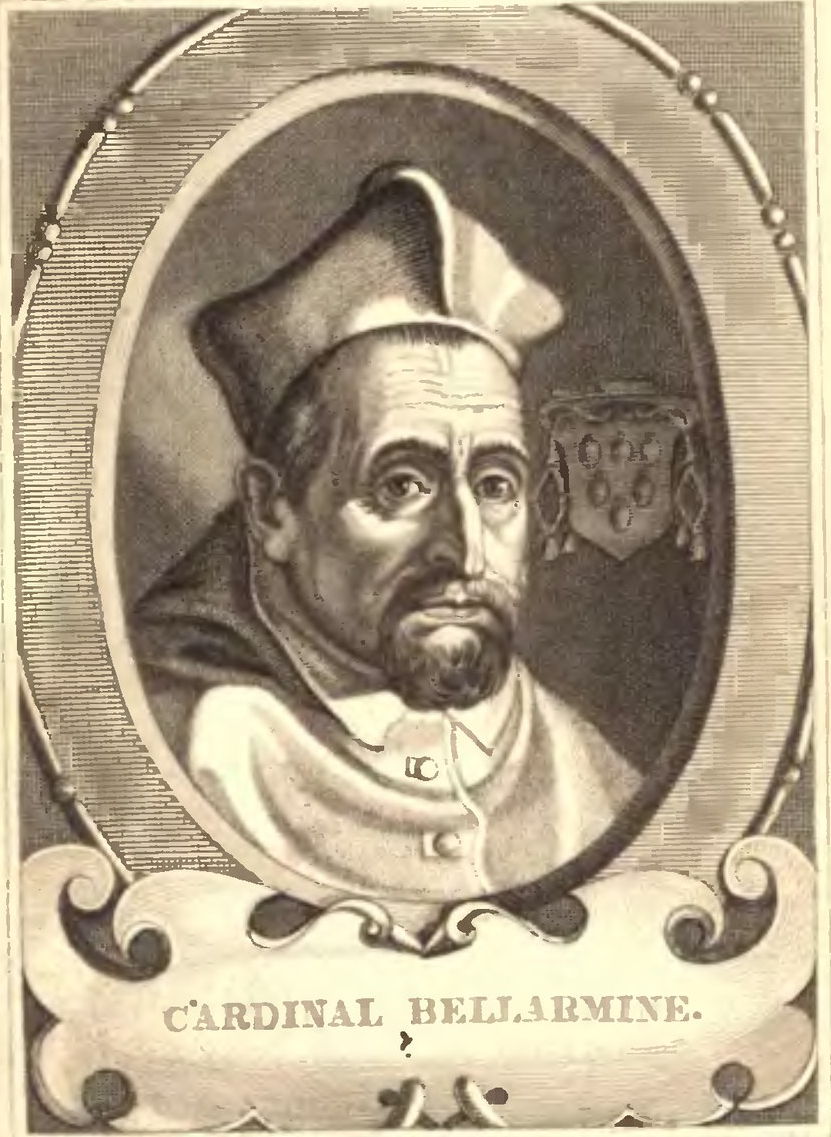
His mother, Cinzia Cervini, was related to Pope Marcellus II. From a young age, he displayed a talent for poetry and literature, mastering works by Virgil. In 1560, he joined the Society of Jesus, beginning his religious journey and studies in Rome before moving to Mondovì to learn Greek.
His theological education continued at the University of Padua and later at Leuven, where he was ordained in 1570. Bellarmine quickly gained recognition as a professor and preacher, particularly noted for his lectures on the Summa Theologica of Thomas Aquinas. His significant work, 'De Controversiis,' aimed to address the theological disputes of the time, particularly against Protestant reformers, and established him as a leading figure in Catholic theology.
In 1599, Bellarmine was appointed a cardinal by Pope Clement VIII, who praised his unparalleled learning. He served in various capacities, including as a theologian to the Pope and as a Cardinal Inquisitor, where he was involved in notable cases such as that of Giordano Bruno. His role in the Galileo affair was also significant; he admonished Galileo on behalf of the Holy Office regarding the heliocentric theory, emphasizing the need for caution in presenting unproven theories.
Bellarmine became Archbishop of Capua in 1602, where he implemented the reform decrees from the Council of Trent (1545–1563, the Catholic Church's council answering the Protestant Reformation). His dedication to pastoral care and theological education was evident throughout his life. He was known for his austere lifestyle, often using his resources to help the poor, demonstrating his commitment to the Church and its teachings.
He passed away on September 17, 1621, at the age of 78. His remains were interred in a church dedicated to St. Ignatius in Rome. His canonization process began in 1627 but faced delays due to political reasons. Ultimately, he was canonized (officially declared a saint by the pope) by Pope Pius XI on June 29, 1930, and declared a Doctor of the Church (a title the pope gives to a saint whose teaching is of special value to the whole Church) the following year, recognizing his profound impact on Catholic theology.