Peter Nolasco came from one of the prominent families of Languedoc. He was born in 1189 in the village of Mas des Saintes Pucelles. His devout parents worked hard to provide him with a good education and to nurture the seeds of virtue that appeared early in his life. They were pleased to see his compassion for the poor and his love of prayer. As a child, he would give away his pocket money as alms, and he regularly attended the early morning prayer service sung shortly after midnight.
When he was 15, he lost his father, who left him a large estate. However, he stayed with his mother, a devout woman, who worked to strengthen and nurture the virtues that grew in him daily. When he was urged to marry, he hesitated for a while, but one night he got up and knelt before his crucifix in prayer, remaining there until dawn, seeking God's guidance. After feeling a clear call, he decided to dedicate his inheritance to the honor and glory of God and to embrace celibacy.
He joined Simon de Montfort in the crusade against the Albigenses, a heretical, or rather heathen sect, that believed in two Gods, one good and the other evil. This group had devastated Navarre, burning churches and killing priests and monks. The crusade was marked by too much worldly ambition and lacked the compassionate love that should seek to win through gentleness rather than force through violence. However, the brutal massacres that occurred were not the responsibility of the crusaders but rather of a mixed group of camp-followers who followed no leaders but those they chose, as contemporary accounts of the war indicate. Nonetheless, Peter Nolasco was not accountable for the atrocities that marred this terrible conflict.
In the battle of Muset, the King of Aragon, who led the Albigenses, was killed, and his six-year-old son was captured by Simon de Montfort. Montfort appointed Peter Nolasco, who was then 25, to be the boy's tutor and sent them both to Spain. At the court of the King of Barcelona, where the Kings of Aragon lived, Peter led a reclusive life. At that time, the Moors controlled a significant part of Spain, and many Christians suffered under their oppressive rule, enduring miserable slavery both in Spain and in Africa. Whenever Peter saw a Christian slave, he felt deep sorrow and resolved to dedicate his life to the redemption of captives. He sought to establish a religious order to ensure a steady supply of men and resources to support this charitable mission. This plan faced many challenges in its execution, but the Blessed Virgin, Saint Raymund of Pennaforte, and Saint Peter Nolasco all appeared in visions to the king on the same night, encouraging the continuation of this charitable endeavor.
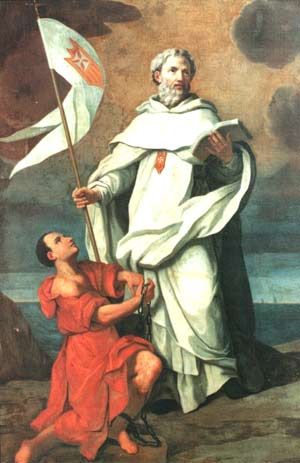
In the year 1223, Saint Peter took his vows before the Bishop of Barcelona, and he became the first general of the new order, which was called "the Order of Our Lady of Mercy for the redemption of captives." It was confirmed by Pope Gregory IX in 1225. The habit is white, with a white scapular, and the arms of Aragon were worn on the chest, at the request of the king.
After his religious profession, Saint Peter gave up all his business at court, and no pleas from the king could persuade him to return there, except once, when he was called to reconcile two powerful nobles whose conflict had sparked a civil war.
He made several journeys along the coasts and to Algiers to buy captives; during one of these missions, he was imprisoned for his faith. He died on Christmas Day, 1286. Almost his last words were those of the Psalmist, which summed up the efforts of his life: "The Lord hath sent redemption unto His people; He hath commanded His covenant for ever."
Footnotes
- Saint Raymund of Pennaforte was a Spanish Dominican priest and canon lawyer.
- Saint Peter took his vows before the Bishop of Barcelona.
- The Order of Our Lady of Mercy was confirmed by Pope Gregory IX in 1225.
- The arms of Aragon were worn on the breast at the desire of the king.
- Saint Peter underwent imprisonment for the faith during one of his expeditions.
- He died on Christmas Day, 1286.
Baring-Gould’s own footnotes, in modern English.
Read the original 1870s text
Baring-Gould’s sources: Roman Martyrology. Authority: life by Franciscus Zumel.
Peter Nolasco sprang from one of the first families of Languedoc. He was born in the year 1189, in the village of Mas des Saintes Pucelles. His pious parents took pains to give him a good education, and to cultivate the germs of virtue which appeared early in his soul. They saw with gladness his compassion for the poor, and his love of prayer. The child was wont to distribute his pocket-money in alms, and he went regularly to the matin office sung shortly after midnight. When he was aged 15, he lost his father, who left him heir to a large estate, but he remained with his mother, a pious woman, who laboured to strengthen and confirm in him those graces which grew and expanded daily. Being solicited to marry, he remained some little while in hesitation, but at last, rising one night he cast himself before his crucifix in prayer, and remained till day broke in the east, imploring God's guidance, and then feeling a clear call, he resolved to devote his patrimony to the honour and glory of God, and himself to celibacy. He followed Simon de Montfort, in the crusade against the Albigenses, an heretical, or rather heathen sect, holding two Gods, one good, the other evil, and who had devastated Navarre, burning churches and massacring priests and monks. The crusade was conducted with too much of worldly ambition, and without that compassionate love which should seek to win by gentleness rather than force by the sword. But the cruel massacres which took place were not the work of the crusaders, but of a mixed multitude of camp-followers, who obeyed no officers but such as they chose to appoint, as appears from the contemporary accounts of that war. However, Peter Nolasco was in no way responsible for the barbarities which sullied this terrible war. In the battle of Muset, the King of Aragon, who headed the Albigenses, was killed, and his son, aged six, fell into the hands of Simon de Montfort, who appointed Peter Nolasco, then aged twenty-five, to be his tutor, and sent both together into Spain. In the court of the King of Barcelona, where the Kings of Aragon resided, Peter led the life of a recluse. The Moors [the Muslims of North Africa and Spain] at that time were possessed of a considerable portion of Spain, and great numbers of Christians groaned under their tyranny in miserable slavery both there and in Africa. Whenever Peter saw a Christian slave, he was moved with sorrow; and he resolved to devote his life to the redemption of captives. He endeavoured to found a religious order for a constant supply of men and means whereby to carry on so charitable an undertaking. This design met with great obstacles in the execution; but the Blessed Virgin appearing to the king, S. Raymund of Pennaforte, and S. Peter Nolasco, the same night, in visions, encouraged the prosecution of this charitable scheme.
In the year 1223 S. Peter took the vows before the Bishop of Barcelona, and he became first general of the new order, which was entitled "the Order of Our Lady of Mercy for the redemption of captives." It was confirmed by Pope Gregory IX. in 1225. The habit is white, with a white scapular, and the arms of Aragon were worn on the breast, by desire of the king.
S. Peter, after his religious profession, renounced all his business at court, and no entreaties of the king could prevail on him to appear there again, except once, when called to reconcile two powerful nobles, who by their dissension had kindled a civil war.
He made several journeys along the coasts, and to Algiers to purchase captives; on one of these expeditions he underwent imprisonment for the faith. He died on Christmas day, 1286. Almost his last words were those of the Psalmist, which summed up the efforts of his life, "The Lord hath sent redemption unto His people; He hath commanded His covenant for ever."