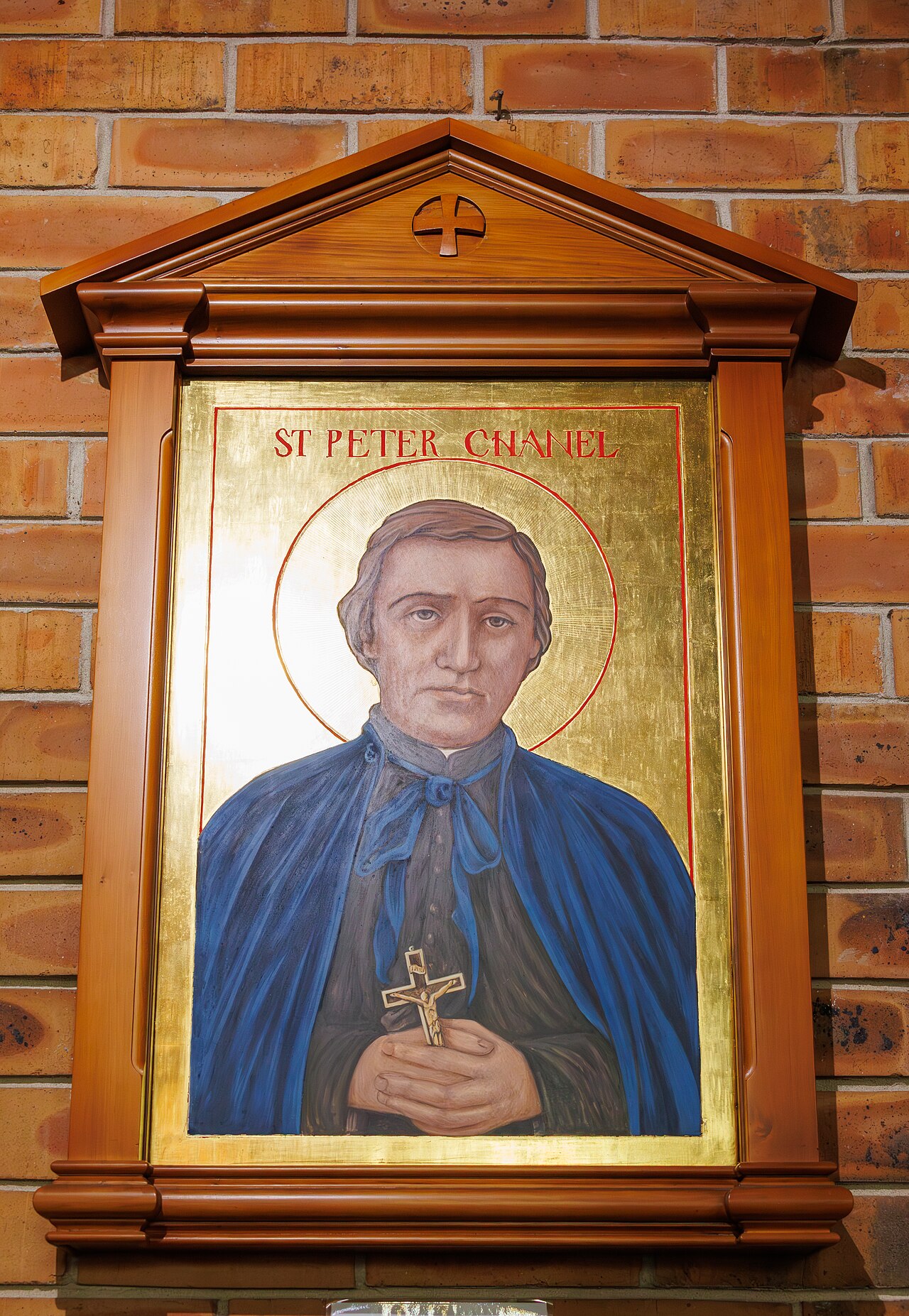
This Saint’s Story
His early life was spent working as a shepherd, but his intelligence and piety caught the attention of a local priest who encouraged him to pursue education. After attending a small school, he was further educated by Abbé Trompier. His interest in missionary work was sparked by reading letters from missionaries in America, leading him to decide to dedicate his life to the missions.
Chanel was ordained a priest on July 15, 1827, and initially served as an assistant priest and later as a parish priest. However, his desire to serve as a missionary remained strong. In 1831, he became a member of the Society of Mary, a newly founded religious order focused on missionary work. After several years of preparation, he set sail for Oceania, arriving at the island of Futuna in November 1837, where he was the first Christian missionary.
Upon his arrival, Chanel was welcomed by the local king, Niuliki, but faced many challenges as he worked to learn the language and adapt to the local culture. Despite the hardships, he was known for his kindness and dedication, caring for the sick and baptizing converts. His efforts began to yield results, and some locals started to embrace Christianity, which alarmed the king, who feared losing his authority.
The situation escalated when Niuliki's son, Meitala, sought baptism. In retaliation, the king ordered Chanel's assassination. On April 28, 1841, Chanel was brutally killed by a group of warriors, becoming the first martyr of Oceania. His death did not extinguish the faith he had worked to spread; rather, it inspired further missionary efforts, and many islanders eventually converted to Christianity.
Chanel was declared Venerable in 1857 and beatified (declared 'Blessed', the step before sainthood) by Pope Leo XIII on November 17, 1889. He was canonized (officially declared a saint by the pope) by Pope Pius XII on June 12, 1954. His feast day is celebrated on April 28, and he is recognized as the patron saint of Oceania.
