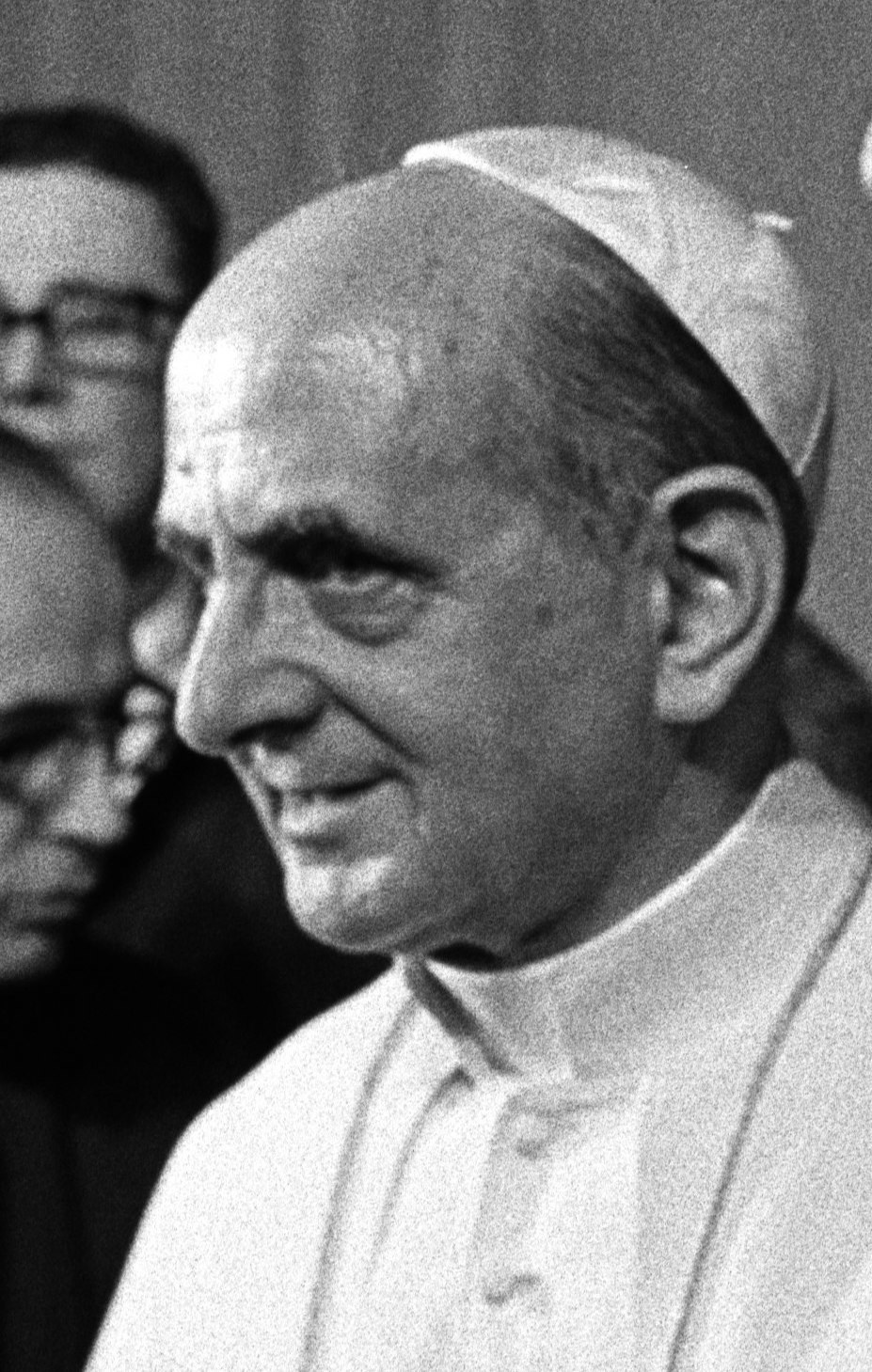
This Saint’s Story
He died on 6 August 1978 at Castel Gandolfo. He was pope from 21 June 1963 until that day. From 1922 to 1954 he worked in the Secretariat of State and was one of the closest aides of Pius XII. In 1954 Pius named him archbishop of Milan. John XXIII made him a cardinal in 1958. The conclave of 1963 elected him, and he took the name Paul.
He resumed the Second Vatican Council (1962–1965, the council that reformed the liturgy and opened the Church to the modern world) and closed it in 1965. The years after the Council were spent putting its decisions into parish life, worship, and the Church's relations with other Christians. He met Orthodox and Protestant leaders. He wrote encyclicals that parishes still cite, among them Ecclesiam Suam on dialogue, Populorum Progressio on the development of peoples, and Humanae Vitae on marriage and contraception. Humanae Vitae was disputed among Catholics. He also traveled, the first pope in modern times to leave Italy for long journeys, including a visit to the Holy Land and a meeting with the Orthodox patriarch Athenagoras.
Pope Francis canonized (officially declared a saint by the pope) him on 14 October 2018. The General Roman Calendar keeps his optional memorial on 29 May. He died on 6 August 1978.
For today: Paul closed the Council in 1965 and spent the rest of his pontificate putting its decisions into practice. If you have already agreed to a change, begin one part of it this week. The Church keeps his memorial on 29 May; he died on 6 August.
