St. Odilo of Cluny

Odilo, fifth Abbot of Cluny (the great Burgundian abbey, head of a vast network of monasteries), was born about 962 of the Mercœur family, among the noblest in Auvergne, and died on 31 December 1048.

Read the essentials →
Feast May 11 · Abbot

St. Odilo of Cluny

Current feast

May 11 (also listed: January 19, February 6)
Secondary source · Wikipedia infobox

Traditional feast

January 1
1914 / pre-1969 calendar, per Baring-Gould (1914)

Represents

Abbot

Feast days

Feast: May 11
Traditional: January 1

This Saint’s Story

His disciple and biographer Jotsald tells, as Odilo himself used to relate it, that as a little boy he could barely use his limbs, until one day, left at the door of a church of the Mother of God, he crawled to the altar, caught hold of the altar cloth and stood up healed. Tradition has kept this as the first sign of his life.

He became a cleric at St. Julien in Brioude, entered Cluny in 991, and before finishing his novitiate was made coadjutor to Abbot Mayeul, whom he succeeded shortly before Mayeul's death in 994. The Catholic Encyclopedia credits the house's rapid growth chiefly to his gentleness, charity, energy and gift for organization. He was a man of prayer and penance, devoted to the Divine Office, encouraged learning, and spread the reform; under him Cluny's houses grew from thirty-seven to sixty-five. Fulbert of Chartres called him the "Archangel of the Monks".

Odilo went nine times to Italy, took part in synods there, and twice declined the Archbishopric of Lyons, offered by John XIX and Benedict IX. He had influence with Otto III and Henry II and was present at Henry III's coronation in Rome in 1046. From 1041 he worked for the Truce of God, and during the great famines, especially 1028–33, his charity saved thousands from death. He established the commemoration of All Souls on 2 November in Cluny and its houses, and it was soon adopted by the whole Church. He wrote a life of the Empress St. Adelaide, a short life of Mayeul, sermons, hymns and letters.

He died on a visitation at Souvigny, where he was buried and soon honoured as a saint; St. Peter Damian took up his cause in 1063 and wrote a short life drawn from Jotsald. In 1793 revolutionaries burned his relics with those of Mayeul. His feast was once 2 January at Cluny; the Catholic Encyclopedia gives 19 January, and 6 February in Switzerland.

What he represents

How he teaches us to live

Drawn from themes in the original account

Build up the community you belong to. Community life is part of this story.

Pray a little every day. Prayer is part of this story.

The full story

Baring-Gould’s account retold in modern English

Read the full story · 2,390 words · about 10 min

Odilo belonged to the Mercœur family, one of the most distinguished families in Auvergne. Jotsald says: "At the beginning of the account of his virtues, I must share what happened to him as a boy. To avoid disbelief, I mention that I heard this from those to whom he used to tell the story. When he was just a small child in his father's house, before he started school, he had almost no strength in his limbs, so he could not walk or move by himself without assistance.

One day, his family was moving to another location, and a nurse was assigned to carry him. On her way, she set the little boy down with her bundles in front of a church dedicated to the Mother of God, as she and the others needed to go into nearby houses to get food. After they had been gone for a while, the boy, feeling abandoned, was inspired by divine thoughts and began to try to crawl to the door to enter the Church of the Mother of God. Somehow, crawling on his hands and knees, he made it to the church, entered, and went to the altar. He grabbed the altar cloth with his hands and, with all his strength, raised his hands high, trying to stand, but he was unable to do so because his joints had been poorly healed for so long.

However, divine power prevailed, strengthening and healing the boy's weak limbs. Through the intervention of the Mother of God, he stood up on his feet, completely healed, and ran around the altar. When the servants returned to collect their bundles and could not find the child, they were very surprised and looked everywhere for him. Not seeing him, they became quite alarmed. By chance, they entered the church and saw him running around inside. They then recognized the power of God and joyfully picked the boy up, took him to their destination, and returned him, completely healed, to his parents with great happiness."

As a child, he displayed remarkable simplicity, modesty, and piety. "Thus passed his childhood years, and as the strength of youth began to replace boyhood, he quietly contemplated how to leave behind the pleasures of Egypt and strive to enter the Promised Land through the challenges of the world. O good Jesus! how sweet is Your call! how sweet the inspiration of Your Spirit, which, as soon as You touch the heart, transforms the fire of the Babylonian furnace into a love for the heavenly country. So! as soon as You touch the heart of the youth, You change it." While he was meditating in this way, Saint Majolus passed through Auvergne, and Odilo came to him. The old man, looking at the graceful form and handsome face of the youth, and by the instinct of the Saints seeing into his soul, loved him greatly. The young Odilo also felt a strong affection for the aged monk. When they spoke to each other, Odilo opened his heart to Majolus, and the venerable man encouraged the youth to remain steadfast in his good intentions.

Shortly after, Odilo left his home, "just as Abraham of old went forth out of Ur of the Chaldees, and sought admittance into the abbey of Cluny, as into the Promised Land. O good Jesus! how pleasant it was to see this sheep shorn of its worldly fleece, again ascend as from the baptismal font! Then, wearing our habit, you could see our sheep among the others of His flock, first in work, last in place, seeking the pastures of eternal greenery; attending to the lamps, sweeping the floors, and performing other common tasks. But the pearl could not remain hidden for long. After four years, Saint Majolus, after enduring many hardships for Christ, left the darkness of Egypt, entered Jerusalem, and was placed in eternal peace by Christ. As death approached, he chose Odilo to be his successor, and to him and to the Lord, he entrusted his flock." However, Saint Odilo hesitated about the position, feeling that his youth disqualified him. Nevertheless, he was elected by the entire community and could not refuse the office that was bestowed upon him by the vote of the brethren and the wish of the late abbot.

His disciple, Jotsald, provides a very beautiful description of his master. He portrays him as being of average height, with a face radiating grace and full of authority; very thin and pale; his eyes bright and piercing, often shedding tears of remorse. Every movement of his body was serious and dignified; his voice was strong, yet sweetly modulated, and his speech was straightforward, without pretension or artificiality.

His disciple says that he would recite psalms while lying on his bed, and as he fell asleep, his lips would continue to speak the familiar words. Because of this, the brethren applied to him the words of the bride, "I sleep but my heart waketh," Ego dormio et cor meum vigilat. He read diligently, and nothing brought him greater joy than studying. His consideration for others was very evident. "He was burdensome to no one, not demanding, seeking no honor, and he did not try to take what belonged to others, nor did he cling to what was his own." His charity was abundant; often the brethren worried that it exceeded what was reasonable, but they found that although he gave generously, he did not waste the monastery's resources.

Once, during a famine, he was riding along a road when he came across the lifeless bodies of two poor boys who had died of hunger. Odilo burst into tears, and getting off his horse, he removed his woolen undergarment and wrapped the bodies in it before carefully burying them. During this famine, he sold the valuable vessels of the Sanctuary and stripped the Church of its gold and silver ornaments so that he could feed the starving people. Among the items he parted with was the gold crown that had been presented to the abbey by Henry, King of the Romans. He accompanied this king on his journey to Rome when he was crowned emperor in 1014. This was his second trip there; he made a third in 1017 and a fourth in 1022. Out of devotion to Saint Benedict, he visited Monte Cassino, where he kissed the feet of all the monks at his own request, which was reluctantly granted.

He regularly held meetings with the brethren until he was near death. Oh, how joyful he was among them, as he stood in the middle of the choir, looking to the right and left and seeing the circle of young plants. He remembered the verse from David's song, "Thy children shall be as the olive branches round about thy table," Filii tui sicut novellæ olivarum, in circuitu mensæ tuæ. The more the number of brothers increased, the more he showed his joy of heart through signs. And when some seemed troubled by this, he would often say, "Do not grieve that the flock has become large, my brothers. He who has called us in governs and will provide."

Fulbert, Bishop of Chartres, referred to him as the archangel of monks, and his disciple said that the name suited him well. Saint Odilo, out of his deep compassion for the souls of the dead who were atoning for their sins in purgatory, established the commemoration of All Souls on the day after All Saints in the Cluniac order. This practice was later adopted by the entire Catholic Church in the West. Many stories about his travels and the miracles he performed are told by his pupil.

While he was riding over the Jura mountains in snowy weather, the horse carrying his luggage fell and tumbled into the valley, scattering all the baggage in the snow. After much effort, they managed to recover the horse and much of the luggage, but a valuable Sacramentary, which was inscribed with gilt letters, and some glass vessels with embossed designs were lost. That evening, Odilo and his monks arrived at a cell under the jurisdiction of Saint Eugendus. Distressed by his loss, and with heavy rain falling that night, Saint Odilo sent some of the brothers early the next morning to search for the lost items. However, the snowdrifts were so deep that they could not find them, and he had to leave without them.

As spring arrived, a certain priest named Ermendran was walking in the glen and found the book unharmed and the glass goblets unbroken. He brought them back to the cell, and when Odilo returned to the Jura, he received his lost treasures in perfect condition.

Another story about a glass vessel comes from a reliable source. The circumstances were described by Albert, Bishop of Como, in these words: "Once our Abbot and Superior visited the court of Emperor Henry. While there, one day at the table, a goblet made of glass, crafted in Alexandria and very precious, with colored enamel on it, was placed before him. He called me and Landulf, who later became Bishop of Turin, to him and instructed us to take this glass to Odilo. We did as the Emperor commanded and went to the abbot, offering it to him on behalf of the Emperor, bowing humbly. He received it with great humility and told us to return after a while for the goblet again.

After we left, the monks, filled with natural curiosity to see and handle something new, passed the vessel from hand to hand. As they were examining it, it slipped through their fingers and fell to the ground, breaking. When the holy man was informed about this, he was quite distressed and said, 'My brothers, you have not acted wisely, for due to your negligence, the young clerks who are responsible for these things may lose the Emperor's favor because of your fault. Now, so that the innocent do not suffer for your carelessness, let us all go to church and ask for God's mercy regarding this matter.' Therefore, they all hurried into the church and sang psalms and prayed, hoping that no harm would come to us—Albert and Landulf, each of them earnestly pleading with God for us.

When the prayer was finished, the holy man ordered the broken goblet to be brought to him. He examined it closely and could find no crack or break in it. Therefore, he exclaimed indignantly, 'What are you doing, brothers? You must be blind to say that the glass is broken when there is not a sign of damage to it.' The brethren, reflecting on this, were amazed at the miracle and did not dare to speak. Then, after a while, my companion and I returned for the vessel, and we asked for it from the person who was carrying it. He called me aside and returned it to me, instructing me to tell the Emperor to regard it as a great treasure. When I asked him what he meant, he explained everything that had happened."

Saint Odilo seems to have had a love for art, as he rebuilt the monasteries of his order and made them very beautiful. He adorned the churches with all the valuable items he could obtain. The marble pillars for Cluny were brought, by his orders, on rafts down the Durance River into the Rhône River. He often said of Cluny that he found it made of wood and left it made of marble. He erected a ciborium over the altar of Saint Peter in the church, with columns covered in silver and inlaid with intricate designs.

When he sensed that his death was approaching, he visited all the monasteries under his care to ensure they were well-disciplined and to give them his final advice. During this journey, he arrived at Souvigny, a priory in Bourbonnais, where he celebrated the Vigil of the Nativity and preached to the people, even though he was suffering greatly at the time. After that, he informed the brethren in chapter that he was nearing the end of his life and asked for their prayers. Since he was too weak to go to the large Church of Saint Peter, which was attended by the monks, he celebrated the festival of the Nativity with a few brethren whom he kept with him in the Chapel of Saint Mary. Joyfully, he led the psalms and antiphons, gave blessings, and performed all the ceremonies of that joyful festival, forgetting his physical ailments, knowing that soon he would see God face to face in the land of the living, and no longer through a glass darkly. He was very earnest, lest death should come and find him unprepared. Throughout the Octave, he was carried in the arms of the monks to church, where he participated in the choir offices, both night and day, and at the celebration of the Mass, finding refreshment in the sacred mysteries. He looked forward to the feast of the Circumcision, on which day his friend William, the abbot of Dijon, had passed away, and on that day, he foretold that he too would enter into his rest.

On that day, carried by his brothers, he was laid before the altar of the Virgin Mother, and the monks sang vespers. Occasionally, their voices faltered due to overwhelming sorrow, and then he recited the words of the psalms that they had omitted in their distress. As night fell outside, he grew weaker and more faint. Then the brothers placed sackcloth and ashes beneath him, and as he was lifted in the arms of one brother, Bernard, he asked, regaining a bit of strength, where he was. The brother replied, "On sackcloth and ashes." He then sighed and said, "God be thanked!" He requested that the little children and the entire group of brothers be gathered. When everyone was assembled around him, he directed his gaze to the Cross, and his lips moved in prayer, and he died while praying, looking at the sign of his salvation.

His body was laid in the nave of the Church of Souvigny, near that of Saint Majolus.

He is often depicted saying Mass, with purgatory open beside the altar, and those suffering extending their hands to him, referring to his establishment of the commemoration of All Souls.

Footnotes

  1. Jotsald is likely a reference to a historical figure or writer.
  2. Jotsald was a disciple of Saint Odilo.
  3. Odilo was a notable figure known for his compassion and leadership during difficult times.
  4. The reference to the verse from David's song highlights the biblical connection to community and family.
  5. Saint Odilo established the commemoration of All Souls on the day after All Saints.
  6. The horse carrying his luggage fell and scattered all the baggage in the snow.
  7. A valuable Sacramentary, inscribed with gilt letters, was lost.
  8. A certain priest named Ermendran found the book unharmed and the glass goblets unbroken.
  9. The goblet was made of glass and crafted in Alexandria.
  10. Odilo was likely a significant figure in the church.
  11. William, abbot of Dijon, had fallen asleep.
  12. The Hermits, by Rev. C. Kingsley, p. 153, 154.
  13. This passage has been quoted by some to show that at this period special vestments were not in general use for the Eucharist, as an argument against their present use. However, it does not appear from the quoted passage that Fulgentius did not wear Eucharistic vestments. It simply states that he wore the habit he lived and slept in during Mass. This is what monks and friars do now; they put the vestment over the habit.
  14. The Octave of Saint Stephen, the First Martyr.
  15. Saints Frontasius and Companions, Martyrs in Gaul.
  16. Saints Martyrs at Lichfield, around A.D. 304.
  17. Saint Isidore, Bishop, in Egypt, 4th century.
  18. Saint Macarius of Alexandria, Abbot, A.D. 394.
  19. Saint Aspasius, Confessor, at Melun, France, A.D. 550.
  20. Saint Maximus, Abbot and Martyr, in France, A.D. 614.
  21. Saint Adalhardt, Abbot of Corbie, A.D. 826.
  22. Saint Silvester, Monk of Trani, in Southern Italy, A.D. 1185.

Baring-Gould’s own footnotes, in modern English.

Read the original 1870s text

Baring-Gould’s sources: Roman and Benedictine Martyrologies. Two lives of S. Odilo are extant, one written by Jotsald, a monk, who had lived under his rule, and who wrote it for Stephen, the nephew of the Saint. The other, a very inferior life, by S. Peter Damian. Both are printed in the Bollandists, but the first is from an imperfect MS. It was printed entire by Mabillon, Acta SS. O. S. B.

Odilo belonged to the family of Mercœur, one of the most illustrious of Auvergne. Jotsald says:—"In the beginning of the account of his virtues I must relate what happened to him as a boy. And lest it be thought incredible, I mention that I heard it from those to whom he was wont to narrate the circumstance. When he was quite a little boy in his father's house, before he was sent to school, he was destitute of almost all power in his limbs, so that he could not walk or move himself without help. It happened that one day his father's family were moving to another place, and a nurse was given charge of him to carry him. On her way, she put the little boy down with her bundles before the door of a church, dedicated to the Mother of God, as she and the rest were obliged to go into some adjacent houses to procure food. As they were some while absent, the boy finding himself left alone, impelled by divine inspirations, began to try to get to the door and enter the Church of the Mother of God. By some means, crawling on hands and knees, he reached it, and entered the church, and went to the altar, and caught the altar vestment with his hands; then, with all his power, stretching his hands on high, he tried to rise, but was unable to do so, his joints having been so long ill-united. Nevertheless, divine power conquered, strengthening and repairing the feeble limbs of the boy. Thus, by the intervention of the Mother of God, he rose, and stood upon his feet whole, and ran here and there about the altar. The servants returning to fetch their bundles, and not finding the child, were much surprised, and looked in all directions, and not seeing him, became greatly alarmed. However, by chance, entering the church, they saw him rambling and running about it; then they recognised the power of God, and joyously took the boy in their arms, and went to their destination, and gave him, completely whole, to his parents, with great gladness."

As a child, he showed singular simplicity, modesty, and piety. "Thus passed his childish years, and as the strength of youth began to succeed to boyhood, he silently meditated how to desert the flesh-pots of Egypt, and to strive to enter the Land of Promise, through the trials of the world. O good Jesu! how sweet is Thy call! how sweet the inspiration of Thy Spirit, which as soon as Thou strikest on the heart, turns the fire of the Babylonish furnace into love of the celestial country. So! as soon as thou strikest the heart of the youth, thou changest it." Whilst he was thus meditating, S. Majolus passed through Auvergne, and Odilo came to him; then the old man, looking on the graceful form and comely face of the youth, and by the instinct of the Saints seeing into his soul, he loved him greatly; also the youthful Odilo felt a great affection for the aged monk. And when they spoke to one another, Odilo opened his heart to Majolus, and the venerable man encouraged the youth to persevere in his good intentions.

Shortly after, Odilo left his home, "as Abraham of old went forth out of Ur of the Chaldees, and sought admittance into the abbey of Cluny, as into the Promised Land. O good Jesu! how pleasant it was to see this sheep shorn of its worldly fleece, again ascend as from the baptismal font! Then, wearing our habit, you might have seen our sheep amongst the others of His flock, first in work, last in place, seeking the pastures of eternal verdure; attending to the lamps, sweeping the floors, and doing other common offices. But the pearl could not remain long concealed. After four years, S. Majolus, after many hard labours borne for Christ, went out of the darkness of Egypt, entered Jerusalem, and was placed in eternal peace by Christ. As death approached, he chose Odilo to be his successor, and to him and to the Lord, he committed his flock." But S. Odilo shrank from the position for which his youth, as he considered, disqualified him; however, he was elected by the whole community, and was therefore unable to refuse the office wherewith he was invested by the vote of the brethren, and the desire of the late abbot.

His disciple, Jotsald, gives a very beautiful picture of his master. He describes him as being of middle stature, with a face beaming with grace, and full of authority; very emaciated and pale; his eyes bright and piercing, and often shedding tears of compunction. Every motion of his body was grave and dignified; his voice was manly, and modulated to the greatest sweetness, his speech straightforward and without affectation or artificiality.

His disciple says that he would recite psalms as he lay on his bed, and falling asleep, his lips would still continue the familiar words, so that the brethren applied to him the words of the bride, "I sleep but my heart waketh," Ego dormio et cor meum vigilat . He read diligently, and nothing gave him greater delight than study. His consideration for others was very marked. "He was burdensome to none, to none importunate, desirous of no honour, he sought not to get what belonged to others, nor to keep what was his own." His charity was most abundant; often the brethren feared that it exceeded what was reasonable, but they found that though he gave largely, he did not waste the revenues of the monastery. Once, in time of famine, he was riding along a road, when he lit on the naked bodies of two poor boys who had died of hunger. Odilo burst into tears, and descending from his horse, drew off his woollen under garment and wrapping the bodies in it, carefully buried them. In this famine he sold the costly vessels of the Sanctuary, and despoiled the Church of its gold and silver ornaments, that he might feed the starving people. Amongst the objects thus parted with was the crown of gold presented to the abbey by Henry, King of the Romans. He accompanied this Prince in his journey to Rome, when he was crowned emperor, in 1014. This was his second journey thither; he made a third in 1017, and a fourth in 1022. Out of devotion to S. Benedict [father of Western monks (d. c. 547), author of the Rule], he paid a visit to Monte Cassino, where he kissed the feet of all the monks, at his own request, which was granted him with great reluctance.

"The convocation of the brethren was regularly held by him till he was at the point of death. O how joyous he was in the midst of them, as standing in the midst of the choir, and looking to right and left he saw the ring of young plantings, and remembered the verse of David's song, 'Thy children shall be as the olive branches round about thy table.' Filii tui sicut novellæ olivarum, in circuitu mensæ tuæ. And the more the number of brothers increased, the more he exhibited his joy of heart by signs. And when some seemed distressed thereat, he was wont to say, 'Grieve not that the flock has become great, my brothers, He who has called us in, He governs, and will provide.'"

Fulbert, Bishop of Chartres, called him the archangel of monks; and the name, says his disciple, became him well. S. Odilo, out of his great compassion for the souls of the dead expiating the penalty of their sins in purgatory, instituted the commemoration of All Souls for the morrow of All Saints, in the Cluniac order, which was afterwards adopted by the whole Catholic Church in the West. Many incidents of his travels, and miracles that he wrought, are related by his pupil. As he was riding over the Jura mountains, in snowy weather, the horse carrying his luggage fell, and was precipitated into the valley, and all the baggage was scattered in the snow-drifts. With much trouble, the horse and much of the baggage were recovered, but a valuable Sacramentary, inscribed with gilt letters, and some glass vessels, with embossed work, were lost. That evening, Odilo and his monks arrived at a cell, under the jurisdiction of S. Eugendus, and being much troubled at his loss, as much rain fell in the night, S. Odilo sent some of the brethren early next morning to search for the lost treasures. But the snow-drifts were so deep that they could not find them, and he was obliged to leave without them. However, as the spring came round, a certain priest, named Ermendran, was walking in the glen, and he found the book uninjured, and the glass goblets unbroken. He brought them to the cell, and on the return of Odilo to the Jura, he received his lost treasures intact.

Another story of a glass vessel comes on good authority. The circumstances were related by Albert, Bishop of Como, in these words, "Once our Abbot and Superior came to the court of the Emperor Henry, and whilst there, it happened one day that at table a goblet of glass, of Alexandrine workmanship, very precious, with coloured enamel on it, was placed before him. He called me and Landulf, afterwards Bishop of Turin, to him, and bade us take this glass to Odilo. We accordingly, as the Emperor had bidden, took it, and going to the abbot, offered it to him, on the part of the Emperor, humbly bowing. He received it with great humility, and told us to return after a while for the goblet again. Then, when we had gone away, the monks, filled with natural curiosity to see and handle a new sort of thing, passed the vessel from hand to hand, and as they were examining it, it slipped through their fingers to the ground, and was broken. When the gentle man of God was told this, he was not a little grieved, and said, 'My brothers, you have not done well, for by your negligence, the young clerks who have the custody of these things will, maybe, lose the favour of the Emperor, through your fault. Now, that those who are innocent may not suffer for your carelessness, let us all go to church and ask God's mercy about this matter.' Therefore, they all ran together into the church, and sang psalms and prayed, lest some harm should befall us—Albert and Landulf, each of them earnestly supplicating God for us. When the prayer was over, the holy man ordered the broken goblet to be brought to him. He looked at it, and felt it, and could find no crack or breakage in it. Wherefore, he exclaimed indignantly, 'What are you about, brothers? You must be blind to say that the glass is broken, when there is not a sign of injury done to it.' The brethren, considering it, were amazed at the miracle, and did not dare to speak. Then, after a while, I and my companion came back for the vessel, and we asked it of him who was carrying it. He called me apart, and returned it to me, bidding me tell the Emperor to regard it as a great treasure. And when I asked his meaning, he told me all that had happened."

S. Odilo seems to have been fond of art, for he rebuilt the monasteries of his order, and made them very beautiful, and the churches he adorned with all the costly things he could procure. The marble pillars for Cluny were brought, by his orders, in rafts down the Durance, into the Rhone, and he was wont to say of Cluny, that he found it of wood and left it of marble. He erected over the altar of S. Peter, in the church, a ciborium, whose columns were covered with silver, inlaid with nigello work.

When he felt that his death approached, he made a circuit of all the monasteries under his sway, that he might leave them in thorough discipline, and give them his last admonitions. On this journey he reached Souvigny, a priory in Bourbonnais, where he celebrated the Vigil of the Nativity, and preached to the people, although at the time suffering great pain. After that, he announced to the brethren in chapter, that he was drawing nigh to his end, and he besought their prayers. As he was too weak to go to the great Church of S. Peter, which was attended by the monks, he kept the festival of the Nativity with a few brethren, whom he detained, to be with him in the Chapel of S. Mary; joyously he præcented the psalms and antiphons, and gave the benedictions, and performed all the ceremonies of that glad festival, forgetful of his bodily infirmities, knowing that soon he was to see God face to face, in the land of the living, and no more in a glass darkly. Most earnest was he, lest death should come and find him unprepared. Throughout the Octave, he was carried in the arms of the monks to church, where he assisted at the choir offices, night and day, and at the celebration of the mass, refreshing himself at the sacred mysteries, and looking forward to the feast of the Circumcision, when his friend William, abbot of Dijon, had fallen asleep, on which day, he foretold, he also should enter into his rest.

On that day, carried by his brethren, he was laid before the altar of the Virgin Mother, and the monks sang vespers. Now and then their voices failed, through over much sorrow, and then he recited the words of the psalms they in their trouble had omitted. As night crept in at the windows, he grew weaker and fainter. Then the brothers laid sack-cloth and ashes under him, and as he was lifted in the arms of one, brother Bernard, he asked, reviving a little, where he was. The brother answered, "On sack-cloth and ashes." Then he sighed forth, "God be thanked!" and he asked that the little children, and the whole body of the brethren, might be assembled. And when all were gathered around him, he directed his eyes to the Cross, and his lips moved in prayer, and he died thus in prayer, gazing on the sign of his salvation.

His body was laid in the nave of the Church of Souvigny, near that of S. Majolus.

He is often represented saying mass, with purgatory open beside the altar, and those suffering extending their hands to him, in allusion to his having instituted the commemoration of All Souls.

FOOTNOTES:

[14] The Hermits, by Rev. C. Kingsley, p. 153, 154.

[15] This passage has been quoted by some to show that at this period special vestments were not in general use for the Eucharist, as an argument against their present use. But it by no means appears from the passage quoted that Fulgentius did not wear Eucharistic vestments. It simply says that he wore at Mass the habit he lived and slept in. This is what monks and friars do now; they put the vestment over the habit.

The Octave of S. Stephen, the First Martyr.

SS. Frontasius, and Companions , MM. in Gaul [roughly modern France and Belgium] . SS. Martyrs , at Lichfield, circ. a.d. 304. S. Isidore , B.C., in Egypt, 4th cent. S. Macarius, of Alexandria , Ab. , a.d. 394. S. Aspasius, C. , at Melun, France , a.d. 550. S. Maximus , Ab. M., in France , a.d. 614. S. Adalhardt , Ab. of Corbie , a.d. 826. S. Silvester , Monk of Trani, in S. Italy , a.d. 1185.
Help us add to this saint's story

Everything is read by a person before anything appears. Facts are checked against trusted sources first.

Facts are welcome; a source link helps (optional).With your permission we may share it on this page.

Nine days · Free

Pray the novena
with us.

One short email a day for nine days. The day's prayer, a line from St. Odilo of Cluny's story, and a nudge to keep going.

Also on January 1
C

The Circumcision of Our…

January 1 · Feast
C

St. Concord

January 1 · Priest, Martyr
E

Sts. Elvan and Mydwyn

January 1 · Feast
← All 1970 saints in the library
Sources & notes

Feast-day sources

Story sources

Sources

Credits

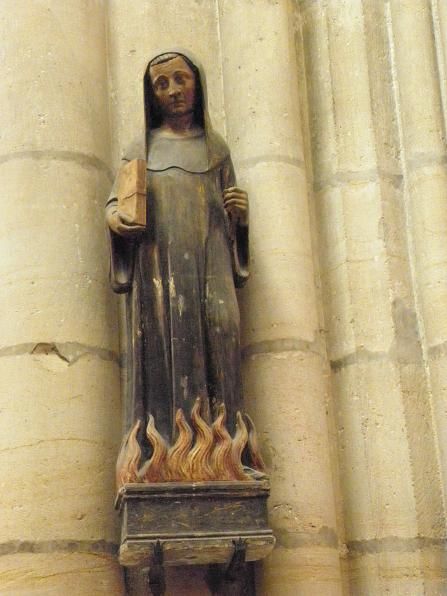
Image: Troyes (10) Basilique Saint-Urbain Statue de Saint-Odilon.jpg · GO69 · CC0, via Wikimedia Commons

Image: GO69, Wikimedia Commons (CC0)

Retold in plain modern English from Baring-Gould’s public-domain text, sentence by sentence, keeping the same facts and order. Short explanations in parentheses are ours.

From Sabine Baring-Gould, The Lives of the Saints, new and revised edition (Edinburgh: John Grant, 1914; first edition 1872). Public domain in the United States. Reproduced unedited, except for short bracketed notes in grey that we added to explain names and terms (“S.” is the old abbreviation for Saint). Some history and judgments reflect 19th-century scholarship.

Notes

Story retold in our own words from the cited sources.