This Saint’s Story
He was legitimized shortly after birth, allowing him to receive a noble education. At the age of 13, he became a page to Queen Leonor and married Leonor de Alvim at 16, with whom he had three children, although only their daughter Beatriz survived infancy.
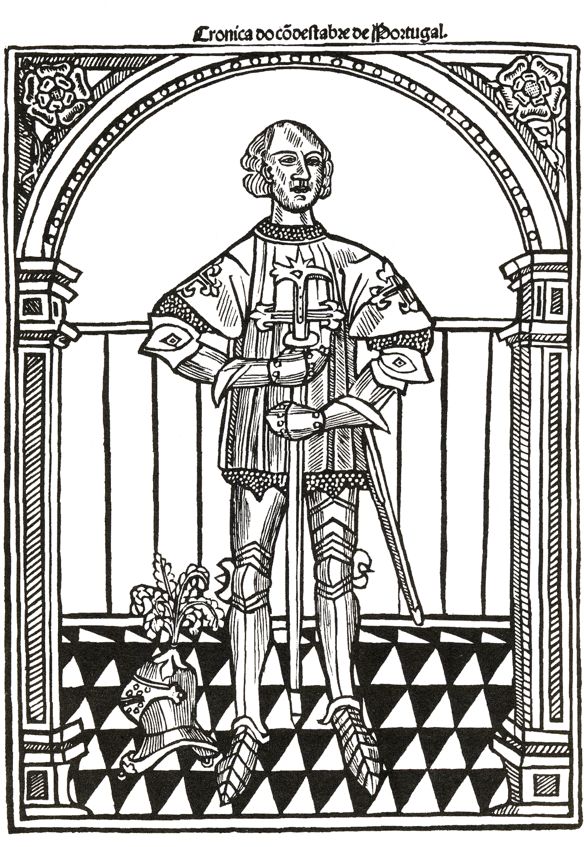
His military career began in 1373 when he joined the fight against a Castilian invasion. Following the death of King Ferdinand I in 1383, Nuno supported the claim of John, Master of Aviz, to the throne, which led to his appointment as Constable of Portugal. At just 24, he commanded Portuguese forces during the critical 1383-1385 Crisis, achieving a significant victory at the Battle of Aljubarrota in 1385 against a much larger Castilian army, which helped secure Portugal's independence.
Nuno's military strategies were characterized by guerrilla tactics, and he was known for his compassion, often providing for the needs of the enemy's hungry populations. After the war, he was appointed count of several regions and continued to serve the realm, even as he amassed wealth, which he later generously distributed to veterans and the poor.
Following the death of his wife in 1387, Nuno turned towards a life of faith. He joined the Carmelite (an order that began with hermits on Mount Carmel in the Holy Land) Order in 1423, taking the name Friar Nuno of Saint Mary. He dedicated himself to prayer, penance, and service, establishing a convent and living a humble life until his death on November 1, 1431. His deep devotion to the Virgin Mary was evident in his life, as he fasted and prayed regularly in her honor.
Nuno Álvares Pereira was beatified (declared 'Blessed', the step before sainthood) on January 23, 1918, by Pope Benedict XV and canonized (officially declared a saint by the pope) on April 26, 2009, by Pope Benedict XVI. His legacy is celebrated on November 6, and he is honored as a saint who exemplified both military valor and profound spirituality.
