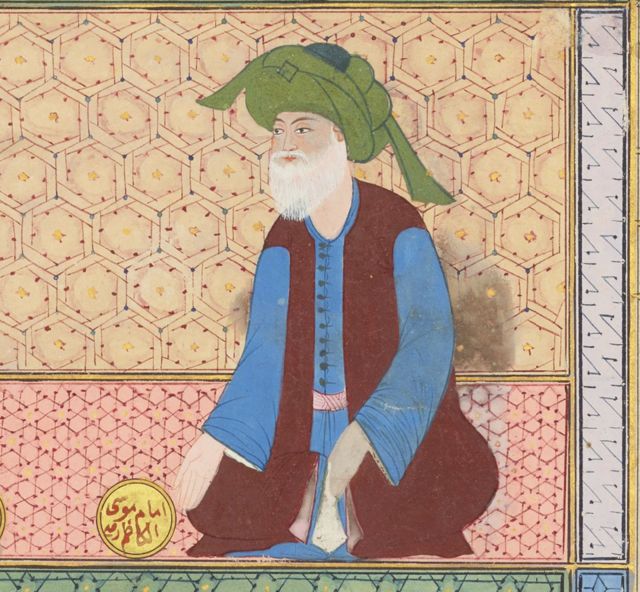
St. Musa

Saint Musa was a little girl of sixth-century Rome whose short life Pope Saint Gregory the Great recorded as an example of childhood holiness.

Read the essentials →
Traditional feast April 2 · Virgin

St. Musa

Traditional feast

April 2
1914 / pre-1969 calendar, per Baring-Gould (1897)

Represents

Virgin

Feast days

Feast: April 2

This Saint’s Story

Paraphrased from Gregory the Great’s Dialogues IV.17 (Gardner/English tradition on Internet Archive) and Baring-Gould’s April 2 notice, which rests on the same Gregorian authority; tradition framing for the vision.

In Book IV of the Dialogues he relates what Probus, a servant of God, used to tell of his little sister Musa. One night the Blessed Virgin Mary appeared to the child and showed her other girls of her own age clothed in white. Musa longed for their company yet did not dare to join them. Our Lady asked whether she wished to remain with them and live in her service; the child answered that she would.

The Blessed Virgin then charged Musa not to behave lightly or live any more like a careless girl, but to put away laughing and pastime, promising that after thirty days she would be admitted among those virgins. From that night Musa changed her manner of life. She set aside childish levity and kept herself with a seriousness that astonished her parents. When they asked the reason, she told them of the commandment she had received and of the day appointed for her going.

Twenty-five days later she fell ill with a fever. On the thirtieth day, as the hour of her departure came, she beheld Our Lady again with the same white-robed girls. Called to come away, she answered with modest downward glance, “Behold, blessed Lady, I come; behold, blessed Lady, I come,” and so gave up her soul. Later martyrologies and Sabine Baring-Gould’s Lives preserve the same Gregorian narrative under her April feast. Tradition keeps Musa among the Roman children whose quiet fidelity Gregory held up for the Church’s encouragement.
Short entry · the summary here is 30 words; Baring-Gould’s fuller original text and its sources are below. We have not filled any gap with invented detail.

What she represents

How she teaches us to live

Drawn from themes in the original account

Celebrate this saint’s feast day. Remember her on April 2 with a short prayer, and ask for her help.

The full story

Baring-Gould’s account retold in modern English

Read the full story · 26 words · about 1 min

Five days later, while lying in her bed, she suddenly looked up and said, “My Mistress, I am coming; I am coming!” Then she fell asleep.

Read the original 1870s text

Baring-Gould’s sources: Canisius in his German Martyrology, Ferrari us in his Catalogue of Italian Saints, Peter de Natalibus, &c. Authority: — S. Gregory the Great in his Dialogues, lib. iv. c. 17. J S. Musa was a little girl in Rome, who in a dream one night saw a great company of girls in white, and the Blessed Virgin Mary, who stayed her when she wished to run among them, telling her that if she desired to be of that happy company, she must be a good and serious little girl. When the child woke, she was changed in heart from what she had been, and was filled with a love of God, and a desire to be of the number of the white-robed. And after twenty-five days, the child was attacked with fever, Aprils.] Francis of Paula.

Land five days after, lying in her bed, she looked up sud- I denly and said, “Mistress mine, I am coming; I am j coming !” and so fell asleep.

Help us add to this saint's story

Everything is read by a person before anything appears. Facts are checked against trusted sources first.

Facts are welcome; a source link helps (optional).With your permission we may share it on this page.

Nine days · Free

Pray the novena
with us.

One short email a day for nine days. The day's prayer, a line from St. Musa's story, and a nudge to keep going.

Also on April 2
A

St. Apphian

April 2 · Martyr
T

St. Theodosia (April 2)

April 2 · Virgin, Martyr
St. Mary of Egypt and S. Zosimus

St. Mary of Egypt and…

April 2 · Abbot
← All 1970 saints in the library
Sources & notes

Feast-day sources

Story sources

Sources

Credits

Image: Chester Beatty T 414 fol 129r Musa al-Kazim.png · Sun'i · Public domain, via Wikimedia Commons

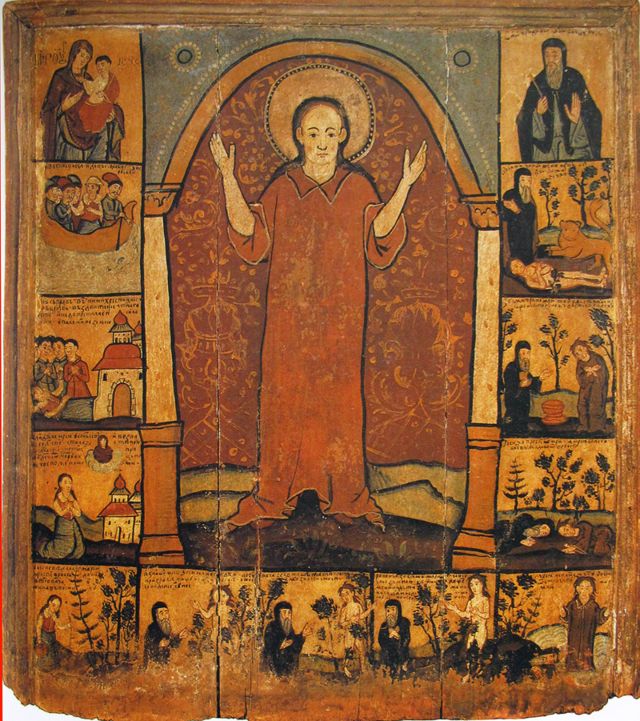
Image: Sun'i, Wikimedia Commons (Public domain)

Retold in plain modern English from Baring-Gould’s public-domain text, sentence by sentence, keeping the same facts and order. Short explanations in parentheses are ours.

From Sabine Baring-Gould, The Lives of the Saints, new edition in 16 vols. (London: John C. Nimmo, 1897–98); text from the Internet Archive scan (OCR, lightly cleaned; errors possible). Public domain in the United States. Reproduced unedited, except for short bracketed notes in grey that we added to explain names and terms (“S.” is the old abbreviation for Saint). Some history and judgments reflect 19th-century scholarship.