This Saint’s Story
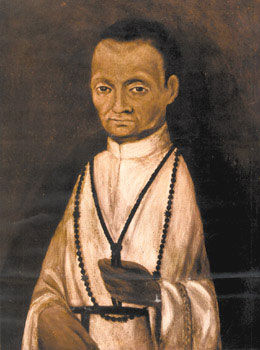
His father was a Spanish nobleman; his mother was a freed woman, of African and possibly Indigenous descent, from Panama. His father did not stay to raise the family, so Martin grew up poor. His mother took in washing to get by, and as a boy Martin was apprenticed to a barber-surgeon. In those days a barber-surgeon cut hair, but also set bones, treated wounds and gave simple medicines, and this training shaped the rest of his life.
As a teenager Martin asked to join the Dominican (the Order of Preachers founded by St. Dominic) friars at the Priory of the Holy Rosary in Lima. Colonial rules of the time barred people of mixed race from becoming full members, so he was taken in as a "donado", a helper who did the humblest jobs in return for living with the community. He swept, worked in the kitchen and laundry, and nursed the sick. The friars came to see his goodness, and in 1603 he was allowed to make vows as a lay brother.
For the rest of his life Martin cared for anyone in need: sick friars, poor families, enslaved Africans and people living on the streets of Lima. He handed out food and alms from the priory and helped set up a home for orphaned and abandoned children. He was known for treating every person, and even stray animals, with the same gentle care. When someone objected to him bringing a sick beggar into his own bed, he is said to have answered that compassion matters more than cleanliness.
Many stories gathered around Martin in his lifetime and after, such as accounts of him appearing in two places at once or passing through locked doors to reach the sick. These belong to the devotion and legends that grew up around him; what the record shows clearly is a man of long nights of prayer, deep love for the Eucharist and tireless work for others. He died in Lima on November 3, 1639, already honored by the people of the city as a holy man.
Pope Gregory XVI beatified (declared 'Blessed', the step before sainthood) him on October 29, 1837, and Pope John XXIII canonized (officially declared a saint by the pope) him on May 6, 1962. His feast is kept on November 3, and he is often shown with a broom, for the humble work he did in the friary.