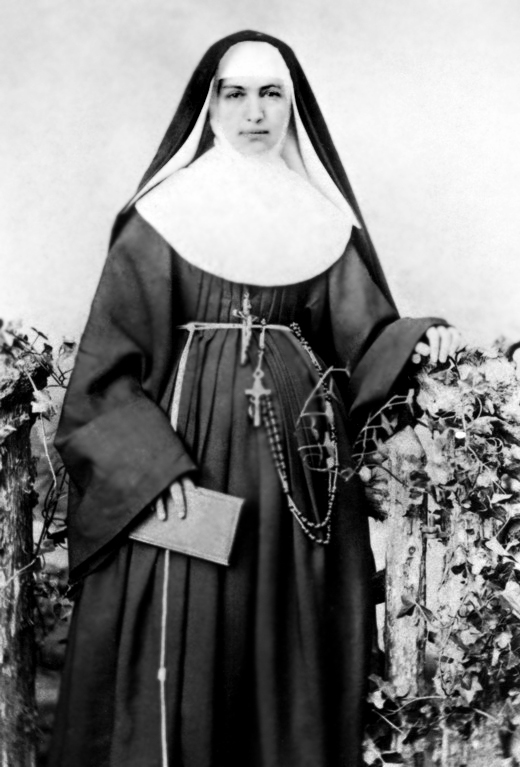
This Saint’s Story
When she was just a year old, her family relocated to the United States, settling in Utica, New York. As the eldest of ten children, she had to leave school early to support her family after her father's disability. Despite these challenges, she felt a strong calling to religious life and joined the Sisters of St. Francis in Syracuse, New York, in 1862, adopting the name Marianne.
After receiving her religious habit, Marianne became a teacher and later a principal, focusing on the education of German-speaking immigrants. By 1870, she was involved in founding two of the first Catholic hospitals in Central New York, emphasizing that medical care should be available to all, regardless of background. Her leadership skills were recognized as she became the head administrator of St. Joseph's Hospital in Syracuse, where she also facilitated medical education for students from Geneva Medical College.
In 1883, Marianne received a heartfelt request from King Kalākaua of Hawaii to assist with the care of leprosy patients. Many religious communities had declined the invitation due to fears of contagion, but Marianne responded with enthusiasm, stating her eagerness to serve. She arrived in Hawaii with six fellow sisters, where they managed the Kakaʻako Branch Hospital and later established Malulani Hospital on Maui. She worked for the care and dignity of people with leprosy.
In 1888, Marianne moved to Kalaupapa on Molokaʻi to oversee the care of women and girls affected by leprosy. She took over responsibilities from Father Damien, who had dedicated his life to serving the leprosy community. Marianne's leadership brought significant improvements to the living conditions and morale of the patients. She introduced cleanliness and a sense of joy, often providing colorful clothing to uplift spirits. Her work earned her the Royal Order of Kapiolani from the Hawaiian government.
Marianne Cope passed away on August 9, 1918, in Hawaii and was buried at the Bishop Home. Her remains were later moved to Syracuse, and in 2014, a portion was returned to Honolulu. She was recognized as Blessed in 2005 and canonized (officially declared a saint by the pope) in 2012 by Pope Benedict XVI, acknowledged for her heroic virtue and dedication to the marginalized.
