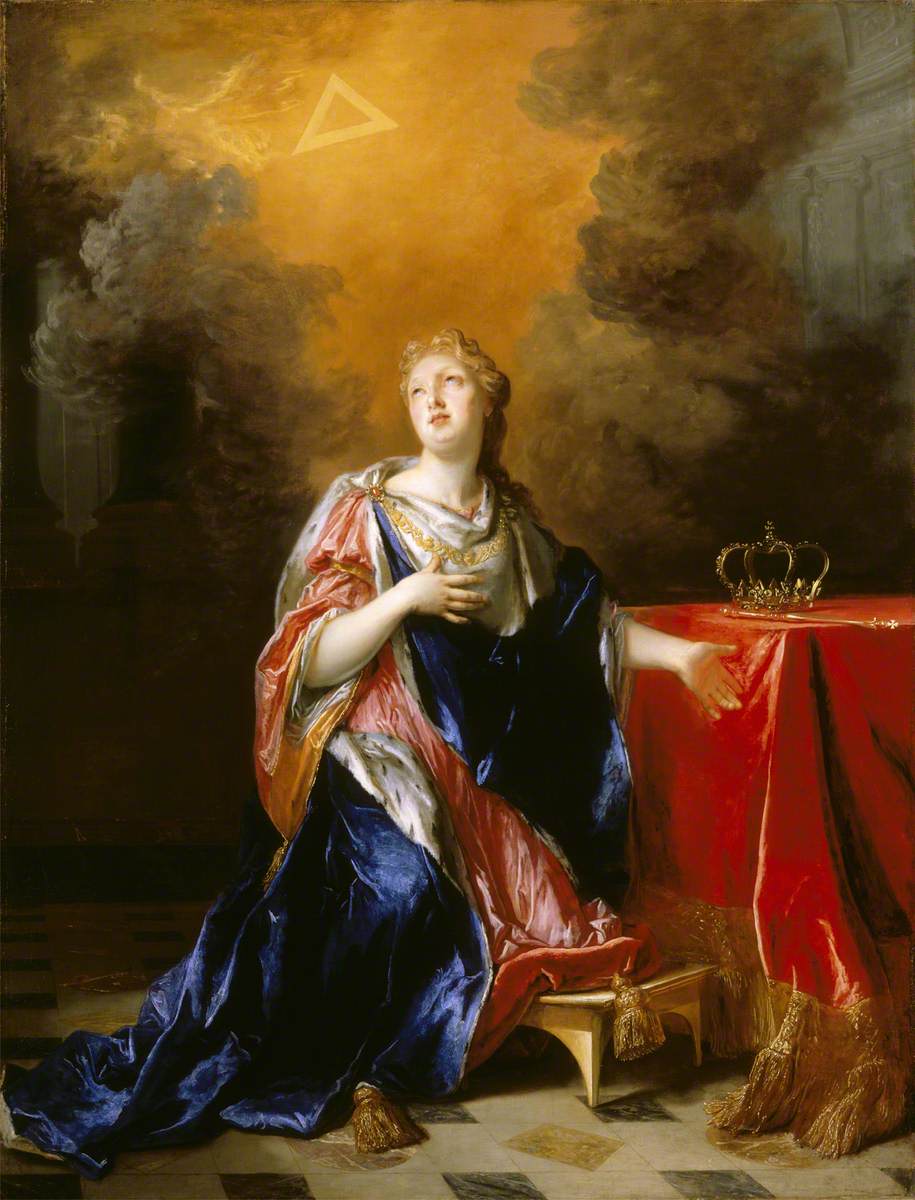
Saint Margaret put great effort into teaching her children, instilling the principles of religion and fairness in their young hearts from an early age. She managed her household with great wisdom, paying attention to her servants and setting a good example for them. The king was influenced by her to love God's service and to join her in correcting many ecclesiastical abuses that marred the Church in Scotland. “The king,” says Theodoric, “learned from her to spend certain nights in prayer. I could not sufficiently admire the fervor of this prince in prayer.” Another ancient writer states: “She encouraged the king to perform acts of justice, mercy, charity, and other virtues; in all these, by divine grace, she inspired him to fulfill her pious wishes. For he, seeing that Christ resided in the heart of his queen, was always eager to follow her counsel.”
During Lent and Advent, she would rise at midnight and go to church to hear matins. Upon her return, she distributed alms and then rested for a couple of hours before returning to her chapel to hear Mass, sometimes attending as many as six in one morning. She ate very little, and her meals were very plain. “She was blessed with a remarkable spirit of compunction,” says Theodoric, “when she spoke to me about the sweetness of everlasting life; her words were full of emotion, and her eyes would fill with tears, which caused tears to flow down my cheeks as well. In the church, no one was more peaceful and absorbed in prayer than she.”
In 1037, the castle of Alnwick, which at that time belonged to Scotland, was captured by William Rufus, and the garrison was killed. Malcolm demanded the castle's return, and when it was refused, he besieged it. The English garrison, brought to the brink of desperation, offered to surrender and asked the king to receive the keys personally; however, the soldier who presented them on the end of a spear thrust the spear at him and struck his eye as the king approached to take the keys. This wound led to his death, and his son, Edward, was also killed in the assault launched to avenge this act of treachery. At that time, Saint Margaret was ill and near death. Theodoric recounts: “She had a premonition that she would soon die, and she privately recounted to me all the acts of her life, weeping bitterly. Then she said, ‘Farewell, I shall not be here much longer. Two things I commend to you: masses and prayer for my soul when I am dead, and the care of my dear children so that they may be raised in the fear and love of God. You must promise me these things here in the presence of God, who alone witnesses our conversation.’”
When she was very ill, her son Edgar arrived from Alnwick, and she asked him how his father and brother were doing. Fearing to alarm her, he answered that they were well. But she saw that he was not telling the truth, and she cried out, “I know how it is!” Then, throwing up her arms, she praised God, saying, “I thank You, Almighty God, that in sending me such a great affliction in the last hour of my life, You would purify me from my sins.”
She died on November 16th, and her body was buried in the church of the Holy Trinity in Dunfermline. When Scotland fell away from the Catholic faith, the remains of Saint Margaret and her husband were saved from the violent mob and carried to Spain. King Philip II built a chapel in the Escorial (a royal site in Spain) in honor of Saint Margaret for their reception. There they remain.
Footnotes
- Theodoric was a writer and chronicler of Saint Margaret's life.
- Saint Margaret was buried in the church of the Holy Trinity in Dunfermline.
- King Philip II built a chapel in the Escorial in honor of Saint Margaret.
- Mention in the Acts of the Apostles.
- The Clementine Recognitions, an apocryphal work of the 3rd century, contains many details, but it is very doubtful whether they can be relied upon.
- There are also the "Periods" or Acts and Passion of Saint Barnabas, which claim to be by John Mark, his disciple, but they are not genuine, though they likely contain the tradition of the Church of Cyprus concerning the apostle.
- Additionally, there is an encomium on Saint Barnabas by Alexander, a Cypriot monk from the 5th century, which also contains traditions.
- Barnabas was sent to Antioch by the apostles.
- They were sent to Jerusalem to discuss the necessity of circumcision for Gentile converts.
- The letter delivered to Antioch brought joy to the community.
- John Mark was Barnabas's nephew.
- The disagreement led to Barnabas and Paul parting ways.
- There is an apocryphal work, probably from the 5th century, titled “Acta et Passio Barnabae in Cypro."
- The translation to a new shrine was made in the year 1531, and an annual festival was instituted to commemorate it, to which the Pope attached an indulgence of a hundred years.
- “Quomodo, unde et a quo fuerint tunc Mediolanum translata, cquidem ignorare me dixerlm Ubentius, quatn incertas Mediolanensium conjecturas amplecti.” D. Papebroech.
Baring-Gould’s own footnotes, in modern English.
Read the original 1870s text
Baring-Gould’s sources: Canonized by Pope Innocent IV. in 1251. Her feast was removed from November 16th to June 8th by Innocent XI. in 1698, and by Innocent XII. in 1693 to Junexoth. Authority Her life written by Theodoric of Durham, her confessor, by order of Henry I. of England. S. Aelred also wrote concerning her. Also the Scottish historians.] S. Margaret was the sister of Edgar Etheling, and fled with him to Scotland from the power of William the Conqueror. They found protection from Malcolm III., who refused to surrender them to the Norman Conqueror, and, struck with the beauty and accomplishments of Margaret, married her, and she was crowned queen in 1070. Malcolm was a rough and unlettered man, but Margaret softened and refined him, so that he became one of the best of the early Scottish kings. They had six sons — Edward, Edmund, Edgar, Ethelred, Alexander, and David — and two daughters, Maud or Mathilda, who afterwards married Henry I. of England, and Mary, who married Eustace, count of Boulogne. Of the sons, Edgar, Alexander, and David, came successively to the throne of Scotland, and governed the kingdom with prudence and justice.
S. Margaret took the greatest pains with the instruction of her children, from their earliest years instilling into their young hearts the principles of religion and equity. She ruled her household with the utmost wisdom, attending to her servants and setting them an example. The king was led by her to love God's service, and to unite with her in reforming many ecclesiastical abuses which disfigured the Church in Scotland. “The king,” says Theodoric, “learnt from her to watch the night in prayer on certain occasions. I could not sufficiently admire the fervour of this prince at ” Another ancient writer says: — “She excited the king to do works of justice, mercy, alms-deeds, and other virtues; in all which, by divine grace, she induced him to comply with her pious desires. For he seeing that Christ dwelt in the heart of his queen, was always willing to follow her advice.”
In Lent [the forty days of fasting before Easter] and Advent she rose at midnight, and went to church to hear matins. On her return she distributed alms, and then lay down on her bed for a couple of hours' sleep, after which she returned to her chapel to hear mass, and sometimes attended as many as six in a morning. She ate very little, and that of the plainest description. “She was endowed with a wonderful spirit of compunction,” says Theodoric, “when speaking to me of the sweetness of everlasting life; her words were hill of unction, and her eyes would swim with tears, so that they brought tears down my cheeks also. In the church no one was more quiet and wrapt in prayer than she.” In 1037, the castle of Alnwick, which belonged at that time to Scotland, was taken by William Rufus, and the garrison put to the sword. Malcolm demanded restitution, and when it was denied, besieged the castle. The English garrison reduced to the greatest extremity, offered to surrender, and desired the king to receive the keys with his own hand; but the soldier who presented them to him on the point of a spear, thrust the spear at him and pierced his eye, as the king approached to receive the keys. His wound produced his death, and his son, Edward, was also killed in the assault made to revenge this act of treachery. At the same time S. Margaret was ill and dying. Theodoric says: “She had a prevision that she would soon die, and she repeated to me in private all the acts of her life, weeping bitterly. And then she said, ‘Farewell, I shall not be long here. Two things I commend to you, [June xo.
masses and prayer for my soul when I am dead, and care of my dear children that they may be brought up in the fear and love of God. These things you must promise me here in the presence of God, who alone witnesses our discourse.*”
When she was very ill, her son Edgar arrived from Alnwick, and she asked him how his father and brother were faring. Fearing to alarm her, he answered that they were welL But she saw that he was not speaking the truth, and she cried out, “ I know how it is !” Then throwing up her arms, she praised God, saying, “ I thank Thee, Almighty God, that in sending me so great an affliction in the last hour of my life, Thou wouldst purify me from my sins.”
She died on Nov. 16th, and her body was buried in the church of the Holy Trinity, at Dunfermlin. When Scotland fell away from the Catholic faith, the remains of S. Margaret and her husband were saved from the brutal rabble and carried to Spain. King Philip II. built a chapel in the Escurial in honour of S. Margaret for their reception. There they remain.