This Saint’s Story
He was the fourth of thirteen children in a devout family. His early education in theology took place at the diocesan seminary in Brixen, where he developed a strong desire to serve as a missionary. After his ordination on July 25, 1875, he began his ministry in the community of San Martin, close to his hometown, but his missionary calling persisted.
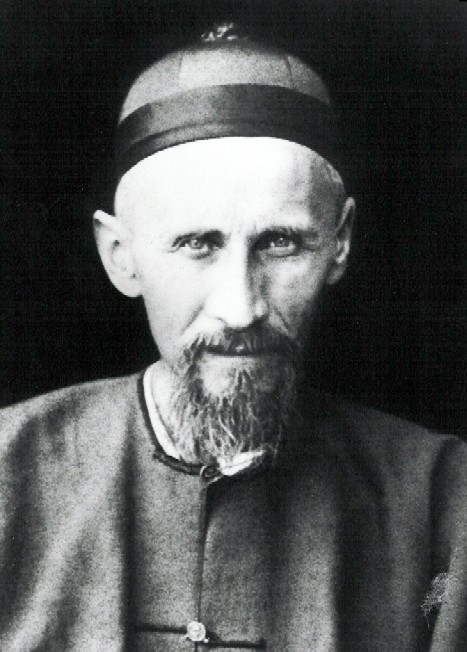
In 1878, Freinademetz joined the Society of the Divine Word, founded by Arnold Janssen, with the aim of serving in foreign missions. He received his mission cross in March 1879 and traveled to Hong Kong with fellow missionary Johann Baptist von Anzer. They spent two years in Hong Kong preparing for their mission before moving to Shandong Province in 1881, where they encountered a vast population with very few Christians.
Freinademetz dedicated himself to educating Chinese laypeople and priests, understanding the importance of local leadership in the Church. He authored a catechism in Chinese, which became a vital resource for his missionary work. His commitment to the local culture was profound; he aimed to become one with the people he served, expressing his love for China and its people in his writings.
Despite facing health challenges, including laryngitis and tuberculosis, Freinademetz continued his work. In 1907, he took on additional responsibilities in the diocese when Bishop Anzer left for Europe. Tragically, during a typhus outbreak, he contracted the disease while caring for others. He passed away on January 28, 1908, in Daijiazhuang, where he was later buried, and his grave became a site of pilgrimage.
His cause for sainthood began shortly after his death, and he was beatified (declared 'Blessed', the step before sainthood) on October 19, 1975, by Pope Paul VI. Finally, on October 5, 2003, he was canonized (officially declared a saint by the pope) by Pope John Paul II, recognized for his exemplary missionary work and profound love for the Chinese people.