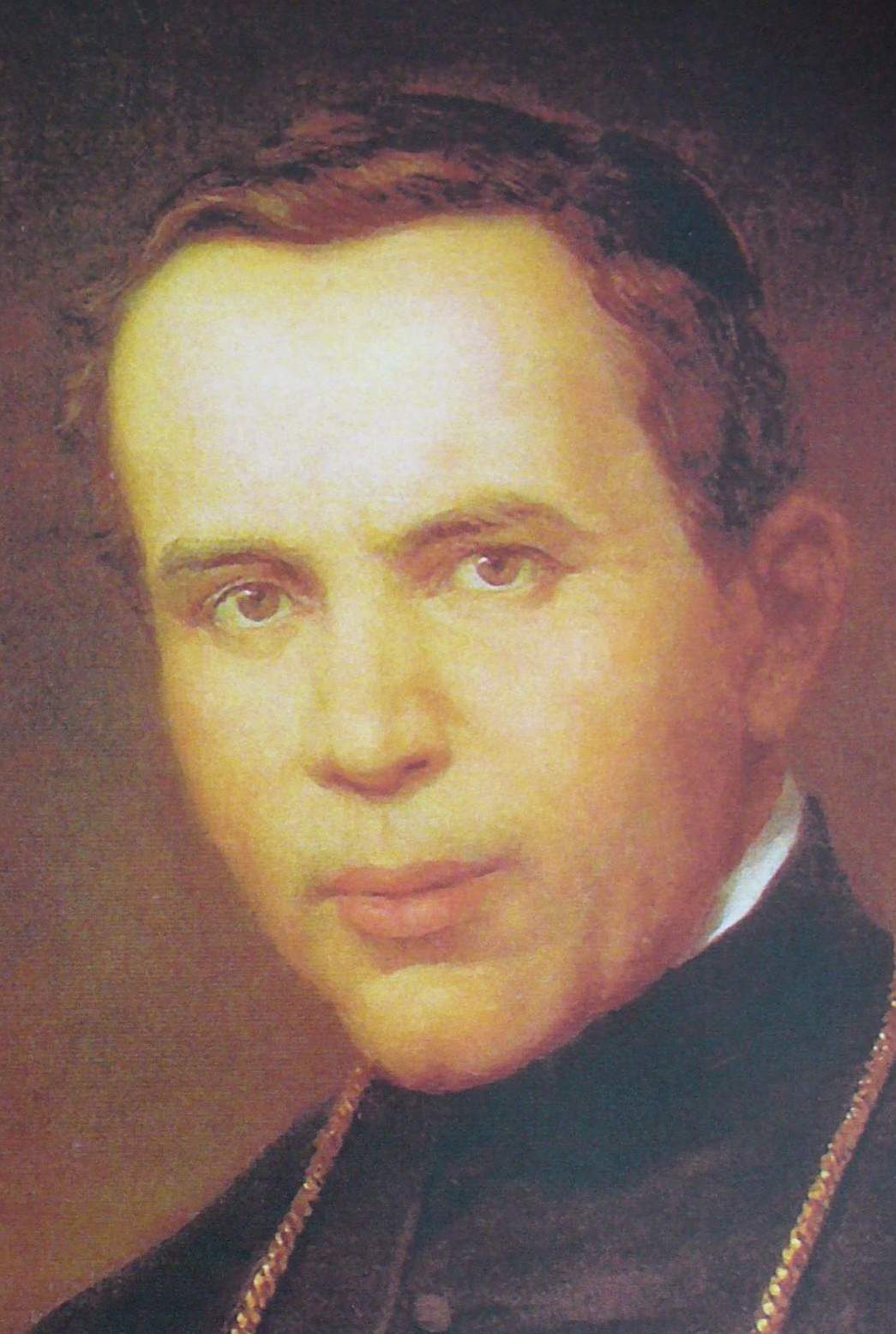
St. John Neumann

John Nepomucene Neumann was born at Prachatitz in Bohemia (today Prachatice, Czech Republic) on 28 March 1811.

Read the essentials →
Feast January 5 · Bishop

St. John Neumann

Current feast

January 5
Verified · Proper calendar for the dioceses of the USA

Traditional feast

January 5
Traditional date (see Catholic Encyclopedia, 1913)

Represents

Bishop

Feast days

Feast: January 5

This Saint’s Story

Retold in modern English from the Catholic Encyclopedia (1913)

He entered the seminary at Budweis in 1831 and studied at the University of Prague. He was a gifted scholar: besides Latin, Greek and Hebrew he spoke at least eight modern languages and was keen on botany. Later, as a bishop, he learned Irish to serve Irish immigrants.

Letters from the missionary Frederic Baraga (later bishop of Marquette, Michigan) made him want to serve in America. Still a seminarian, he landed in New York on 2 June 1836 and was ordained there by Bishop Dubois on 25 June. He spent four hard years in western New York.

In 1840 he joined the Redemptorists, a religious order of missionary priests, and was the first member professed in America (1842). He led the Redemptorists in Pittsburgh, where he built St. Philomena's church, and in 1846 became their vice-provincial in America. In 1852, under obedience to Pope Pius IX, he accepted the post of Bishop of Philadelphia.

He visited the larger parishes every year and smaller ones every two years, staying several days to preach, hear confessions, confirm and anoint the sick. Once he walked twenty-five miles and back to confirm one boy. When he became bishop there were two parish schools in Philadelphia; at his death eight years later there were nearly a hundred, staffed by the Christian Brothers and several orders of sisters. He also befriended the Oblate Sisters of Providence in Baltimore, a community of Black sisters, and helped save them from being dissolved. He built some fifty churches and was the first American bishop to bring the Forty Hours devotion (a period of prayer before the Blessed Sacrament) into his diocese, in 1853.

He died in Philadelphia on 5 January 1860 and is buried at St. Peter's church there. He was declared Venerable in 1896, beatified (declared 'Blessed', the step before sainthood) in 1963 and canonized (officially declared a saint by the pope) by Pope Paul VI in 1977. His feast is January 5.

For today: Neumann's monument is a school system. You can ask who teaches the children of your parish, and you can support that work with money or time this month.

What he represents

How he teaches us to live

Drawn from themes in the original account

Share your faith, in words and by example. Preaching and conversion are part of this story.

Feed your mind with Scripture and good books. Learning and the Scriptures matter in this life.

Give to people in need. The account records care for the poor.

Read more

The full original · 753 words

Read the full Catholic Encyclopedia article

Neumann, John Nepomucene, Venerable, fourth Bishop of Philadelphia, Pennsylvania, U.S.A., b. at Prachatitz, Bohemia, March 28, 1811, erroneously set down as Good Friday by his biographers; d. at Philadelphia, January 5, 1860. From childhood he evinced signs of a vocation to the priesthood, and entered the seminary of Budweis in 1831. A profound theologian, thoroughly versed not only in all branches of sacred learning but in the natural sciences as well, particularly in botany, he spoke fluently many Slavic dialects and at least eight modern languages, besides being master of Latin, Greek, and Hebrew. When Bishop of Philadelphia he learned Irish to help the Irish immigrants in his diocese. Finishing his course at the University of Prague with distinction in August, 1835, he returned to Budweis, his native diocese, for ordination. While at the seminary, the letters of Father Baraga, afterwards Bishop of Marquette, Michigan, written to the Leopold Missionary Society, inspired Neumann with the desire of consecrating himself to the American missions. Accordingly, while yet a seminarian he landed in America (June 2, 1836) was adopted, and (June 25, 1836) ordained by Bishop Dubois of New York, who sent him without delay to western New York, where he labored for four years amid incredible hardships. In 1840 he entered the Redemptorist Congregation; and was the first of its members professed in America, January 16, 1842. For three years Neumann was superior of the Redemptorists at Pittsburg, where he built the church of St. Philomena and by labors especially among the German-speaking people, won the gratitude and praise of Bishop O'Connor. In 1846 he was made vice-provincial of the Redemptorists in America, and in 1852 at the suggestion of Archbishop Kenrick of Baltimore Pius IX gave Father Neumann a command under obedience to accept the Bishopric of Philadelphia, to which he was consecrated by Archbishop Kenrick at St. Alphonsus, Baltimore, March 28, 1852. In his solicitude for his flock he visited the larger congregations of his diocese every year and the smaller ones every two years, remaining several days in the country places, preaching, hearing confessions, confirming, visiting, and anointing the sick. He once walked twenty-five miles and back to confirm one boy.

Indefatigable in the cause of education, both ecclesiastical and secular, he raised the standard of study and discipline at the diocesan seminary of St. Charles Borromeo, and founded (1859) an ecclesiastical preparatory college, to this day a credit and a blessing to the great diocese of Philadelphia. One of his first acts was to provide Catholic schools. At his consecration (1852) there were but two parochial schools in Philadelphia; at his death eight years later, their number was nearly one hundred. The boys he entrusted to the Christian Brothers, and the girls to different sisterhoods: St. Joseph, Charity, Immaculate Heart of Mary, Notre Dame of Namur and Notre Dame of Munich. These last he helped to establish firmly in the United States, and befriended in many ways. He introduced the Sisters of the Holy Cross from France to take charge of an industrial school. At the advice of Pius IX he founded the Philadelphia branch of the Sisters of St. Francis, and he was also the staunch friend of the Colored Oblate Sisters in Baltimore, whom by his tact and charity he saved from dissolution. In five years he erected fifty churches and completed the exterior of the cathedral. Conspicuous at the First Plenary Council of Baltimore (1852), he was one of the American bishops invited by Pius IX to Rome in 1854 for the definition of the dogma of the Immaculate Conception. Noted for his devotion to the Most Blessed Sacrament, Neumann was the first American bishop to introduce the Forty Hours devotion into his diocese in 1853; he also inaugurated the practice now in vogue in many places of reciting the Litany of the Blessed Virgin and the Rosary before High Mass on Sundays and Holy Days. His remains lie interred in a vault before the altar in the lower chapel of St. Peter's Redemptorist church, Philadelphia. Neumann left no published works except two catechisms of Christian Doctrine, which received the approbation of the First Plenary Council of Baltimore, a Bible history, confraternity manuals, a Latin pamphlet on the Forty Hours, and Acts of the synods held by him every two years. His pastoral letters are remarkable for their solidity, beauty, and unction. On December 15, 1896, he received the title of Venerable and the authorities of Rome have under consideration the acts of the Process of Beatification.
Patron saint of

  • Catholic schools (tradition in the U.S.) Tradition
    Remembered for building Philadelphia's parish school system.

More about St. John Neumann

Checked against at least two sources, in our own words

  • He was canonized as a saint in 1977, making him the only male American citizen to achieve this status. · Wikipedia Franciscan Media
  • Neumann founded the first Catholic diocesan school system in the United States, significantly increasing student enrollment. · Wikipedia Franciscan Media

Help us add to this saint's story

Everything is read by a person before anything appears. Facts are checked against trusted sources first.

Facts are welcome; a source link helps (optional).With your permission we may share it on this page.

Nine days · Free

Pray the novena
with us.

One short email a day for nine days. The day's prayer, a line from St. John Neumann's story, and a nudge to keep going.

Also on January 5
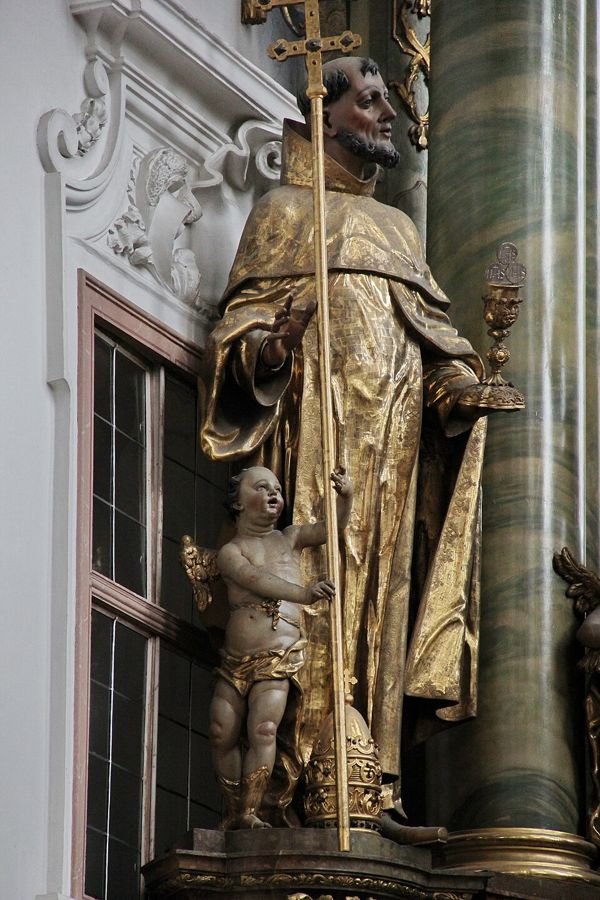
St. Telesphorus, Pope

St. Telesphorus

January 5 · Martyr
M

The Martyrs in the…

January 5 · Feast
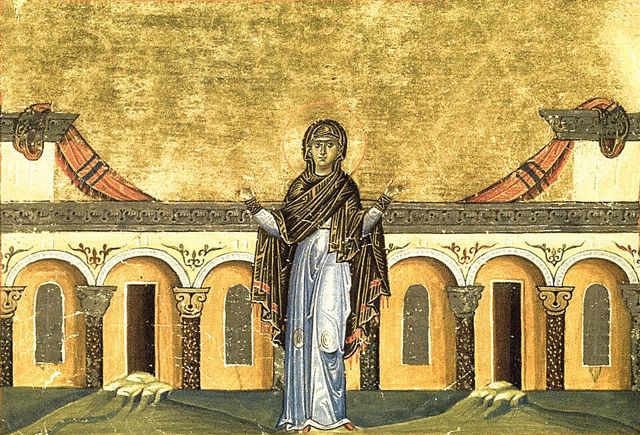
St. Syncletica

St. Syncletica

January 5 · Virgin
← All 1970 saints in the library
Sources & notes

Feast-day sources

Story sources

Sources

Credits

Image: Johann Nepomuk Neumann.jpg · zeitgenössischer Maler · Public domain, via Wikimedia Commons

Image: zeitgenössischer Maler, Wikimedia Commons (Public domain)

From The Catholic Encyclopedia (New York: Robert Appleton Company, 1907–1914), via Wikisource. Public domain in the United States. Reproduced unedited, except for short bracketed notes in grey that we added to explain names and terms (“S.” is the old abbreviation for Saint). Some history and judgments reflect 19th-century scholarship.