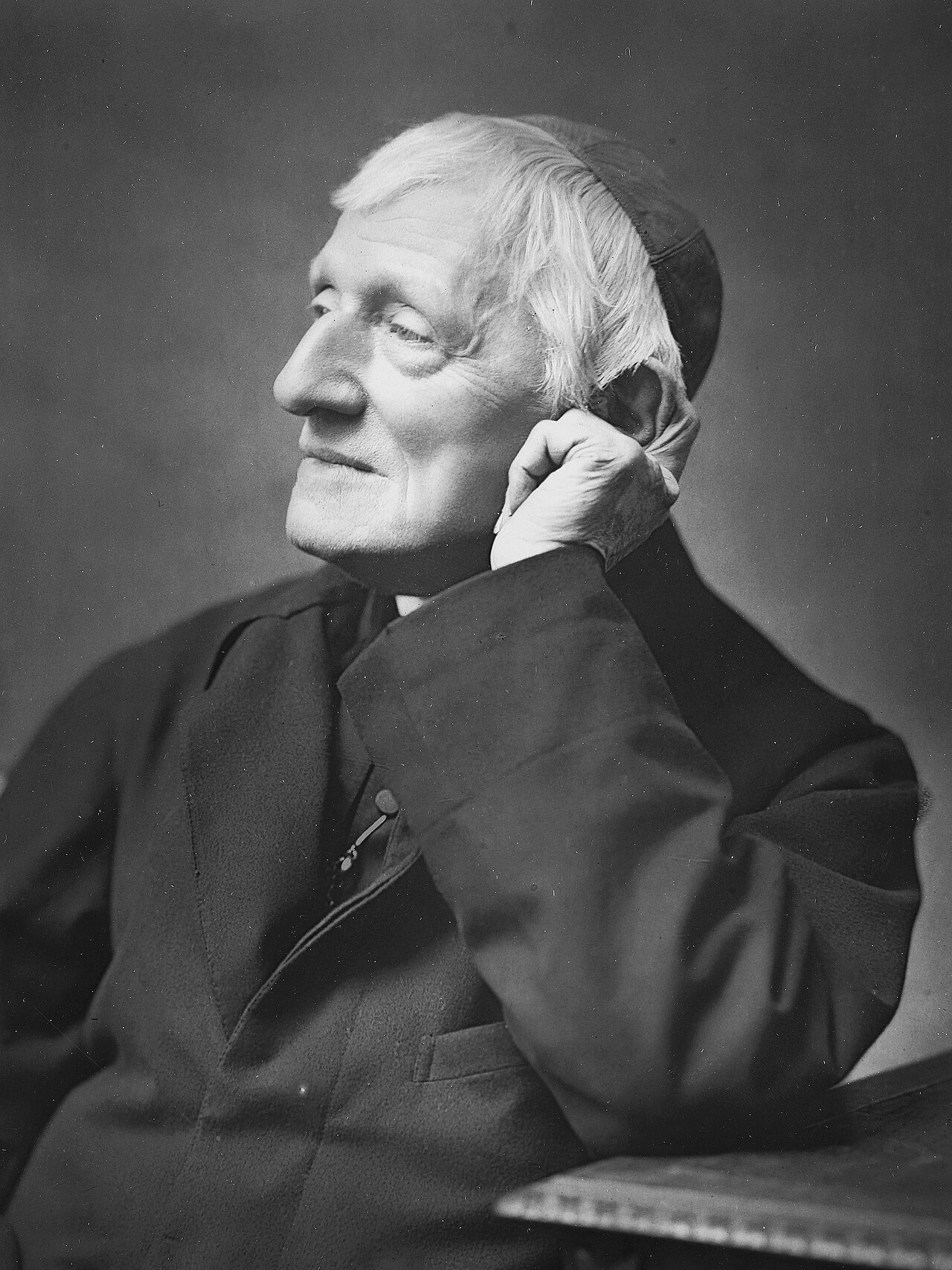
This Saint’s Story
His father was a banker, and his mother descended from Huguenot refugees. Growing up, Newman was an avid reader and showed early signs of intellectual promise. He attended Great Ealing School and later Trinity College, Oxford, where he initially embraced Evangelical Christianity at the age of fifteen, a conversion he viewed as pivotal in his life.
As a student at Oxford, Newman became increasingly involved in the Church of England and was ordained as an Anglican priest in 1825. He was a key figure in the Oxford Movement, which sought to reintroduce Catholic elements into Anglican worship. His influential writings during this period included the 'Tracts for the Times,' where he articulated his vision of a more Catholic Anglicanism. However, his views led to significant controversy, culminating in his resignation from his position at Oxford in 1843 after the publication of his Tract 90, which sparked backlash from church authorities.
In 1845, after years of theological struggle, Newman converted to Catholicism, leaving the Anglican Church. He was ordained as a Catholic priest shortly thereafter and became a prominent leader in the Catholic Church in England. He founded the Oratory of St. Philip Neri in Birmingham, which became a center for Catholic education and spirituality. In 1854, he played a crucial role in establishing the Catholic University of Ireland, which later became University College Dublin.
Newman's literary contributions were vast, including significant works such as 'Apologia Pro Vita Sua,' where he defended his religious beliefs and journey. His writings on the development of doctrine have had a lasting impact on Catholic theology. In recognition of his contributions, Pope Leo XIII elevated him to the rank of cardinal in 1879. Newman continued to write and teach until his health declined in his later years.
He passed away on August 11, 1890, in Birmingham. His legacy was formally recognized when he was beatified (declared 'Blessed', the step before sainthood) by Pope Benedict XVI on September 19, 2010, and canonized (officially declared a saint by the pope) by Pope Francis on October 13, 2019. Newman was later proclaimed a Doctor of the Church (a title the pope gives to a saint whose teaching is of special value to the whole Church), acknowledging his profound influence on Catholic thought.
