This Saint’s Story
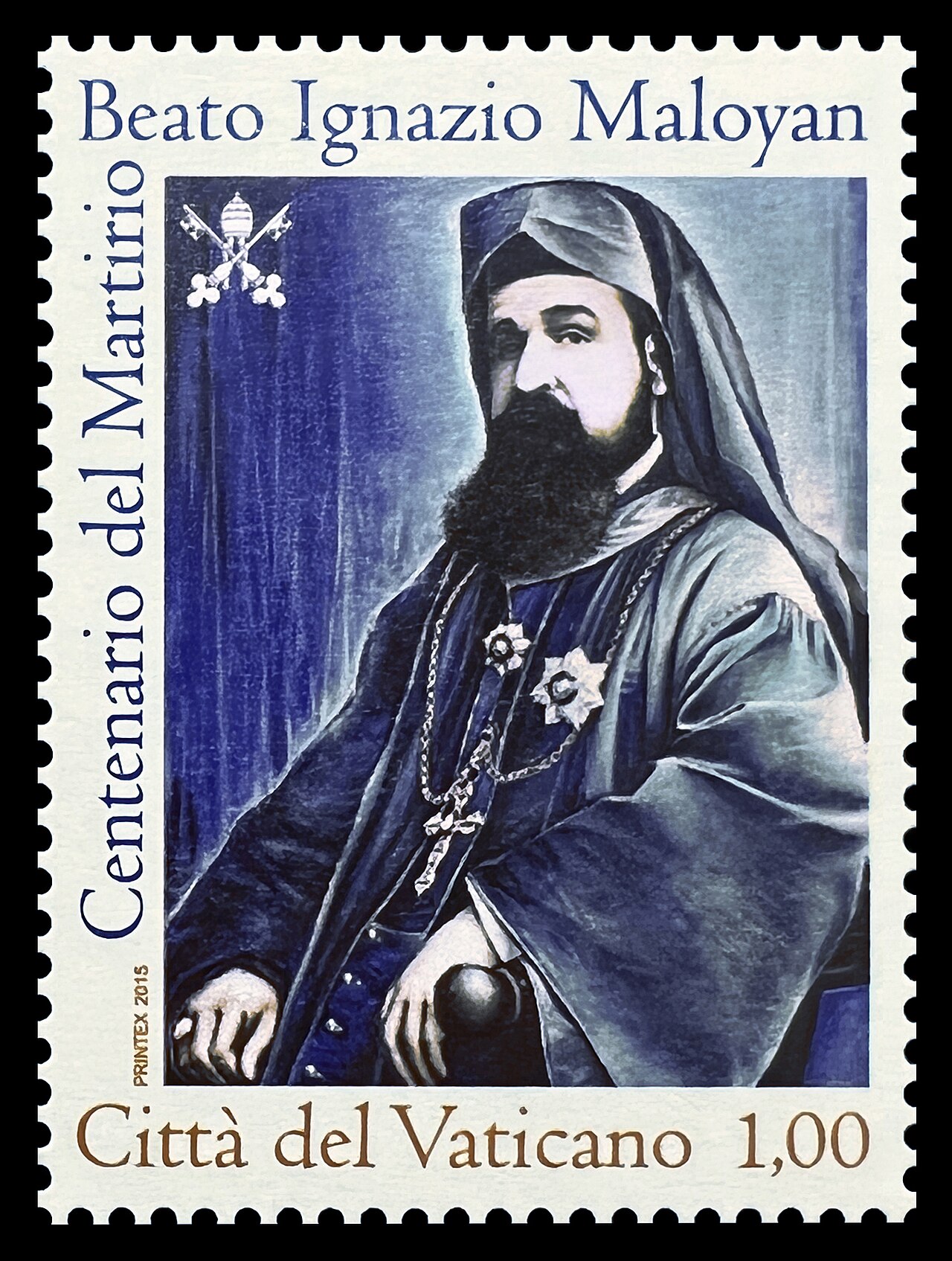
At the age of fourteen, he was sent to the Bzoummar convent in Lebanon by his parish priest, who recognized his potential for a religious vocation. After completing his theological studies in 1896, he was ordained a priest and adopted the name Ignatius, honoring the martyr Ignatius of Antioch. He served as a parish priest in Alexandria and Cairo until 1910, gaining a reputation for his dedication to his community.
In 1911, Maloyan was appointed Archbishop of Mardin during a tumultuous time for the Armenian Catholic Church. His leadership came at a moment when the church faced significant challenges, including internal divisions and external pressures from the Ottoman (the Turkish empire) government. Maloyan worked diligently to restore order and foster devotion among his parishioners, particularly emphasizing the Sacred Heart of Jesus. However, the outbreak of World War I and the subsequent Armenian genocide brought unprecedented suffering to the Armenian community.
As the genocide began in April 1915, Maloyan's commitment to his faith and his people was put to the ultimate test. Despite the growing danger, he sought to reassure his flock and maintain their loyalty to the Ottoman Empire. However, as the situation escalated, he was arrested along with other Armenian leaders. On June 3, 1915, he was brought to trial, where he was pressured to convert to Islam. Maloyan refused, declaring his faith in Christ and his readiness to suffer for it.
Following his refusal to convert, Maloyan was subjected to brutal treatment. He was tortured and faced the execution of many of his parishioners. On June 10, 1915, he was executed by gunfire after leading his community in prayer and encouraging them to remain faithful. His final words expressed his trust in God, demonstrating his deep commitment to his faith even in the face of death.
Ignatius Maloyan was beatified (declared 'Blessed', the step before sainthood) as a martyr by Pope John Paul II on October 7, 2001. He was canonized (officially declared a saint by the pope) on October 19, 2025, by Pope Leo XIV, recognizing his sacrifice and the profound impact of his faith during one of history's darkest chapters.