This Saint’s Story
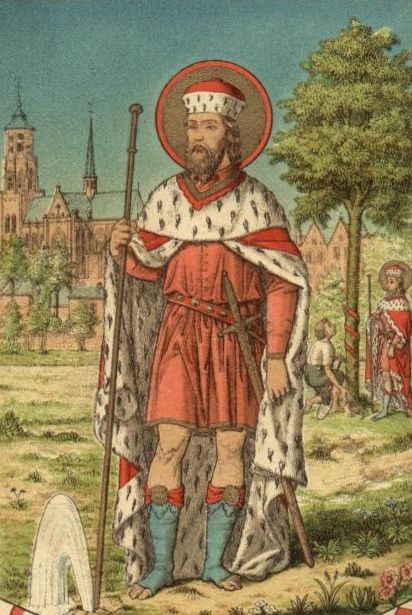
Butler says his parents were rich and related to Pepin, that he had no schooling in letters, and that he was meek and devout. Pepin, then mayor of the palace and soon king, which points to Pepin the Short, called him to court and set him in high office. He kept his prayers there. Pepin arranged his marriage to a noblewoman named Gwinmary (also Guinmarie; Grimnaria in Latin). Butler describes her as extravagant and impossible to guide. They had no children. Some other accounts mean an earlier Pepin, Pepin of Herstal, rather than the king.
Pepin took him to war in Lombardy, Saxony, and Aquitaine for eight years. He came home, found the household and the tenants wronged, and repaid each one. He built a chapel called Nivesdunc as a quiet place to pray. She seemed to soften, then the old temper returned. Butler says he withdrew, with her consent, to live as a hermit, and Lier grew up around that place. The Roman Martyrology (the Church's official list of saints for each day) marks his death at Lier on 11 October. Butler puts the year about 774. Other notices say 714, because a later story makes him a companion of Rumbold of Mechelen. A 2004 relic study suggests Rumbold died decades before Gummar was born, so they were not companions. Tales of a spring from his staff, and of a tree he felled and restored, are legend. On the first Sunday after 10 October Lier carries his relics through the streets. People ask his prayers for hard marriages and for hernia.
This page keeps 11 October.
For today: If you come home to find that people in your household have been wronged, make it right where you can, even if you did not cause the harm. A legend will not fix a hard marriage, but you can refuse cruelty, make room to pray, and, if you must leave, go without repaying injury for injury.