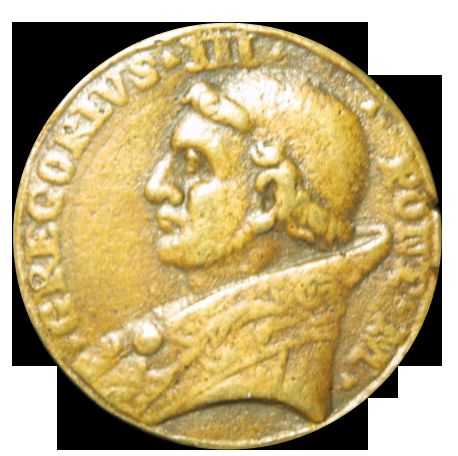
Now, however, since the real power of the empire in Italy was gone, it might seem that nothing could stop the Lombards. Although King Luitprand and Pope Gregory III, at least for the first eight years of Gregory's papacy, maintained a friendly relationship, the Lombards, even though they were no longer Arians, were feared as barbarian invaders. The Pope was anxious that he might become subject to a ruler with savage manners and foreign origins. At this time, the attention of Europe and all of Christendom was focused on the Franks. The great victory at Tours had elevated Charles Martel to the role of protector of the liberties and the religion of the Western world. When the Lombards and the Pope finally entered into open conflict, Gregory was compelled to seek protection from Charles Martel. “His tears,” he wrote, “were falling day and night for the desperate state of the Church. The Lombard king and his son were devastating the last remnants of the Church's property with fire and sword, which no longer sufficed to support the poor or provide lights for the daily service. They had invaded the territory of Rome and seized all his farms; his only hope was in the timely assistance of the Frankish king.” Gregory was aware that the Lombards were negotiating with the Frank and cleverly appealed to his pride. “The Lombards were constantly speaking of him with contempt, — ‘Let him come, this Charles, with his army of Franks; if he can, let him rescue you from their hands.’ O unspeakable grief, that such sons, so insulted, should make no effort to defend their holy mother the Church! Not that St. Peter was unable to protect his successors and exact vengeance on their oppressors; but the apostle was testing the faith of his followers.”
Gregory sent Charles the keys to the tomb of St. Peter, along with the offer of the titles of Patrician and Consul of Rome. Charles Martel received Gregory III's first mission generously, yet not without hesitation. He owed a debt of gratitude to the Lombard king for services rendered; perhaps all of Western Christendom was also indebted to him, for according to the Lombard’s epitaph, he had fought alongside Charles against the Saracens. Consequently, Charles returned a polite but noncommittal response and sent gifts to Rome. It is interesting to note that while the Pope was appealing to Charles as the champion of Christendom, the clergy of France were condemning him to damnation as a sacrilegious person and a robber of churches. In fact, at a critical time when the fate of Christendom was uncertain, he had taken wealth from the rich bishops and abbots to pay his mercenaries and soldiers who were to fight against the wave of invading Mohammedanism. A second letter from Gregory received no better outcome. Charles Martel died almost immediately after, in 741, at Quercy on the Oise River, and Gregory followed him in the same year. Although the Church's patrimony was so plundered that there was no money for the support of the poor, he was able to lavishly adorn several churches in Rome. He placed six silver columns given to him by the exarch Eutychius around the Confession of St. Peter and set on them silver architraves and statues of the Savior and the apostles, and on six other columns, the images of the Blessed Virgin and female saints. He hung silver lilies and candelabra above the sacred spot. He built an oratory in honor of all the saints, which he decorated with a gold chalice encrusted with jewels, an image of the Virgin, and a crown with a cross hanging from it, all made of gold. He gave a gold statue of the Virgin Mother holding her Divine Child, adorned with jewels, to the church of St. Maria Maggiore. He also gave a similarly valuable statue of St. Andrew to the church dedicated to that apostle. The total amount of gold he used for these decorations weighed 73 pounds; of silver, 376 pounds. This was a significant amount considering the dire circumstances in which the Papacy, the poor, and the lamps found themselves at that time. He also donated lands and slaves to the monks of St. Chrysogonus. He financed the rebuilding of the walls of Rome and purchased a castle from Thrasimund, duke of Spoleto, which threatened the Church's estates.
Footnotes
- The Lombard king and his son were devastating the last remnants of the Church's property.
- He had taken wealth from the rich bishops and abbots to pay his mercenaries and soldiers.
- He placed six silver columns given to him by the exarch Eutychius around the Confession of St. Peter.
- He built an oratory in honor of all the saints, which he decorated with a gold chalice encrusted with jewels.
- He also donated lands and slaves to the monks of St. Chrysogonus.
Baring-Gould’s own footnotes, in modern English.
Read the original 1870s text
Baring-Gould’s sources: Roman Martyrology. Authorities: — Anastasius the Librarian, and his own Letters.] Gregory III., who succeeded Gregory II. in the see of Rome, was a Syrian by birth, skilled in the Greek and Latin tongues, and noted for his knowledge of the Scriptures and his eloquent preaching. He was liberal and charitable, and spent large funds in redeeming captives and relieving widows and orphans. Gregory II. died in 731, in the heat of contest with the Emperor Leo III. in the matter of images. Gregory III. was elected by acclamation of the people, whilst he was following the coffin of Gregory II. to its tomb. His nomination was at once forwarded to the exarch of Ravenna, for his approbation and confirmation. But no sooner had he obtained this, than he sent a deputation to Constantinople to announce to the emperor his inflexible adhesion to the sacredness of images. The mission was confided to George the priest, but the language of the message was so sternly condemnatory of the emperor’s proceedings, that the trembling ambassador had hardly begun his journey when he fled back to Rome, and confessed that the enthusiasm and faith to carry him to martyrdom were wanting in his breast. The Pope indignantly threatened to degrade him from his priestly office, and was hardly persuaded to content himself with forcing the timorous George to resume his dangerous mission. George was arrested in Sicily and not allowed to proceed. Gregory thereupon summoned a council, November 1, 732. It was attended by the archbishops of Grado and Ravenna and ninety-three Western bishops, together with the consuls and people of Rome, and many laics of distinction. The council decreed that “ In future whoever shall carry off vol xiv. 14 destroy, dishonour, or insult the images of the Saviour or of ‘ the immaculate and glorious Virgin/ or of the apostles, &c., should be forbidden to receive the body and blood of the Lord, and be excluded from the Church.” All signed this decision. The Pope then sent another letter to the Emperor Leo, and made the Defender of the Poor — an officer of the Roman Church — bearer of the despatch. He also was arrested in Sicily, and his papers taken from him. The same fate attended the ambassadors of the Italian towns who were made bearers of similar missives. A fourth attempt was made, but we do not learn the result. In 732, Leo the Isaurian sent a fleet to punish Rome, the Pope, and Italy for their opposition to his enterprises against images. But the fleet was wrecked in the Adriatic, and the emperor was obliged to content himself with raising the imposts in Sicily and Calabria, and in confiscating the “patrimony” of the apostles Peter and Paul, consisting of three and a half talents of gold, which was paid annually to the Church of Rome. The emperor also detached Sicily and Calabria and the provinces of Illyria from the Roman see, and placed them under the patriarchate of Constantinople. With the wreck of the imperial navy, the authority of the eastern emperor over northern Italy virtually came to an end. The exarch of Ravenna, unsupported, could not make his power and authority felt, and some years later he abandoned the seat of government, and took refuge in Naples.
Now, however, that the real power of the empire in Italy was extinguished, it might seem that nothing could resist the Lombards [a Germanic people who ruled much of Italy from 568 to 774]. Though King Luitprand and Gregory III., at least for the first eight years of Gregory's pontificate, maintained their outward amity, the Lombards, albeit now no longer Arians [followers of Arius, who taught that the Son is a created being, not fully God], were dreaded as barbarian invaders, and the Pope shuddered lest he should become the subject of a sovereign of savage manners and foreign origin. At this juncture the attention of Europe, of all Christendom, was centred on the Franks [the Germanic people who ruled Gaul and gave France its name]. The great victory of Tours had raised Charles Martel to the position of protector of the liberties and the religion of the Western world. When at last the Lombards and the Pope were involved in open war, Gregory was forced to appeal to Charles Martel for protection. “His tears,” he wrote, “were falling day and night for the destitute state of the Church. The Lombard king and his son were ravaging by fire and sword the last remains of the property of the Church, which no longer sufficed for the sustenance of the poor, or for providing lights for the daily service. They had invaded the territory of Rome, and seized all his farms; his only hope was in the timely succour of the Frankish king.” Gregory knew that the Lombards were negotiating with the Frank, and dexterously appealed to his pride. “ The Lombards were perpetually speaking of him with contempt, — 4 Let him come, this Charles, with his army of Franks; if he can, let him rescue you out of his hands.’ O unspeakable grief, that such sons so insulted should make no effort to defend their holy mother the Church ! Not that S. Peter was unable to protect his successors, and to exact vengeance upon their oppressors; but the apostle was putting the faith of his followers to trial.” Gregory sent Charles the keys of the tomb of S. Peter, and the offer of the titles of Patrician and Consul of Rome. Charles Martel received the first mission of Gregory III. with munificence, yet not without hesitation. He owed a debt of gratitude to the Lombard king for services rendered, perhaps all Western Christendom was also indebted to him, for according to the Lombard’s epitaph, he had fought in person by the side of Charles against the Saracens [medieval Christian name for Arab and Muslim peoples]. Accordingly Charles returned a courteous but evasive answer, and sent presents to Rome. It is curious to note that while the Pope was appealing to Charles as the champion of Christendom, the clergy of France were denouncing him to damnation as a sacrilegious person, a robber of churches. He had, in fact, in the hour of need, when the fate of Christendom trembled in the balance, laid his hand on the wealth of the rich bishops and abbots, to pay his mercenaries and soldiers who were to fight and repel the wave of invading Mohammedanism. A second letter of Gregory met with no better result. Charles Martel died almost immediately after, in 741, at Quercy on the Oise, and Gregory followed him in the same year. Although the patrimony of the Church was so plundered that there was not money for the support of the poor, he was able to adorn sumptuously several of the churches in Rome. Six silver columns given him by the exarch Eutychius he placed round the Confession of S. Peter, and set on them silver architraves and statues of the Saviour and the apostles, and on six other columns the images of the B. Virgin and female saints. He hung silver lilies and candelabra above the sacred spot. He built an oratory in honour of all the saints, which he adorned with a gold chalice encrusted with jewels, an image of the Virgin, and a crown with a cross dependent from it, all of gold. He gave a gold statue of the Virgin Mother holding her Divine Child, enriched with jewels, to the church of S. Maria Maggiore. He gave a similar costly statue of S. Andrew to the church of that apostle. The amount of gold he used for these ornaments weighed 73 lbs.; of silver, 376 lbs.: a considerable amount considering the circumstances of destitution in which the Papacy, the poor, and the lamps then found themselves. He also gave lands and slaves to the monks of S. Chrysogonus. He paid for rebuilding the walls of Rome, and he purchased of Thrasimund, duke of Spoleto, a castle, which threatened the estates of the Church.