St. Francis Solano

Francis Solano was born at Montilla, Spain, on 10 March 1549, to noble and devout parents.

Read the essentials →
Feast July 14 · Martyr

St. Francis Solano

Current feast

July 14
Secondary source · Wikipedia infobox

Traditional feast

July 24
1914 / pre-1969 calendar, per Baring-Gould (1897)

Represents

Martyr

Feast days

Feast: July 14
Traditional: July 24

This Saint’s Story

Adapted in modern English from the Catholic Encyclopedia (1913) · original text below

He became a Franciscan (the order of friars founded by St. Francis of Assisi) at twenty and was later master of novices. In 1589 he sailed for the New World and, by way of Panama, reached Peru.

For twenty years he spared himself no hardship in evangelizing the vast regions of Tucuman and Paraguay, and he was called the wonderworker of the New World. He learned the Indian languages quickly, and it was said tribes of different tongues all understood him. He was custos of the convents of Tucuman and Paraguay and later guardian at Lima. Preaching at Truxillo in 1610, he foretold disaster for the city, which an earthquake destroyed eight years later. He also foretold his own death, which came at Lima on 14 July 1610 and was mourned across Peru. He was canonized (officially declared a saint by the pope) in 1726.

What he represents

How he teaches us to live

Drawn from themes in the original account

Look after people who are sick or suffering. Care for the sick is part of this story.

Share your faith, in words and by example. Preaching and conversion are part of this story.

Build up the community you belong to. Community life is part of this story.

The full story

Baring-Gould’s account retold in modern English

Read the full story · 1,102 words · about 5 min

The young Francis spent his free time gardening, and his bright, cheerful voice could be heard singing as he worked. Under his gentle care, the garden bloomed like a piece of Paradise.

At the age of twenty, he entered his novitiate among the Franciscans of Monsilia and engaged in all the intense austerities that youthful enthusiasm suggested. After making his vows, he studied philosophy and theology and was appointed master of the novices. Later, he became the superior of the convent, but feeling a strong calling to work for souls, he obtained permission to leave his duties as superior so he could go out preaching. When the plague broke out, Francis cared for the sick, assisted by another friar, with great dedication. His companion fell ill. He nursed him and was with him until his last breath. After that, he continued his work alone until one day he became dizzy and sick. When a plague boil appeared, he crawled back to the hospital and lay down to die.

But God had other plans for His servant. Francis recovered, and as soon as he was well again, he returned to his work among the sick.

At that time, the New World presented a new opportunity for missionaries who were brave enough to explore it. The desire to do this work came upon Francis like a powerful wind filling a sail and pushing it across the ocean. The Spirit of God filled his heart with immense love for the souls of the poor Peruvians. After receiving permission to leave, he sailed for South America in 1589. As the ship rounded Cape Horn and was sailing along the coast of Chile, it was caught in a storm and driven onto a sandbank. When all hope of saving the vessel was lost, the captain ordered the Spanish sailors and passengers into the lifeboat. There were also enslaved Africans on board, who were considered mere property for the colony, and their loss was seen as just a financial setback. But Francis Solano looked at the poor black men very differently. He recognized that they too were made in the image of God and had souls to save. He refused to get into the boat. He chose to stay on the wreck with the enslaved men. There was no time to waste; the lifeboat was cast off, and those on the ship watched as the boat, along with what they believed was their only chance of survival, disappeared over the waves.

Huge waves crashed against the back of the ship, or, catching the vessel in the middle, lifted it and threw it further up the bank. In the midst of the storm, Solano, with a cross in hand, hurried from one frightened group of Black people to another. He briefly explained the basics of the faith and baptized them in a spray of foam. The ship broke apart, and some of the people on board sank into the sea. Francis Solano and the remaining survivors clung to the front of the ship, which had grounded on the sand. Morning came, and the sea began to calm down. He continued his religious teachings to the trembling, dazed Black people, encouraged them with hope, and pointed to the clearing clouds and receding waves. As the tide fell and the storm subsided, a long sandy shore was revealed, where, among the tragic wreckage of human bodies and pieces of the ship, Francis found his habit, which he had taken off to help maneuver the vessel during the storm.

Three days later, a boat returned and picked up the survivors. Upon their arrival in Lima, Francis was sent to the Rio de la Plata. He found the Indigenous tribes there speaking various languages, but they had a great natural ability for languages. He quickly learned their languages well enough to communicate with the natives.

He is said to have had the gift of prophecy and to have predicted the destruction of Truxillo by an earthquake fifteen years before it happened. However, in a country where earthquakes occur frequently, there is nothing remarkable about the fulfillment of a warning of punishment on a careless town through an earthquake. Hardly a year goes by in Peru without serious destruction caused by underground tremors.

In 1610, he was preaching in Lima, using the text “All that is in the world, the lust of the flesh, the lust of the eyes, and the pride of life.” He attacked the prevalent vices of the Peruvian Spaniards with such intensity, spoke such profound truths, and warned of such dire consequences if morals were not reformed, that a panic fell over his audience. The alarm and contrition were contagious; the entire population of Lima trembled, lamented their past, and promised to change. The friars of Saint Francis and Saint Dominic competed with each other in publicly whipping their bare and bleeding shoulders to appease Divine wrath. Litanies were sung in procession. The rumor spread that Francis had predicted the city's imminent destruction by an earthquake. Every tremor of the ground sent chills through the hearts of the citizens and heightened their fear; alarm turned into terror. The magistrates intervened. The viceroy of Peru consulted with the archbishop of Lima at night on how to calm the widespread anxiety. A commission was formed to investigate the causes. Saint Francis was summoned before it and confronted. He assured the commissioners that he had not prophesied the city's destruction; he had warned about the ruin of individual souls, not physical buildings. He was required to put this statement in writing under oath and sign it. It was published, and gradually the excitement subsided.

He died on July 14th from fever. It was the feast of Saint Bonaventure, and Mass was being sung in the convent church. The sick man lay on his hard bed, murmuring his usual exclamation, “God be glorified!” The friars caring for the saint were singing the Credo in the infirmary. Some little birds perched on the infirmary window were chirping joyfully. Those attending the sick man thought— it was a pleasant thought— that the birds were also singing their Credo. Then, through the thin hot air, came the sound of the bell, as the words, “And He was incarnate by the Holy Ghost of the Virgin Mary,” were being sung by the friars around the bed; for at that moment, the elevation was taking place in the convent church. At the same moment, the sick man clasped his crucifix, looked at it, sighed “God be glorified!” laid it on his chest, folded his hands over it, and died.

Footnotes

  1. Francis Solano was a Spanish Franciscan missionary known for his work in South America.
  2. Saint Bonaventure was a Franciscan theologian and minister general of the order.

Baring-Gould’s own footnotes, in modern English.

Read the original 1870s text

Baring-Gould’s sources: Roman and Franciscan Martyrologies. Beatified by Clement X., and canonized by Benedict XIII., in 1755. Authority: — A Life by Tiburtius Navarrez, O.M., Rome, 1671.] S. Francis Solano was born at Monsilia in Andalusia, in the diocese of Cordova, in March, 1549. His father and mother, distinguished alike for their rank and piety, inspired him from earliest infancy with the love and fear of God. He made his first studies with the Jesuits, and at school was conspicuous for his love of peace, and guilelessness. One day, seeing two men engaged in a duel, the boy rushed between them, exclaiming, “For the love of God! put away those swords or you will hurt one another. Amused and touched, the combatants drew back, unwilling to injure the child; and their anger cooling, they sheathed their swords, and shook hands.

The young Francis spent his leisure in gardening, and over his work his bright, cheerful voice could be heard singing. Under his tender nurture the garden flowered as a patch of Paradise.

At the age of twenty he entered his noviciate among the Franciscans of Monsilia, and indulged in all the vehement austerities which young and inexperienced enthusiasm suggested. After his profession, he studied philosophy and theology, and was appointed master of the novices. Later, he became superior of the convent, but feeling strongly a vocation to labour for souls, he obtained his discharge from the duties of superior, that he might absent himself from the convent preaching. When the plague broke out, Francis ministered to the sick, assisted by another friar, with the utmost assiduity. His companion was stricken. He nursed him, and received his last breath. Then he went about his work, doing all alone, till one day he fell, dizzy and sick, and the plague boil having appeared, he crawled back to the hospital, and laid himself down to die.

But God had other work for his servant. Francis recovered,' and as soon as he was restored, returned to his labours among the sick.

The New World at this time opened a field of conquest for souls to the adventurous missionaries who dared to explore it. The craving for the work came on Francis like a mighty wind filling a sail, and driving it over the ocean. The breath of God filled his great heart with unspeakable charity for the souls of the poor Peruvians, and, having received permission to depart, in 1589 he sailed for South America. As the ship, after having doubled Cape Horn, was coasting Chili, it was caught by a storm, and driven upon a sand-bank. All hope of saving the vessel having been abandoned, the captain ordered the Spanish sailors and passengers into the long boat. There were negroes on board, slaves for the colony, they might perish, — a loss of capital, nothing more. But Francis Solano looked on the poor black men with a very different eye. They too had been made in the image of God, and had souls to be saved. He refused to enter the boat. He would remain on the wreck with the negroes. There was no time for delay, the painter was cast off, and the straining eyes of those on the ship saw the boat, and with it, as they deemed, every chance of life, disappear over the waves.

Huge billows thundered against the stern, or catching the vessel midships lifted her, and threw her farther up the bank. In the midst of the storm, Solano, cross in hand, hurried from one cowering group of negroes to juiy 24.] Francis Solano * 543 another, briefly explained to them the outlines of the faith, and baptized them in a scud of foam. The vessel parted, and some of her living freight went down in the sea. Francis Solano and the remainder clung to the bows, grounded on the sands. Morning broke, and the sea began to go down. He continued his pious instructions to the trembling, stupefied negroes, cheered them with hope, and pointed to the breaking clouds and retreating waves. The fall of the tide and the abatement of the storm exposed a long sandy shore, on which, among the sad wrecks of human bodies and spars of the vessel, Francis found his habit, from which he had divested himself, to assist in manoeuvring the vessel during the storm.

Three days after, the boat returned and picked up the survivors. On their arrival at Lima, Francis was sent to the Rio de la Plata. He found the Indian tribes there speaking various languages, but having a great natural facility for tongues, he speedily mastered their languages, sufficiently at least to make himself understood by the natives.

He is said to have had the gift of prophecy, and to have foretold the destruction of Truxillo by earthquake fifteen years before the event took place • but in a country where earthquakes are of daily occurrence, there is nothing extraordinary in the accomplishment of a threat of punishment on a careless town by earthquake shock. Scarce a year elapses in Peru without serious devastation being caused by the subterranean agitations.

In r6o4 he was preaching at Lima, on the text “All that is in the world, the lust of the flesh, the lust of the eyes, and the pride of life.,? He attacked the pre-. valent vices of the Peruvian Spaniards with such vehemence, uttered such lofty truths, denounced such dire woes in the event of morals being unreformed, that a panic fell on his hearers. The alarm, the contrition, were catching; the whole population of Lima trembled, wailed over the past, and promised amendment. The friars of S. Francis and S. Dominic vied with one another in public scourgings of their bare and bleeding shoulders, to appease Divine wrath. Litanies were chanted in procession. The report spread that Francis had foretold the speedy ruin of the city by earthquake. Every vibration of the soil sent a chill to the hearts of the citizens, and redoubled their alarm; alarm grew to agony of terror. The magistrates interfered. The viceroy of Peru took counsel at night with the archbishop of Lima how to appease the general excitement. A commission was appointed to investigate the causes. S. Francis was summoned before it, and remonstrated with. He assured the commissioners that he had not prophesied the overthrow of the city, he had denounced the ruin of individual souls, not of material buildings. He was required to put this statement in writing on his oath, and sign it. It was published; and by degrees the excitement was appeased.

He died, July 14th, of fever. It was the feast of S. Bonaventura, and mass was being.sung in the convent church. The sick man lay on his hard pallet, murmuring his wonted exclamation, “ God be glorified ! ” The friars nursing the saint were singing the Credo in the infirmary. Some little birds perched on the infirmary window were twittering joyously. Those attending the sick man thought — -it was a pleasant fancy — that the birds also were chanting their Credo. Then through the thin hot air came the clang of the bell, as >S. Francis Solano.

the words, “And He was incarnate by the Holy Ghost of the Virgin Mary,” were being sung by the friars round the bed; for at that moment the elevation was made in the convent church. The sick man at the same moment clasped his crucifix, looked at it, sighed “God be glorified ! ” laid it on his breast, folded his hands over it, and was dead.
From the Catholic Encyclopedia

1913 · 413 words

South American missionary of the Order of Friars Minor; b. at Montilla, in the Diocese of Cordova, Spain, 10 March, 1549; d. at Lima, Peru, 14 July, 1610. His parents, Matthew Sanchez Solanus and Anna Ximenes, were distinguished no less for their noble birth than for their virtue and piety. When Francis was twenty years old, he was received into the Franciscan Order at Montilla, and after his ordination, several years later, he was sent by his superiors to the convent of Arifazza as master of novices. In 1589 he sailed from Spain to the New World, and having landed at Panama, crossed the isthmus and embarked on a vessel that was to convey him to Peru. His missionary labours in South America extended over a period of twenty years, during which time he spared no fatigue, shrank from no sacrifice however great, and feared no danger that stood in the way of evangelizing the vast and savage regions of Tucuman and Paraguay. So successful, indeed, was his apostolate that he has been aptly styled the Thaumaturgus of the New World. Notwithstanding the number and difficulty of the dialects spoken by the Indians, he learned them all in a very short time, and it is said that he often addressed tribes of different tongues in one language and was understood by them all. Besides being engaged in active missionary work, he filled the office of custos of the convents of his order in Tucuman and Paraguay, and later was elected guardian of the Franciscan convent in Lima, Peru. In 1610, while preaching at Truxillo he foretold the calamities that were to befall that city, which was destroyed by an earthquake eight years later, most of the inhabitants perishing in the ruins. The death of St. Francis, which he himself had foretold, was the cause of general grief throughout Peru. In his funeral sermon at the burial of the saint, Father Sebastiani, S.J., said that "Divine Providence had chosen Father Francis Solanus to be the hope and edification of all Peru, the example and glory of Lima and the splendour of the Seraphic Order". St. Francis was beatified by Clement X, in 1675, and canonized by Benedict XIII, in 1726. His feast is kept throughout the Franciscan Order on the twenty-fourth of July.

"Life of St. Francis Solanus" (New York, 1888); LEO, "Lives of the Saints and Blessed of the Three Orders of St. Francis" (Taunton, 1886), II 509-522; Acta SS., July, V, 847-901.

Help us add to this saint's story

Everything is read by a person before anything appears. Facts are checked against trusted sources first.

Facts are welcome; a source link helps (optional).With your permission we may share it on this page.

Nine days · Free

Pray the novena
with us.

One short email a day for nine days. The day's prayer, a line from St. Francis Solano's story, and a nudge to keep going.

Also on July 24
N

Sts. Niceta and Aquilina

July 24 · Martyrs
W

Sts. Wulfhad and Rufin

July 24 · Martyrs
C

St. Christina the…

July 24 · Virgin
← All 1970 saints in the library
Sources & notes

Feast-day sources

Story sources

Sources

Credits

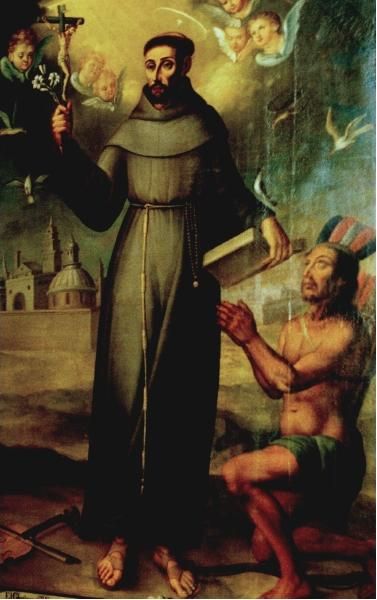
Image: San Francisco Solano (1549 -1610).jpg · Attributed to Pedro Diaz · Public domain, via Wikimedia Commons

Image: Attributed to Pedro Diaz, Wikimedia Commons (Public domain)

From “Catholic Encyclopedia (1913)/St. Francis Solanus,” The Catholic Encyclopedia (New York: Robert Appleton Company, 1907–1914), via Wikisource. Public domain. Matched by name and feast date; text unedited except for our bracketed notes in grey.

Retold in plain modern English from Baring-Gould’s public-domain text, sentence by sentence, keeping the same facts and order. Short explanations in parentheses are ours.

From Sabine Baring-Gould, The Lives of the Saints, new edition in 16 vols. (London: John C. Nimmo, 1897–98); text from the Internet Archive scan (OCR, lightly cleaned; errors possible). Public domain in the United States. Reproduced unedited, except for short bracketed notes in grey that we added to explain names and terms (“S.” is the old abbreviation for Saint). Some history and judgments reflect 19th-century scholarship.