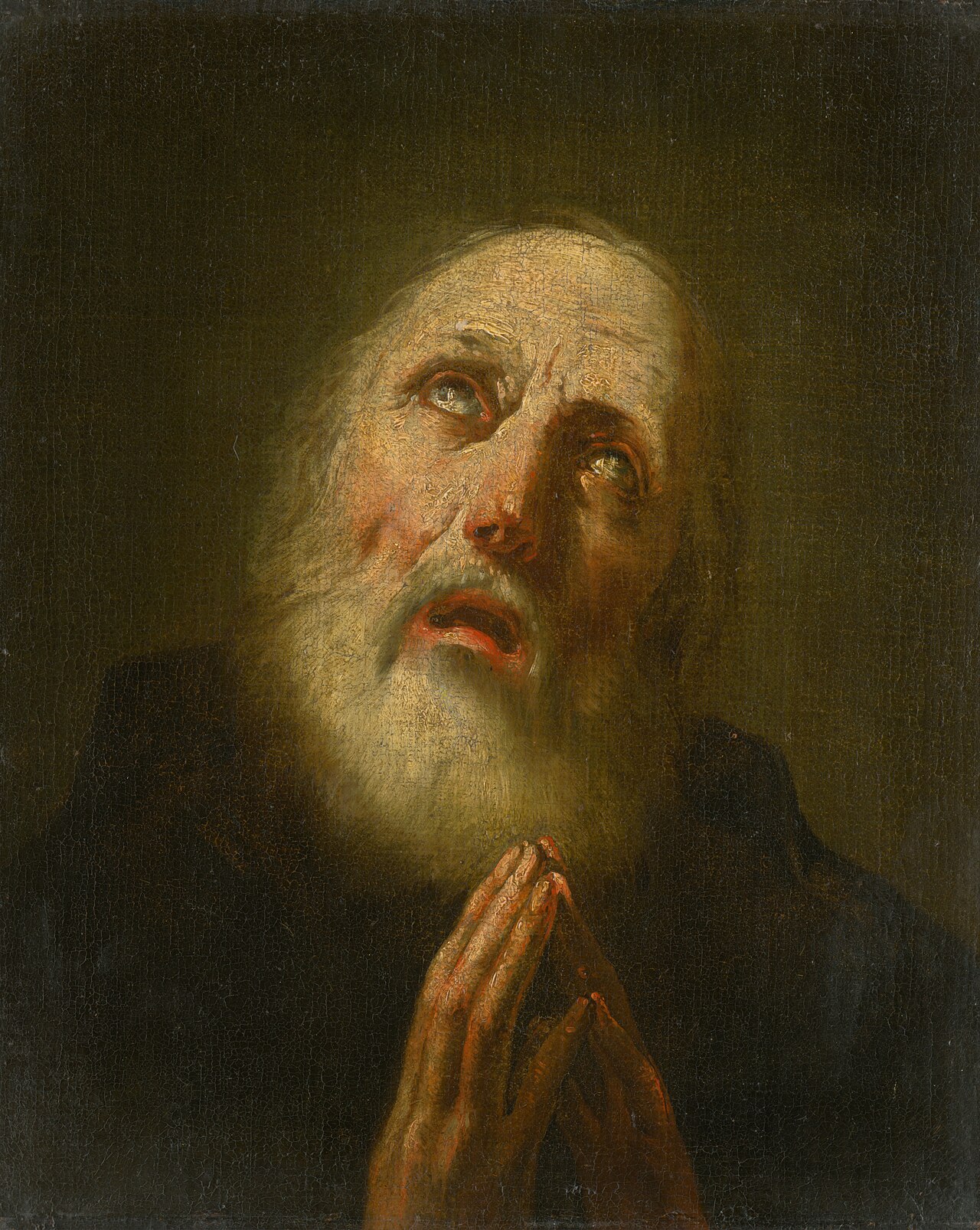
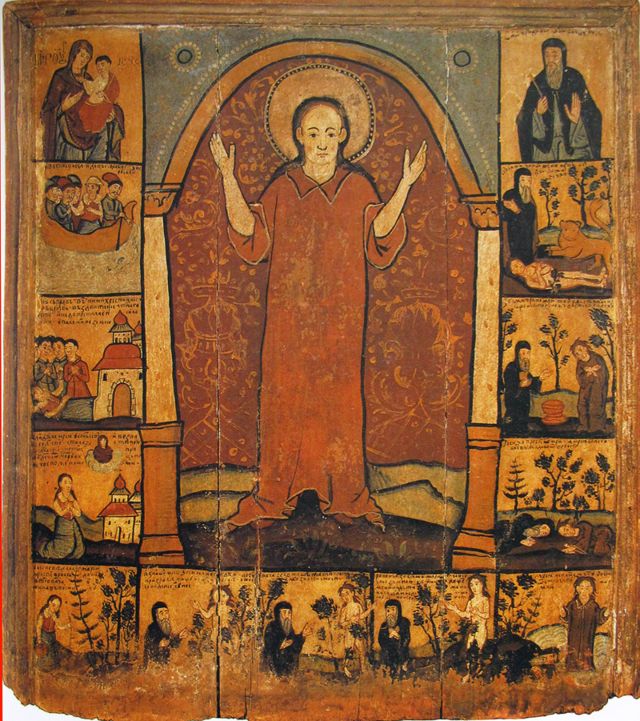
Some saints are known for their poverty, others for their austerity, and others for their prayer and holy zeal. Saint Francis of Paula is notable for his special love for humility, which he strongly recommended to his followers as the foundation of all Christian virtues. He gave them a name that reflected this, calling them Minims, to signify that they were the least in the house of God. The leader of each house in his Order was called the Corrector, to remind him that he was merely the servant of all the others, in line with Christ's teaching, who said, “He that is greatest among you, let him be as the younger; and he that is chief, as he that doth serve.”
The archbishop of Cosenza approved the rule and Order in 1471. Pope Sixtus IV confirmed it with a papal bull dated May 23, 1474, and established Francis as the superior general. Around 1476, the saint founded another convent at Patemo, located on the Gulf of Tarentum, and a third at Spezza, in the diocese of Cosenza. In 1479, after being invited to Sicily, he was welcomed there as an angel from heaven, performed miracles, and built several convents on the island, where he stayed for a whole year. Upon his return to Calabria in 1480, he built another convent at Corigliano, in the diocese of Rossano.
Ferdinand, king of Naples, was angered by some wise advice the saint had given him and his two sons, Alphonso, duke of Calabria, and John, cardinal of Aragon, and he persecuted him. However, the third son, Frederick, prince of Tarentum, was his friend. The king claimed that Francis had built religious houses without royal approval and ordered a messenger to arrest him at Patemo and bring him to Naples as a prisoner. However, the officer was so moved by Francis's humility and his willingness to follow him that, struck with awe, he returned to Naples and persuaded the king not to take any action against the servant of God.
The Sovereign Pontiff, Paul II, instructed one of his chamberlains to visit the remarkable man of God and determine whether he was inspired by the Divine Spirit or motivated by self-righteousness. The chamberlain arrived at the convent without announcing himself, and upon entering, he intended to kiss the hands of Saint Francis. However, the holy man would not allow this. Instead, he fell to his knees and said he was obliged to kiss the hands that God had consecrated for the thirty years he had been saying Mass. The chamberlain was greatly impressed by this response from a complete stranger, who revealed how long he had been a priest. Concealing his identity and purpose, he requested to speak with Francis privately.
The saint led him into his cell. The chamberlain then began to criticize Francis's institution as being too austere. He spoke extensively about the illusions and dangers associated with miraculous gifts and urged him to follow the ordinary paths taken by other notable servants of God. Francis responded to his objections with great humility, but seeing that the chamberlain was still not satisfied, he went to the fire, took out some burning coals, and held them in his hand for a considerable time, calmly stating, “All creatures obey those who serve God with a perfect heart.” Remarkably, his hands were unharmed.
The chamberlain returned to the pope filled with respect for the holy man and told him that Francis's sanctity was greater than his reputation. A young man, who was the saint's nephew, had died, and his mother, the saint's own sister, sought comfort from him. After the requiem Mass had been said for the repose of the young man's soul, Saint Francis ordered the corpse to be moved from the church into his cell, where he continued to pray until he restored him to life and presented him to his mother in perfect health. The young man joined his Order and became the well-known Nicolas Alesso, who later followed his uncle to France.
At this time, Louis XI was king of France. He had spent his life in schemes and was marked by wrongdoing, and now that miserable life was coming to an end. Everyone knows the nature of this cunning monarch. It has been portrayed by a skilled writer in "Quentin Durward." Now he faced death. The thought of it chilled him, and in fear, he used every means at his disposal to fend off the dreaded visitor. He consulted doctors, charlatans, and astrologers, and paid his personal physician ten thousand crowns a month, hoping to bribe him to extend his life. He isolated himself in his castle of Plessis-les-Tours, feeling despair, fear, and intense irritability. Jesters and dancers performed for him to distract his mind from the one overwhelming concern, but the shadow of death loomed too heavily over his soul to be lifted by humor or entertainment. He ordered prayers, processions, and pilgrimages for his health, and even tried to prevent the north wind from blowing, as it was harmful to his health. In blind superstition rather than faith, he collected relics from all over and stored them in his chamber at Plessis, as if he hoped to ward off death with these objects.
Hearing about the virtues and miracles of Saint Francis of Paula, he hoped to gain life through his intercession. He sent an ambassador to Calabria, asking that Saint Francis come to see him and restore his health, making grand promises to serve both him and his Order. When he learned that the holy man would not be persuaded by these promises, he pleaded with Ferdinand, king of Naples, to send him. Francis replied that he could not tempt God by undertaking a journey of a thousand miles to perform a miracle requested for low and merely human reasons. Louis then asked the pope to intervene on his behalf. Pope Sixtus IV commanded Francis to go to the king immediately, and the saint obediently set out on his long journey. After boarding a ship at Ostia, he landed in France and healed many plague victims in Provence along the way. Louis, overjoyed, gave a purse of ten thousand crowns to the messenger who brought the news of the saint's arrival in his lands and sent the dauphin, along with the leading lords of the court, to meet him at Amboise and escort him to his palace. The saint arrived at Plessis on April 24, 1482. The king went out to meet him, accompanied by his court, and fell to his knees, begging him to ask God to prolong his life. “Sire,” said Saint Francis, “no wise man should wish for such a thing. The lives of kings have their appointed limits just like those of their lowest subjects. God's decree is unchangeable; therefore, resign yourself to His holy will.”
The king was not satisfied. His mean, crafty mind led him to believe that the saint would not yield to his requests because he had not been bribed enough. He sent him a statue of the Blessed Virgin made of pure gold, valued at 7,000 ducats. Francis refused the statue. “I do not reverence the gold,” he said, “but her whom it is molded to represent. I have my own paper representation of her, and I am content with that.”
A few days later, the king privately offered him a large sum of money, promising that no one would know if he accepted it. The serious hermit suddenly became angry. “Sire,” he said, “use your money better, in healing the many wrongs you have done during your life.”
If Louis XI was brought to anything resembling true remorse, it was because of the straightforward hermit, who stayed with him until his death and prepared him for his passage into that other and terrible world he feared so much. It was in the arms of Francis that Louis died, uttering his last words.
His last breath was, “Notre-Dame d’Embrun, help me!” King Charles VIII honored the saint as much as his father, Louis XI, did. He consulted the saint on matters of his conscience and even on state affairs. He visited the saint every day while he stayed at Plessis and persuaded him to be the godfather to his son, the dauphin, to whom he gave the name of our saint. He built a beautiful convent for him in the park of Plessis, in a place called Montils, and another at Amboise, on the very spot where he met the saint when he was the dauphin. In 1495, while going to Rome, he built a grand monastery for this Order on the Pincian Hill, which was to admit only Frenchmen. During his reign, the saint founded the convent of Nigeon, near Paris.
Two doctors, who had strongly opposed the institute before the bishop of Paris, were so moved by the sight of the saint at Plessis that they joined his Order in 1506. Pope Julius II approved the rule again, in which the saint had made some changes. King Charles VIII died in 1498, and Louis XII succeeded him. At first, he allowed the saint to return to Italy, but he quickly revoked that permission.
Saint Francis spent the last three months of his life in his cell, preparing for a happy death. He denied himself all communication with others so that nothing would distract him from thoughts of death and eternity. He fell sick with a fever on Palm Sunday, 1506. On Maundy Thursday, he gathered all his religious followers in the sacristy and encouraged them to love God, to be charitable with one another and with all people, and to strictly observe all the duties of their rule. After making his confession, he received communion barefoot and with a cord around his neck, which is the custom of his Order. He died on April 2, 1508, at the age of ninety-one. He was canonized by Leo X in 1519.
His body remained uncorrupted in the Church of Plessis-les-Tours until 1562, when the Huguenots broke open the shrine and found it intact, fifty-five years after his death. They dragged it through the streets and burned it in a fire made from the wood of a large crucifix. Some of his bones were recovered by Catholics and are kept in several churches of his Order in Plessis, Nigeon, Paris, Aix, Naples, Paula, and Madrid.
In art, Saint Francis of Paula is often depicted with a donkey beside a forge. The story goes as follows: at the saint's request, a blacksmith shod his donkey and then demanded payment. However, the man of God had no money with him. The smith then began to shout and curse. But Francis told the donkey to return the shoes, and the animal shook them off its feet. He is shown in the habit of his Order with "Caritas" written on his chest, surrounded by rays of light, and standing on his cloak. According to a popular legend, he was carried from Sicily to Calabria on this cloak when boatmen refused him passage because he could not pay the fare.
Footnotes
- The archbishop of Cosenza approved the rule and Order in 1471.
- Pope Sixtus IV confirmed it with a papal bull dated May 23, 1474.
- The Sovereign Pontiff, Paul II, instructed one of his chamberlains to visit the remarkable man of God.
- Saint Francis of Paula was a 15th-century Italian hermit and founder of the Order of Minims.
- Blessed Virgin: a title for Mary, the mother of Jesus.
- Notre-Dame d’Embrun, help me!
- The Huguenots were French Protestants in the 16th century.
Baring-Gould’s own footnotes, in modern English.
Read the original 1870s text
Baring-Gould’s sources: Roman Martyrology. Authority * — The Acts of his Canonization, which took place in 15x9, and his life written by a disciple. Philip de Comines also speaks of him during his lifetime.] This saint was bom about the year 1416, at Paula, a small town in Calabria. His parents were very poor and industrious. Francis, whilst yet a child, showed evident token of being chosen by God for a special work. In the thirteenth year of his age his father placed him in the convent of Franciscan friars at S. Marco, where he learned to read. From that time he denied himself the use of linen and meat, though he had not professed the rule of the Order. Having spent one year there, he performed, with his parents, a pilgrimage to Assisi, the Portiuncula, and Rome. When he returned to Paula, with their consent, he retired to a solitude about half a mile from the town; and thence shortly after to the face of a rock, a cliff on the sea coast, where he made himself a cave. He was scarce fifteen years old when, in 1432, he shut himself up in this hermitage. He had no other bed than the rock itself, nor other food than the herbs which he gathered in the neighbouring wood, or what was sometimes brought him by his friends. Before he was quite twenty years old, two other devout persons joined him. The neighbours built them three cells and a chapel, in which they sang the praises of God, and a priest from the parish church came, and said mass for them. This is considered the foundation of his religious order. Seventeen years after, the number of recluses was so much increased that, with the approbation of the archbishop of Cosenza, a large church and monastery were built for them in the same place. This was about the year 1454. So great was the devotion of the people, that the whole country joined in the work, even noblemen shared in carrying burdens. His bed was now no longer indeed the rock, but it was a board, with a log for his pillow, till, in his old age, he was persuaded to make use of a mat He took but one meal in the day, in the evening, and that usually consisted of only bread and water. He obliged his followers to observe a perpetual Lent, and always to abstain not only from flesh, but also from food made of milk, cheese, butter, and eggs. In order more effectually to enforce obedience to this injunction, he prescribed a fourth vow, by which every religious of his Order bound himself to observe it. His intention in enjoining this perpetual abstinence was to repair, in some sort, the neglect or lax observance of Lent among Christians. And he hoped that the severe discipline of his Order would stimulate Christians living in the world to deny themselves more seriously in the forty days of Lent, instead of seeking means of evading or tempering the disciplinary rules of the Church. Humility, however, was his darling virtue. The greater he was before God, and the more he was distinguished in the sight of heaven, the less he appeared in his own eyes. He felt a craving to live unknown and hidden from men, which made him shun their society. But a city set on a hill cannot be hid, and God lifteth the humble and setteth him on high. When it pleased God to discover him to the world, the saint conversed with great and noble persons without losing his retiring and humble spirit Other Orders have their principal end and distinguishing characters; some being reApril *.] •S'. Francis of Paula.
I markable for their poverty, others for austerity, others for ! prayer, holy zeal, &c. That of S. Francis of Paula may ' be distinguished by its special love for humility, which he J most earnestly recommended to his followers as the ground | work of all Christian virtues, and he gave them a name j that might express it, namely, that of Minims, to signify | that they were the least in the house of God; and the j superior of every house of his Order he called the Corrector, to put him in continual remembrance that he was only the servant of all the rest, according to the doctrine of Christ, who said, “ He that is greatest among you, let him be as the younger; and he that is chief, as he that doth serve.” The archbishop of Cosenza approved the rule and Order in 1471. Pope Sixtus IV. confirmed it by a bull, dated the 23rd of May, in 1474, and established Francis as superiorgeneral About the year 1476, the saint founded another convent at Patemo, on the gulf of Tarentum; and a third at Spezza, in the diocese of Cosenza. In the year 1479, being invited into Sicily, he was received there as an angel from heaven, wrought miracles, and built several convents in that island, where he continued a whole year. On his return into Calabria, in 1480, he built another convent at Corigliano, in the diocese of Rossano. Ferdinand, king of Naples, provoked at some wholesome advice the saint had given him and his two sons, Alphonso, duke of Calabria, and John, cardinal of Aragon, persecuted him; but the third son, Frederick, prince of Tarentum, was his friend. The king, alleging that he had built religious houses with1 out the royal assent, ordered a messenger to apprehend him at Patemo, and bring him prisoner to Naples. But I the officer was so moved by his humility, and the readiness ' with which he disposed himself to follow him, that, struck ( with awe, he returned to Naples, and dissuaded the king ! from attempting any thing against the servant of God. The Sovereign Pontiff, Paul II., charged one of his chamberlains to visit the wonderful man of God, and examine whether he were actuated by the Divine Spirit, or were influenced by self-righteousness. The chamberlain arrived at the convent without announcing himself, and on entering, would have kissed the hands of S. Francis, but this, the holy man would not allow; and falling on his knees, said he was bound to kiss his hands, which God had consecrated for the thirty years during which he had said mass. The chamberlain was much struck by his answer made to him by an entire stranger, telling him how long he had been a priest; but concealing himself and his commission, asked to converse with him in private. The saint conducted him into his cell The chamberlain then began to censure his institution as too austere, spoke much on the illusions and dangers to which miraculous gifts are liable, and exhorted him to walk in ordinary paths, trodden by other eminent servants of God. Francis replied to his objections with great modesty, but seeing that he was not yet satisfied, he went to the fire, and taking out some burning coals, held them a considerable time in his hand, saying calmly: “ All creatures obey those who serve God with a perfect heart” And lo I his hands were unhurt. The chamberlain returned to the pope full of veneration for the holy man, and told him that the sanctity of Francis was greater than his reputation. A youth, nephew to the saint, having died, his mother, the saint's own sister, applied to him for comfort After the requiem had been said for the repose of the young man's soul, S. Francis ordered the corpse to be carried from the church into his cell, where he ceased not to pray till he had restored him to life, and presented him to his mother in perfect health. The young man entered his Order, and was the celebrated Nicolas Alesso, who afterward followed his uncle into France. April a.] Francis of Paula.
At this time Louis XI. was king of France. His life had been spent in intrigues, and was stained by crime, and now that wretched life was drawing to a close. Everyone knows what was the character of this crafty monarch. It has been sketched by a master’s hand in 44 Quentin Durward.” And now he must die. The thought turned his blood cold, and in fear he used every means in his power to ward off the dread visitor. He consulted physicians, quacks, and astrologers, and gave his private physician ten thousand crowns a month, hoping to bribe him to prolong his life. He shut himself up in his castle of Plessis-les-Tours, despairing, frightened, and intensely irritable. Jesters and dancers performed their antics before him, to divert his mind from the one absorbing topic, but the shadow hung too darkly upon his soul to be lightened by a joke and dispelled by a caper. He ordered prayers, processions, and pilgrimages for his health, and even to prevent the blowing of the north wind, which was injurious to his constitution, and in blind superstition, rather than in faith, he collected relics [the bodily remains of a saint, or objects they used, kept with honor] from every quarter, and stored them in his chamber at Plessis, as though he hoped to drive off death by a display of these. Hearing of the virtue and miracles of S. Francis of Paula, he hoped to obtain life through his intercession, and he sent an ambassador into Calabria, begging that S. Francis would come to see him, and restore his health, making the greatest promises to serve both him and his Order. Hearing that the man of God would not be prevailed on by these promises to comply with his request, he entreated Ferdinand king of Naples to send him. Francis answered that he could not tempt God and undertake a voyage of a thousand miles to work a miracle, which was asked out of low and merely human motives. Louis then desired the pope to interpose in favour of his request Sixtus IV. commanded Francis immediately to repair to the king, and the saint obediently set out on his long journey. Embarking at Ostia, he landed in France, and cured many sick of the plague in Provence, as he passed. Louis, in great joy, gave a purse of ten thousand crowns to the messenger who brought the news of the saint's arrival in his dominions, and sent the dauphin, with the principal lords of the court, to meet him at Amboise, and conduct him to his palace. The saint arrived at Plessis, on the 24th of April, in 1482. The king went out to meet him, attended by his court, and falling on his knees, conjured him to obtain of God the prolongation of his life. “Sire,” said S. Francis, “no wise man ought to entertain such a desire. The lives of kings have their appointed limits as well as those of their meanest subjects. God's decree is unchangeable, therefore resign thyself to His holy will.”
The king was not satisfied, his mean, crafty mind made him suppose that the saint would not yield to his solicitations because he had not been sufficiently bribed. He sent him a statue of the B. Virgin in pure gold, valued at 7,000 ducats. Francis refused the statue. “I do not reverence the gold,” said he, “ but her whom it is moulded to represent I have my own paper representation of her, and therewith I am content.” A few days after, the king privately offered him a large sum of money, promising that no one should know if he would but accept it The grave hermit flashed into sudden wrath. “Sire,” said he, “use thy money better, in healing the many wrongs thou hast done during thy life.”
If Louis XI. was brought to anything approaching true contrition, it was due to the plain-spoken hermit, who attended him till his death, and prepared him for his passage into that other and awful world he feared so greatly. It was in the arms of Francis that Louis died, uttering with April a.] Francis of Paula.
his last breath, “ Notre-Dame d’Embrun, aidez moi 1" on King Charles VIII. honoured the saint as much as did his father, Louis XI., and consulted him on the affairs of his conscience, and even on those of the state; visited him every day as long as he stayed at Plessis, and induced him to stand godfather to his son, the dauphin, to whom he gave the name of our saint He built for him a beautiful convent in the park of Plessis, in a place called Montils; and another at Amboise, upon the very spot where he met him when he was dauphin; and going to Rome in 1 495, he built there, on the Pincian hill, a stately monastery for this Order, under the name of the Blessed Trinity, into which none but Frenchmen were to be admitted. In his reign, the saint founded the convent of Nigeon, near Pans. Two doctors, who had violently opposed the institute before the bishop of Paris, were so moved by the sight of the saint at Plessis, that they entered his Order in 1506. Pope Julius II. again approved the rule, in which the saint had made some alterations. King Charles VIII. dying in 1498, Louis XII. succeeded him.. He at first gave the saint leave to return to Italy; but quickly recalled it S. Francis spent the last three months of his life within his cell, to prepare himself for a happy death, denying himself all communication with mankind, that nothing might divert his thoughts from death and eternity. He fell sick of a fever on PalmSunday, 1 506. On Maundy Thursday he assembled all his religious in the sacristy, and exhorted them to the love of God, charity with one another and with all men, and to a punctual observance of all the duties of their rule. After having made his confession, he communicated barefoot, and with a cord about his neck, which is the custom of his Order. He died on the 2nd of April, in 1508, at the age of ninety-one. He was canonized by Leo X. in 1519. His body remained uncorrupted in the Church of Plessis-les-Tours, till the year 1562, when the Huguenots broke open the shrine and found it entire, fifty-five years after his death. They dragged it about the streets, and burned it in a fire which they had made with the wood of a great crucifix. Some of his bones were recovered by the Catholics, and are kept in several churches of his Order at Plessis, Nigeon, Paris, Aix, Naples, Paula, and Madrid. In art S. Francis of Paula is often represented with an ass beside a forge. The story is as follows. At the request of the saint a blacksmith shod his ass, and then demanded payment. But the man of God had no money with him. Then the smith began to storm and swear. But Francis bade the ass restore the man the shoes, and the beast shook them off its feet He appears in the habit of his Order with Caritas written on his breast surrounded by rays of light, and standing on his cloak, on which, says a popular legend, he was floated from Sicily to Calabria, when refused a passage by the boat men, because he could not pay the fare.