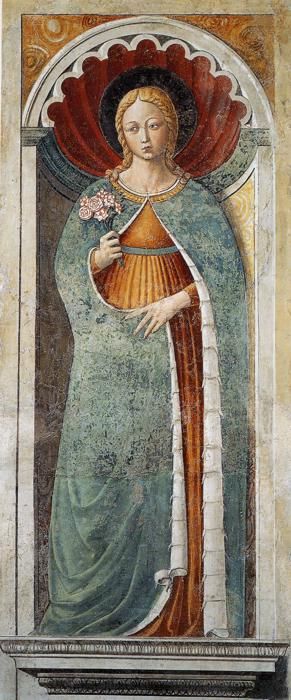
Fina was the daughter of very poor parents in San Geminiani, Tuscany. Her name was probably Seraphina, but she is only known by the affectionate nickname, Fina. The young girl was exceptionally beautiful and at the same time extremely shy, always walking around with her soft dark eyes modestly lowered. While she was still young, she suddenly became paralyzed throughout her entire body, except for her head. For six years, she lay on one side on a hard board and would not allow her mother or the neighbors to make her a soft bed, preferring instead to be like our Blessed Lord, stretched on His Cross. Her father seems to have been dead, and the poor mother begged for food for herself and her daughter. The girl's skin broke and formed terrible sores, but she endured all her suffering with sweetness. When left alone, the mice and rats that infested the miserable hut would often come and attack her, horribly mangling her sores, and the poor child, being paralyzed in all her limbs, was unable to protect herself from them. Yet not a murmur escaped her lips, nor did a cloud darken the serenity of her spirit. She was always gentle, loving, and considerate of others.
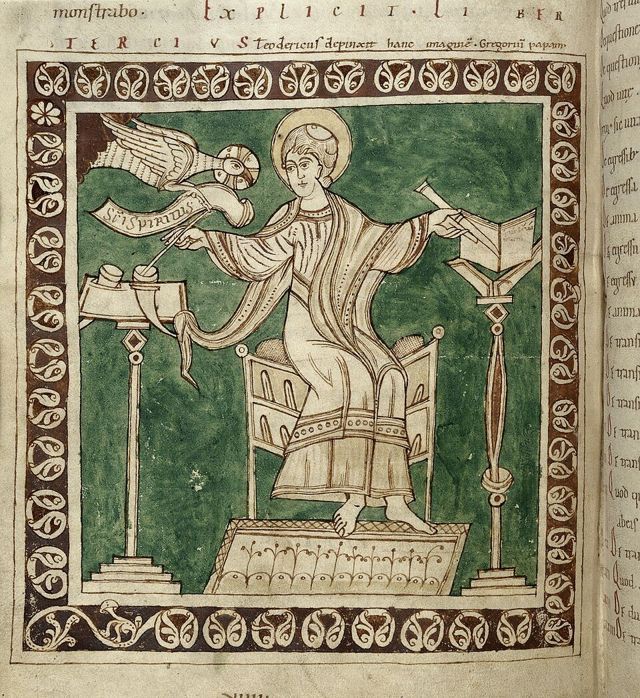
A new misfortune now befell her. Her mother died suddenly while crossing the threshold on her return from begging, leaving Fina completely unprovided for. She was thus left entirely helpless, at the mercy of poor neighbors. However, their sporadic attention was not like that of a mother, and it soon became clear that she would die from neglect. In the midst of her suffering, she had found comfort in hearing about Saint Gregory the Great and his cruel pains, and the young girl had developed a strong attachment and devotion to him. One night, as she lay alone and uncared for in her hut, the great pontiff and doctor of the Church appeared out of the darkness beside the poor cripple and told her to be of good cheer. "Dear child, on my festival Christ will give you rest." And it was so. On the feast of Saint Gregory, she died. When the neighbors lifted the poor little body from the board on which it had lain, behold! that board was covered with white violets giving off a delightful fragrance, and to this day, in San Geminiani, the peasants call these flowers that bloom around the time of her death, Saint Fina's flowers.
Footnotes
- Saint Gregory the Great was a pope known for his contributions to the Church.
- San Geminiani is a town in Tuscany, Italy.
Baring-Gould’s own footnotes, in modern English.
Read the original 1870s text
Baring-Gould’s sources: Venerated in Tuscany, especially at S. Geminiani. Authority:—A Life written by the famous preacher, John de S. Geminiani (1310).
S. Fina was the daughter of very poor parents at S. Geminiani, in Tuscany. Her name was probably Seraphina, but it is only known by its diminutive of endearment, Fina. The young girl was singularly beautiful, and at the same time exceedingly bashful, ever walking abroad with her soft dark eyes modestly lowered. Whilst yet young she was suddenly paralysed through her whole body, with the exception of her head. For six years she lay on one side upon a hard board, and would not suffer her mother or the neighbours to make her a soft bed, desiring rather to be like our Blessed Lord, stretched on His Cross. The father seems to have been dead, and the poor mother begged for subsistence for herself and daughter. The girl's skin broke, and formed terrible sores, but she bore all her sufferings with sweetness. When left alone, the mice and rats, which infested the miserable hut, would often come and attack her, and horribly mangle her sores, and the poor child being paralysed in all her members was unable to protect herself from them. Yet not a murmur escaped her lips, nor did a cloud darken the serenity of her temper. She was always gentle, loving, and considerate of others.
A new misfortune now befel her. Her mother died suddenly whilst crossing the threshold, on her return from begging, and Fina was left wholly unprovided for. She was thus left perfectly helpless, to the mercy of poor neighbours. But their desultory attention was not like that of a mother, and it soon became evident that she would die through partial neglect. In the midst of her sufferings she had been comforted by being told of S. Gregory the Great and his cruel pains, and the young girl had formed a strong attachment and devotion to him. One night, as she lay alone, uncared for in her hut, the great pontiff and doctor of the Church shone out of the darkness by the side of the pauper cripple, and bade her be of good cheer. "Dear child, on my festival Christ will give thee rest." And it was so. On the feast of S. Gregory she died. When the neighbours lifted the poor little body from the board on which it had lain, lo! that board was covered with white violets exhaling a delicious perfume, and to this day, at S. Geminiani, the peasants call these flowers which bloom about the day of her death, S. Fina's flowers.