This Saint’s Story
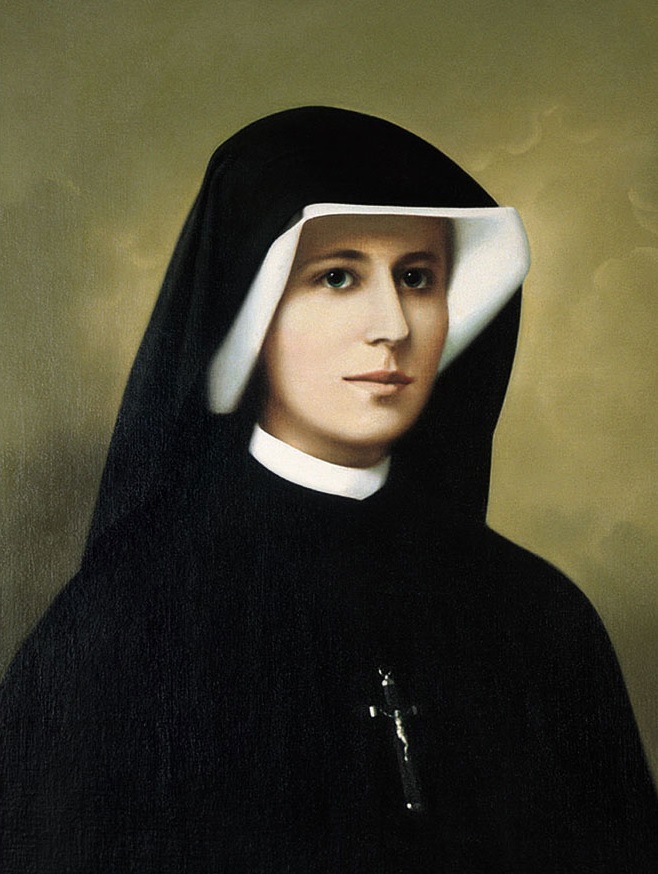
The Vatican biography remembers a child marked by love of prayer, work and obedience, and by a sensitivity to the poor. She made her First Communion at nine and had only three years of schooling. She felt the first stirrings of a religious vocation at seven, but her parents would not let her enter a convent, so at sixteen she left home to work as a housekeeper in Aleksandrów, Łódź and Ostrówek, supporting herself and helping her family.
On August 1, 1925, she entered the Congregation of the Sisters of Our Lady of Mercy and took the name Sister Mary Faustina. Over thirteen years she lived in several of its houses, including Kraków, Płock and Vilnius, working as a cook, gardener and porter. Outwardly her life looked plain and even dull; she kept the rule faithfully and was remembered as recollected, natural, serene and kind. Inwardly, the biography says, she lived a deep union with God centered on the mystery of His mercy, with a strong love of the Eucharist and of Mary, Mother of Mercy.
At the request of her confessors she kept a Diary of what she understood Jesus to be asking. From it come the forms of Divine Mercy devotion: the image inscribed "Jesus, I trust in You," the feast of Divine Mercy on the Sunday after Easter, the chaplet, and prayer at three in the afternoon. She insisted that graces and visions do not make a soul holy; holiness lies in the close union of one's will with God's.
Worn down by tuberculosis, she died in Kraków on October 5, 1938, aged thirty-three. Her cause opened in Kraków in 1965. Pope John Paul II beatified (declared 'Blessed', the step before sainthood) her on April 18, 1993, and canonized (officially declared a saint by the pope) her on April 30, 2000. Her remains rest at the Divine Mercy Sanctuary in Kraków-Łagiewniki; her feast is October 5.