This Saint’s Story
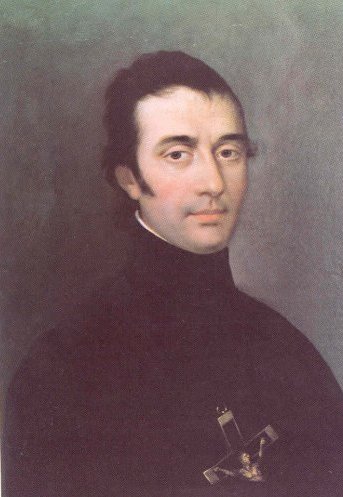
His early life was disrupted by the French Revolution, which forced his family to flee to Italy when he was just eight years old. Living as refugees, they faced poverty and instability, moving through various cities in Italy. Despite these hardships, Eugène received a significant education from a local priest, Bartolo Zinelli, who greatly influenced his spiritual and academic development.
When Eugène turned twenty, he returned to France and initially indulged in the pleasures of his noble status. However, he soon felt a deep emptiness in his life, prompting him to seek a more meaningful existence through church involvement and charitable work. His spiritual awakening culminated on Good Friday in 1807, when he experienced a profound religious conversion that led him to pursue the priesthood.
Eugène began his theological studies at a seminary in Paris and was ordained a priest on December 21, 1811. He dedicated himself to evangelizing the poor and marginalized, particularly those who spoke Provençal and were neglected by the Church. In 1816, he gathered a group of priests to form the 'Missionaries of Provence,' focusing on preaching and serving the most abandoned communities. This group later became known as the Missionary Oblates of Mary Immaculate, receiving papal approval in 1826.
As a bishop, Eugène was appointed the Bishop of Marseille in 1837. He worked tirelessly to restore the Church's presence and discipline in France, commissioning the construction of the basilica Notre-Dame de la Garde and promoting the moral teachings of Saint Alphonsus Liguori. His commitment to the Church and its mission extended beyond France, as he sent Oblates to various countries, including Canada and the United States, to spread the Gospel.
Eugène de Mazenod passed away on May 21, 1861. His legacy continued through the Oblates, who have since established a presence in nearly 70 countries. The Church recognized his virtuous life, declaring him 'venerable' in 1970, beatifying him on October 19, 1975, and canonizing him on December 3, 1995, during a Mass celebrated by Pope John Paul II.