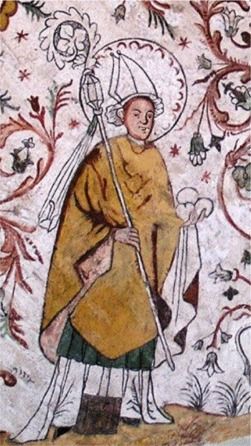
St. Eskill

Eskill was an Englishman and a kinsman of St Sigefride.

Read the essentials →
Feast June 12 · Bishop, Martyr

St. Eskill

Current feast

June 12 (also listed: June 11)
Secondary source · Wikipedia infobox

Traditional feast

June 12
1914 / pre-1969 calendar, per Baring-Gould (1897)

Represents

Bishop
Martyr

Feast days

Feast: June 12

This Saint’s Story

Adapted in modern English from Alban Butler's Lives of the Saints · Baring-Gould original below · little is known

After St Anscharius left Sweden, the Swedes went back to paganism and expelled their bishop, so Sigefride went there as a missionary and Eskill went with him. At the request of the king and people, Sigefride consecrated Eskill bishop.

The church grew until the good king Ingon was killed and Sweno, called the Bloody, took the throne. When the pagans held a great festival at Strengis, Eskill went there and urged them to give it up. A violent storm of hail and thunder destroyed their altar. They called it magic, and by the king's order they stoned him to death, in the eleventh century.
Short entry · the summary here is 197 words; Baring-Gould’s fuller original text and its sources are below. We have not filled any gap with invented detail.

What he represents

How he teaches us to live

Drawn from themes in the original account

Celebrate this saint’s feast day. Remember him on June 12 with a short prayer, and ask for his help.

The full story

Baring-Gould’s account retold in modern English

Read the full story · 185 words · about 1 min

As long as he reigned, the Church grew. But Ingi was driven from the throne by Sweyn, who led the pagan faction. Sweyn and the people went to Strengnas, near Lake Malar, to offer the usual sacrifices to Thor, Odin, and Freyr, and to hold a great feast. Eskill spoke out, and boldly approached the crowd, rebuking them for trusting in false gods and not worshiping the Creator. As he spoke, a loud crash of thunder erupted over the gathering, and a fierce hailstorm struck the faces of the king and his followers. Meanwhile, if we can believe the story, Eskill and his small group of Christians, dressed in white robes, stood on a sunlit patch of green grass, untouched by the storm. The anger of the pagans intensified. A man named Spatbod threw a stone at the bishop and knocked him down. Then another man rushed at him and struck his skull with an axe, cutting off his crown. After that, the entire group of unbelieving Swedes, shouting, attacked the bishop, dragged him to a place with many stones, and stoned him to death.

Read the original 1870s text

Baring-Gould’s sources: Swedish Kalendar on this day. But some Martyrologies give June 9th, October 6th, and April 10th. Authority: — The Lessons of the ancient Swedish Breviary, probably taken from the Life of S. Eslrill, written by S. Brinjolf, Bishop of Skara.J S. Eskill or Oskull went with S. Sigfiried of York (Feb. 15th) into Sweden, as his chaplain, to assist him in spreading the Gospel amongst the Swedes, who were only partially converted. S. Sigfried consecrated him bishop. Ingi, who favoured Christianity, was then king of Sweden, [Jane is.

Land as long as he reigned, the Church increased. But Ingi was driven from the throne by Sweyn, at the head of the heathen party. Sweyn and the people came to Strengnas, near to the Malar lake, to offer the usual sacrifices to Thor and Odin and Freyr, and hold a great feist Eskill remonstrated, and going boldly before the people, rebuked them for putting their trust in vain gods, and not worshiping the Creator. As he spake, a crash of thunder burst over the assembly, and a pitiless hail-storm poured in the faces of the king and his host, whilst, if we may believe the story, Eskill and his little body of Christians in their white robes, stood on a sunlit patch of green sward, untouched by the storm. The fury of the heathens was redoubled, a man named Spatbod threw a stone at the bishop, and struck him down; thereupon another rushed upon him, and smote at his skull with his axe, shearing off the crown. Then the whole body of the unbelieving Swedes, yelling, fell on the bishop, dragged him to a suitable spot where there were many stones, and pelted him to death.

Help us add to this saint's story

Everything is read by a person before anything appears. Facts are checked against trusted sources first.

Facts are welcome; a source link helps (optional).With your permission we may share it on this page.

Nine days · Free

Pray the novena
with us.

One short email a day for nine days. The day's prayer, a line from St. Eskill's story, and a nudge to keep going.

Also on June 12
B

Sts. Basilides and…

June 12 · Martyrs
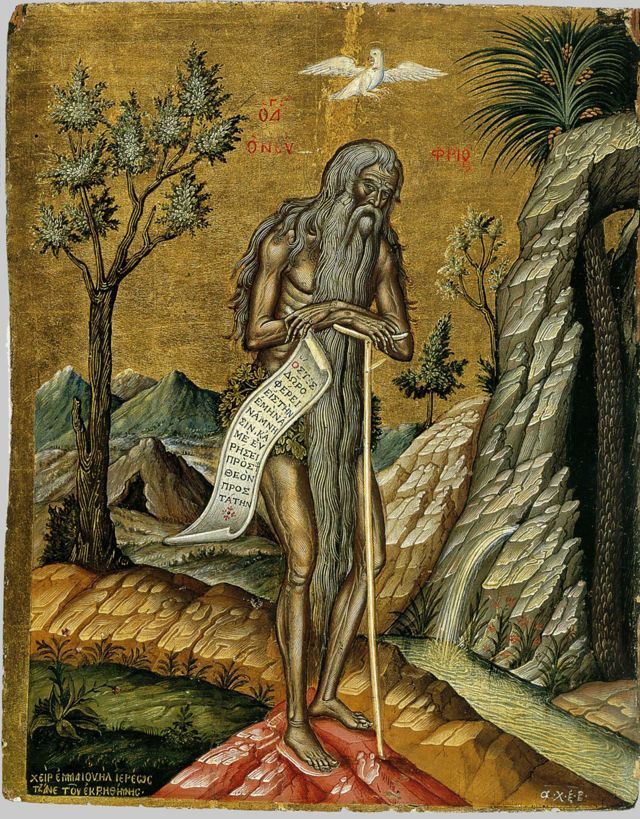
St. Onuphrius

St. Onuphrius

June 12 · Hermit
J

St. John of Sagahun

June 12 · Confessor
← All 1970 saints in the library
Sources & notes

Feast-day sources

Story sources

Sources

Credits

Image: Overselo L1valv4a detail (left).jpg · sv:Användare:Klafui · Public domain, via Wikimedia Commons

Image: sv:Användare:Klafui, Wikimedia Commons (Public domain)

Retold in plain modern English from Baring-Gould’s public-domain text, sentence by sentence, keeping the same facts and order. Short explanations in parentheses are ours.

From Sabine Baring-Gould, The Lives of the Saints, new edition in 16 vols. (London: John C. Nimmo, 1897–98); text from the Internet Archive scan (OCR, lightly cleaned; errors possible). Public domain in the United States. Reproduced unedited, except for short bracketed notes in grey that we added to explain names and terms (“S.” is the old abbreviation for Saint). Some history and judgments reflect 19th-century scholarship.