This Saint’s Story
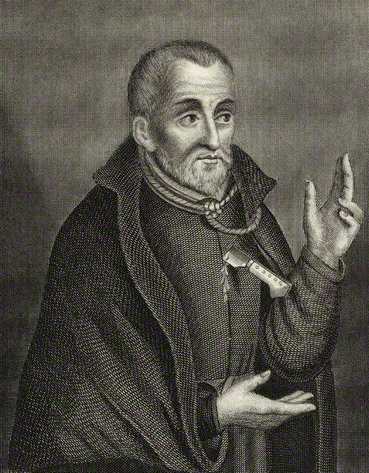
He received his early education at Christ's Hospital and later attended St John's College at Oxford, where he excelled in his studies and became a junior fellow. By 1560, he had taken the Oath of Supremacy and was ordained as an Anglican deacon. However, he began to have doubts about Anglican teachings, which led him to leave Oxford in 1569 to study privately in Ireland.
While in Ireland, Campion was sheltered by friends but faced the threat of arrest due to his Catholic leanings. He managed to evade capture for several months while writing a history of Ireland. In 1571, he secretly left for Douai in the Low Countries, where he returned to the Catholic faith and joined the English College, which had been established to train priests for the English mission.
After completing his studies, Campion traveled to Rome, where he joined the Society of Jesus in April 1573, becoming the first novice accepted into the order. He then spent time in Brünn and Prague, where he taught and was ordained a priest in 1578. His passion for the Catholic faith led him to participate in the Jesuit (member of the Society of Jesus, founded by St. Ignatius of Loyola) mission to England in 1580, where he aimed to support and strengthen the Catholic community amidst increasing persecution. He arrived in London disguised as a jewel merchant and quickly became known for his preaching and writings, including his influential pamphlet 'Decem Rationes'.
Campion's activities soon attracted the attention of the authorities, and he was ultimately betrayed and captured in July 1581. He endured severe torture in the Tower of London but remained steadfast in his faith. Despite being offered wealth and power if he renounced his beliefs, he refused. He was tried for treason and found guilty, leading to his execution on December 1, 1581, at Tyburn.
Edmund Campion was beatified (declared 'Blessed', the step before sainthood) on December 29, 1886, and later canonized (officially declared a saint by the pope) on October 25, 1970, as one of the martyrs recognized for their sacrifice during the English Reformation. His feast day is celebrated on December 1.