Deicolus left Ireland, his home country, with Saint Columbanus. They first lived together in the kingdom of the East Angles and later at Luxeuil, the large monastery that Columbanus founded in France. When Saint Columbanus was expelled by the fierce Queen Brunehaut and her son Thierri, King of Burgundy, Deicolus followed him. However, as his strength began to fail, he could not keep up with the energetic and active Columbanus. Therefore, he fell at the feet of his superior and asked for permission to retire to a place of solitude where he could serve God in peace.
Columbanus, feeling compassion for his exhausted companion, spoke to him in a fatherly manner, saying, "God Almighty, for the love of whom you left your country and have always obeyed me, may we rejoice together in the presence of His Majesty." After they embraced for a long time and shed many tears, the abbot blessed Deicolus with these words: "The Lord give you blessing out of Zion, and may you see Jerusalem in prosperity all your life long." Then, with tears, he quickly separated from Deicolus, who remained alone in Burgundy.
After kneeling down and commending himself to God, Deicolus walked through the wild, tangled thickets and wastelands, searching for a place to settle. However, the area was a wilderness with no habitation. By chance, he came across a swineherd who was feeding pigs on acorns in the forest. The swineherd was surprised to see a stranger. Deicolus reassured him, saying, "Do not be afraid, my brother, I am a monk. Now, I ask you to show me a suitable spot where I may settle."
The swineherd thought for a moment and replied, "There is no such place in this wilderness, except for a small lake we call Luthra, which has fresh springs." When Deicolus urged him to take him there, the swineherd said, "I cannot do that, for I would lose my pigs if I leave them without a keeper." But Deicolus took his staff, planted it in the ground, and said, "Do not worry; my staff will be your substitute, and the pigs will not stray until you return." The pigwarden trusted the word of the man of God, left his pigs, and led Deicolus to the place called Luthra. There, he found a small chapel dedicated to Saint Martin, built by a gentleman named Weifhardt, where services were occasionally held by his chaplain.
Deicolus was pleased with the place, so he lived in the forest. Every day, he visited the little chapel, opened the door, and went inside to pray. However, the priest who served that chapel was very angry. He spoke to the people, saying, "There is a man, a kind of hermit, who haunts the woods. He intrudes on this chapel and uses it as if it were his own private property. If I catch him here, I swear I will beat him well."
In response, the people blocked the windows and door with brambles and thorns to prevent the hermit from entering. Nevertheless, ignoring the obstacles, he came as usual. The priest then complained to Weifhardt, who became furious. He ordered his servants to search the woods for Deicolus and to mistreat him when they caught him. The servants obeyed his orders.
Shortly afterward, Weifhardt fell sick with a very painful illness. When his wife, Berthilda, thought he might die, she considered that perhaps the illness was a punishment for the harm done to the hermit. Therefore, she instructed her servants to find Deicolus and bring him to the sickbed. When Deicolus heard that Weifhardt was suffering greatly, he remembered Christ's command to return good for evil. He hurried to the gentleman's castle and entered the room.
Since it was a hot day and he had walked quickly, he took off his mantle because he was warm. The servants rushed to take it from him, but Deicolus exclaimed, "The elements serve him who serves God, and he does not need the help of man." Then, seeing a sunbeam coming through the window, he cast his mantle onto it, and it rested on the sunbeam.
After he prayed, the Lord healed the gentleman. Berthilda then gave Deicolus the farm of Luthra, the little chapel, and the adjoining woods. The hermit walked around the land given to him, rejoicing and saying, "This shall be your rest forever; here you shall dwell, for you have delight in it."
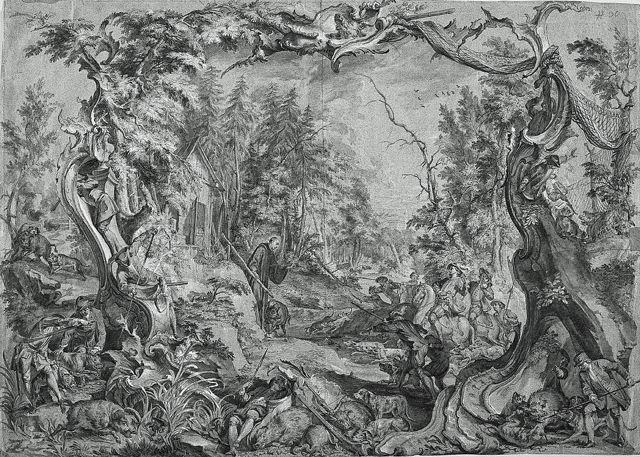
One day, while he was sitting and reading in his cell, King Clothaire II was hunting in the forest. His dogs were chasing a wild boar, and when the animal was cornered, it ran into the oratory of Deicolus, covered in foam. The hermit then extended his hand, placed it on the boar, and said, "Believe me, because you have taken refuge in the love of the brethren, your life shall be spared today." Soon after, the hunters arrived with their hounds and found the boar lying, panting, before the altar, while the man of God stood at the door to protect the animal. The King asked Deicolus who he was and where he came from. When the hermit explained that he was a disciple of Columbanus, who had promised him in the past that he would reign over three kingdoms, which had now come to pass, the King granted Deicolus the game in the woods, the fish in the waters, and some vineyards. Deicolus then gathered some brethren and built a monastery.
After some time, Abbot Deicolus desired to visit Rome, so he went with some of his brethren and obtained a charter from the Pope, which conferred privileges on his monastery. Upon his return, he spent several years governing his monks, always cheerful and amiable. The joy and peace of his soul shone through in his face. Once, when he was young, S. Columbanus asked him, "Deicolus, why are you always smiling?" He simply replied, "Because no one can take my God from me."
The exact year of his death is not known. He heard God's call to depart on January 18th. He then took the Holy Sacrament, and after receiving it, he kissed all the brethren. After kissing the last one, he fell asleep.
Baptism and Confirmation, from a Painting in the Catacombs.
A similar story is told of Saint Goar (July 6th), Saint Florence (November 7th), Saint Amabilis (October 19th), Saint Cuthman (February 8th), Saint David, abbot in Sweden (July 15th), Saint Hildevert, Bishop of Meaux (May 27th), Saint Robert of Chaise-Dieu, Saint Cunegunda, Saint Odo of Urgel, Saint Leonore, Saint Lucarus of Brixen, Saint Bridget, Blessed Utho of Metten, and Blessed Alruna of Altaich. I present this story for what it is worth. The story is traditional and was not written down until a hundred years after the death of Saint Deicolus.
Saint Germanicus, martyr, was at Smyrna, in Asia Minor, in the year 161. Saints Maris, Martha, Audifax, and Habakkuk, martyrs, were near Rome in the year 270. Saint Bassian, Bishop of Lodi, in Italy, lived around the year 409. Saint Catellus, Bishop of Castellamare, in Italy, died in the year 617. Saint Launomar, priest, and abbot of Corbion, in France, died in the year 593. Saint Remigius, Bishop of Rouen, lived around the year 771. Saints Blaithmaic, abbot, and companions, monks and martyrs, were at Iona, in Scotland, in the year 824. Saint Canute, king and martyr, died in Denmark in the year 1086. See July 10. Saint Wulstan, Bishop of Worcester, died in the year 1095. Saint Henry, bishop and martyr, was at Upsala, in Sweden, in the year 1150.
Footnotes
- Weifhardt was a gentleman who built a chapel dedicated to Saint Martin.
- Berthilda was Weifhardt's wife.
- Luthra is the name of the farm given to Deicolus.
- Eusebius, Ecclesiastical History, Book II, Chapter 25.
- Eusebius, Book II, Chapter 25.
- Book III, Chapter 3.
- Eusebius, Book II, Chapter 14.
- Eusebius, Book II, Chapter 15.
- That Claudius I persecuted the Church is evident from Acts 18:2. It is unclear why Alban Butler assigns S. Prisca a date of 275, after the death of the second Claudius, when all accounts agree she suffered under Claudius I.
- Lure is in the diocese of Besançon, located among the Vosges mountains, between Vesoul and Belfort.
- Saint Goar: July 6th
- Saint Florence: November 7th
- Saint Amabilis: October 19th
- Saint Cuthman: February 8th
- Saint David: July 15th
- Saint Hildevert: May 27th
- Saints Maris, Martha, Audifax, and Habakkuk: 270
- Saints Blaithmaic and companions: 824
Baring-Gould’s own footnotes, in modern English.
Read the original 1870s text
Baring-Gould’s sources: Deicolus, in Irish Deichul , in French Déel , Dèlé , Dielf , Dieu , or Diel , is commemorated on this day in the Roman Martyrology and in the Anglican Kalendars. His translation is observed on Feb. 15th or Nov. 21st. His life was written by an anonymous author about the year 700.
Deicolus quitted Ireland, his native country, with S. Columbanus [Irish monk (d. 615) who founded monasteries in France and Italy], and lived with him, first in the kingdom of the East Angles, and afterwards at Luxeuil, the great monastery he founded in France. When S. Columbanus was expelled by the fierce Queen Brunehaut and her son Thierri, King of Burgundy, Deicolus followed him, but his strength failing him, he was unable to continue in the companionship of the energetic and active Columbanus; therefore, falling at the feet of his superior, he besought his permission to retire to some solitude where he could serve God in tranquillity. Then Columbanus, compassionating the exhaustion of his companion, said in a fatherly tone, "God Almighty, out of love to whom thou didst leave thy country, and hast ever obeyed me, make us together to rejoice in the presence of His Majesty." And when they had long clasped each other, and had shed many tears, then the abbot blessed his follower with these words, "The Lord give thee blessing out of Zion, and make thee to see Jerusalem in prosperity all thy life long." Then he hastily tore himself away weeping, and Deicolus remained alone in Burgundy. And after he had knelt down and commended himself to God, he turned and went through the wild tangled thicket and waste lands, seeking where he might settle. But the country was a wilderness without habitation. Then, by chance, he lighted on a swineherd, who was feeding pigs on acorns in the forest; who was much surprised to see a stranger. But Deicolus said, "Fear not, my brother, I am a monk. And now I beseech thee, show me a commodious spot where I may settle." Then the swineherd mused and said, "There is no such place in this wilderness, save a little lake we call Luthra, with fresh springs." And when Deicolus urged him to conduct him thither, the swineherd said, "I cannot do so, for I shall lose my hogs if I leave them without a keeper." But Deicolus took his staff, and planted it in the ground, and said, "Be without fear, my staff shall be thy substitute, and the swine will not stray till thou returnest." Then the pigwarden believed the word of the man of God, and he left his swine, and guided Deicolus to the place called Luthra; and there was a little chapel, dedicated to S. Martin [St. Martin of Tours (d. 397), soldier turned bishop], built by a gentleman named Weifhardt, where service was occasionally performed by his chaplain. [79]
Now Deicolus was pleased with the place, and he dwelt in the forest, and every day he visited the little chapel and opened the door and went in, and there he prayed. But the priest who served that chapel was very wroth, and he spoke to the people, saying, "There is a man, a sort of hermit, who haunts the woods, and he intrudes on this chapel, and uses it, as if it were his own private property. If he be caught here by me, I swear that I will beat him well."
Then the people choked the windows and door with brambles and thorns, to prevent the ingress of the hermit. Nevertheless, regardless of the impediment, he came as usual. So the priest complained to Weifhardt, who flew into a rage, and ordered his servants to scour the woods for Deicolus, and when they had caught him, savagely to maltreat him. All which they obeyed. But shortly after, the gentleman fell sick of a most painful disorder, and when his wife, Berthilda, thought that he must die, she considered that perhaps the disease was sent in punishment for the injury done to the hermit. Therefore she bade her servants find him and bring to the sick-bed. Now when Deicolus heard that Weifhardt was grievously tormented, mindful of the command of Christ, to return good for evil, he hasted and went to the castle of the gentleman, and entered the room. And as the day was hot, and he had walked fast, he plucked off his mantle, for he was heated. Then the servants ran to take it from him, but Deicolus exclaimed, "On him who serves God the elements attend, and he needeth not the assistance of man." Then, seeing a sunbeam shot through the window, he cast his mantle upon it, and it rested on the sunbeam. [80]
And when he had prayed, the Lord healed the gentleman; and Berthilda gave Deicolus the farm of Luthra, and the little chapel, and the wood adjoining. Then the hermit walked round the land given him, and he rejoiced and cried, "This shall be thy rest for ever; here shalt thou dwell, for thou hast a delight therein."
Now it happened one day, as he sat reading in his cell, that King Clothaire II. was hunting in the forest, and his dogs pursued a wild boar, and when the beast was hard pressed, it rushed into the oratory of Deicolus, covered with foam. Thereupon the hermit extended his hand, and laid it on the boar, and said, "Believe me, because thou hast taken refuge in the love of the brethren, thy life shall be spared to-day." Then the hunters came up, with the hounds, and they found the boar lying panting before the altar, and the man of God standing at the door to protect the beast. So the King asked Deicolus who he was, and whence he came, and when the hermit had told him that he was the disciple of Columbanus, who had promised to him in old times that he should reign over three kingdoms, which now had come to pass, he gave to Deicolus the game in the wood and the fish in the waters, and some vineyards. So Deicolus gathered brethren, and built a monastery. And after a time the abbot Deicolus became desirous of visiting Rome, so he went with some of his brethren, and obtained a charter from the Pope, conferring privileges on his monastery. After his return he remained some years governing his monks, ever cheerful and of amiable disposition; the joy and peace of his soul beamed in his countenance. S. Columbanus once said to him in his youth, "Deicolus, why art thou always smiling?" He answered in simplicity, "Because no one can take my God from me."
The year of his death is not known with certainty. It was on the 18th January that he heard God's call to depart. Then he took the Holy Sacrament, and after having communicated himself, he kissed all the brethren, and when he had kissed the last he fell asleep.
Baptism and Confirmation, from a Painting in the Catacombs.
FOOTNOTES:
[73] Euseb. Hist. Eccl., lib. II. c. 25.
[74] Euseb. lib. II. c. 25.
[75] Lib. III. c. 3.
[76] Euseb. lib. II. c. 14.
[77] Ibid. c. 15.
[78] That Claudius I. did persecute the Church appears from Acts xviii. 2. Why Alban Butler should give S. Prisca the date 275, after the death of the second Claudius, when all notices of her are unanimous in saying she suffered under Claudius I., I am at a loss to conjecture.
[79] Lure is in the diocese of Besançon, among the Vosges mountains, between Vesoul and Belfort.
[80] A similar story is told of S. Goar (July 6th), S. Florence (Nov. 7th), S. Amabilis (Oct. 19th), S. Cuthman (Feb. 8th), S. David, abbot in Sweden (July 15th), S. Hildevert, B. of Meaux (May 27th), S. Robert of Chaise-Dieu, S. Cunegunda, S. Odo of Urgel, S. Leonore, S. Lucarus of Brixen, S. Bridget, B. Utho of Metten, and the Blessed Alruna of Altaich. I give it for what it is worth. The story is traditional, not having been consigned to writing for a hundred years after the death of S. Deicolus.
S. Germanicus , M., at Smyrna, in Asia Minor , a.d. 161. SS. Maris, Martha, Audifax, and Habakkuk , MM., near Rome , a.d. 270. S. Bassian , B. of Lodi, in Italy, circ. a.d. 409. S. Catellus , B. of Castellamare, in Italy , a.d. 617. S. Launomar , P., Ab. of Corbion, in France , a.d. 593. S. Remigius [bishop of Reims who baptized Clovis, king of the Franks] , B. of Rouen, circ. a.d. 771. SS. Blaithmaic , Ab. , and Companions , Monks and MM., at Iona, in Scotland , a.d. 824. S. Canute , K. M., in Denmark , a.d. 1086. See July 10. S. Wulstan , B. of Worcester , a.d. 1095. S. Henry , B. M., at Upsala, in Sweden , a.d. 1150.