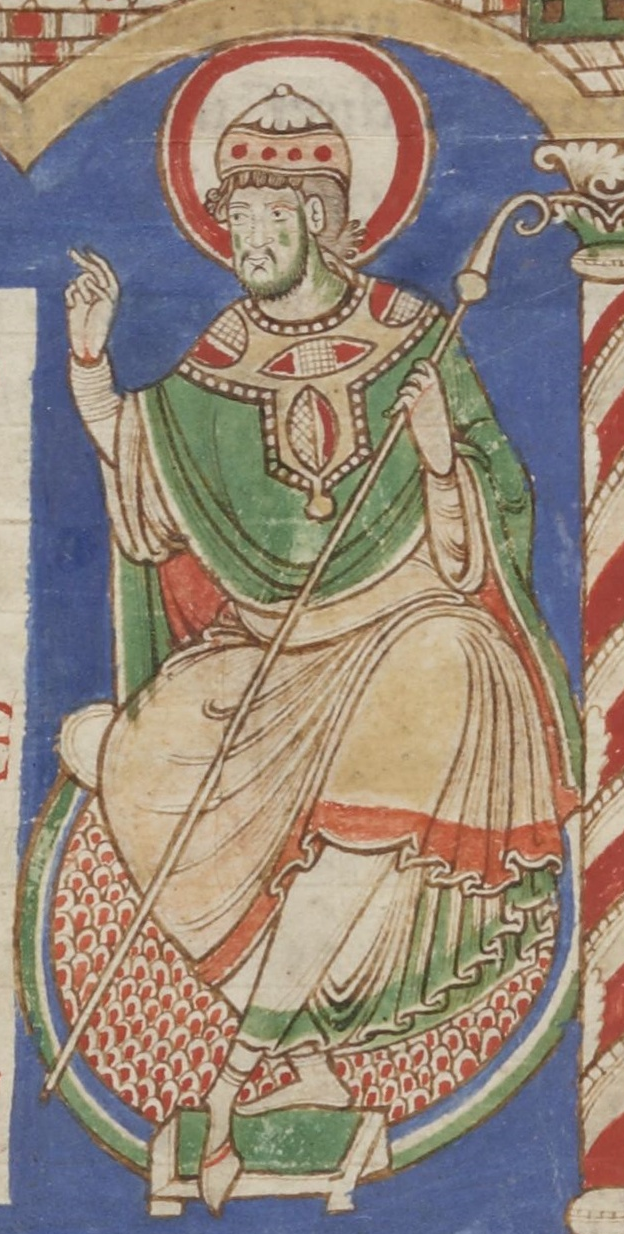
On December 20, a group supporting Damasus rushed to the scene, and people of both genders were brutally killed. Ammianus Marcellinus, an unbiased pagan historian who tries to show no bias in his references to Christianity, states: “Damasus and Ursinus, both excessively eager to obtain the bishopric, formed factions and engaged in a fierce conflict, with each side's supporters resorting to actual violence, resulting in injuries and deaths.” When Juventius, the prefect of Rome, was unable to stop or even ease these disturbances, he was ultimately forced to retreat to the suburbs due to their violence. In the end, Damasus emerged victorious in the struggle thanks to the vigorous efforts of his supporters. It is reported that on one day, as many as one hundred thirty-seven dead bodies were discovered in the basilica of Sicinus, which is a Christian church. The enraged populace was restored to order only with great difficulty. “I do not deny that, considering the showiness that prevails in Rome, those who seek such rank and power may be justified in striving with all their might to achieve their goals; for once they succeed, they will be secure for the future, enriched by offerings from wealthy women, riding in carriages, dressing extravagantly, and feasting lavishly, so that their banquets surpass even royal ones. They might find true happiness if, disregarding the vastness of the city, which they provoke against themselves through their vices, they chose to live like some priests in the provinces, who, through strict abstinence in eating and drinking, simple clothing, and eyes always cast down, are seen as pure and sober-minded by the everlasting Deity and His true worshippers.”
The Preface to the Memorial addressed to Theodosius by Marcellinus and Faustinus, two Luciferian priests who had joined Ursinus's faction, provides further details. The Preface states that Damasus gathered laborers, charioteers, and gladiators to support his cause with their weapons. Damasus was proclaimed by the followers of Felix in the church of Saint Mary Lucina; Ursinus was elected by the priests, deacons, and faithful who had remained loyal to Liberius during his exile, and he was consecrated in the basilica of Sicinus by Paul, the bishop of Tibur. Damasus, accompanied by a mob of charioteers and a wild crowd, broke into the Julian basilica and caused significant bloodshed. Seven days after this horrific event in the church, Damasus succeeded in winning over some priests from his rival's faction through bribes and promises, and with their help, he took control of the Lateran Church and was consecrated as bishop.
Ursinus was expelled from Rome by Juventius, the prefect of the city, and Julian, the prefect of the Annona (the grain supply), along with his deacons, Anantius and Lupus. Seven priests, known for their violence, were also arrested. However, Ursinus's supporters rushed to rescue them, freeing them from the officers and taking them to the basilica of Sicinus, where Ursinus had been ordained.
Damasus then gathered his followers, armed with clubs, axes, and swords, and attacked the church at eight o’clock in the morning on October 28, 366. A fierce battle broke out. Damasus managed to break down the doors of the church. The roof was torn off, and fire was thrown down on the supporters of his rival. Damasus and his followers killed one hundred and sixty-seven of their opponents, while not a single member of his own party was harmed. The supporters of Ursinus were forced to retreat, unsuccessfully asking for a synod of bishops to investigate the validity of the two elections.
Ursinus returned from exile more than once, but Damasus had the support of the women of Rome, and the council of Valentinian was not immune to bribery. Given the means by which Damasus obtained the position of Saint Peter, it is hard not to smile at the judgment of Saint Ambrose, who said, “The holy Damasus was chosen by the judgment of God.” Ursinus returned to Rome with his two deacons in September 367, but he was expelled again a couple of months later. His followers kept one church in Rome and continued to meet in the catacombs. Damasus appealed to Emperor Valentinian to allow him to remove them. Permission was granted, and the unfortunate supporters of Ursinus were driven out by an armed group. Damasus was triumphant. However, the supporters of Ursinus, now expelled from their church, began to gather outside the city walls in large numbers. Damasus would not even allow them this freedom, showing his relentless hostility toward those who had opposed his election. He obtained a decree from Valentinian, forbidding the schismatics from gathering within twenty miles of Rome.
Damasus was not content with persecuting the supporters of Ursinus; he also attacked the Luciferians. His clergy broke into the church of that group, captured Macarius the priest, and dragged him over flint stones until he was mortally injured. He also targeted Eusebius, the Luciferian bishop, but was unable to expel him.
In 375, Damasus condemned Apollinaris at a council he held in Rome. Valens died in the battle of Hadrianople on August 9, 378, and Gratian became the ruler of the entire empire. A synod was held in Rome, attended by several Italian bishops.
bishops gathered partly to reaffirm the condemnation of Ursinus and partly to hear Damasus's defense regarding an accusation made against him by a Jew. The accusation was disgraceful—it was of adultery. He was found not guilty, and the Jew was exiled to Spain.
In 380, Priscillian, Instantius, Salvianus, and other Spanish bishops were condemned for their beliefs, and they, along with all who agreed with them, were ordered by a decree from Gratian to leave their churches and country, and were denied refuge anywhere in the empire. This decree had been forced from Gratian by the persistence of the cruel and irreligious prelate Ithacius. The three Priscillianists mentioned above went to Rome to plead with the Pope to hear their defense and to seek a reduction of the sentence against them. However, Damasus, with scornful injustice, refused to even allow them to enter his presence. Salvianus died in Rome. Instantius and Priscillian went to Milan, where they were met with a rebuff from Saint Ambrose. Meanwhile, Saint Jerome had allied himself with Damasus, providing him with advice and composing many of his letters.
Ammianus Marcellinus provides testimony about the wealth, vices, and pride of the Roman pontiffs. According to Saint Jerome, the clergy of Rome were hardly better than their chief pastors. He describes the clerical dandy of his time in Rome, noting how his main concern was his appearance, that he was well perfumed, that his feet were well shod, his hair curled with curling pins, and his fingers adorned with rings. He walked on tiptoe to avoid splashing himself with the wet ground. Damasus died in 384. He left behind several poetic epitaphs and some letters. He was buried in a church he had built, next to his mother and sister. He rebuilt the church of Saint Laurence, where his father and he had served, and decorated it with sacred pictures, five silver crowns for lights, and patens and chalices made of precious metal.
Footnotes
- Ammianus Marcellinus was a Roman historian.
- Juventius was the prefect of Rome, a high-ranking official.
- The basilica of Sicinus is a Christian church.
- The church of Saint Mary Lucina is a Christian church in Rome.
- Paul was the bishop of Tibur, a city in Italy.
- The Julian basilica is a church in Rome.
- Damasus was the bishop of Rome during a time of significant conflict.
- The battle of Hadrianople was a major conflict between the Roman Empire and Gothic tribes.
- es licentius videantur.” — Ad Eustoch. [Dec. n.
Baring-Gould’s own footnotes, in modern English.
Read the original 1870s text
Baring-Gould’s sources: Roman Martyrology. Usuardus, &c. Authorities S. Ambrose, Ep. 30; Rufinus, H.E. lib. xi. c. 10; Theodoret, lib. ii. c. 22, and lib. v. cc. 9, 10, II; Cassiodorus, Tripart. lib. v. c. 28, lib. viii. c. 10, lib. ix. cc. 2 and 7; The Epistles, and Chronicle of S. Jerome, Ammianus Marcellinus, lib. xxvii. c. 3.] Damasus, a Spaniard, son of Antonius, was educated by the sophist Eubulus and the philosopher Libanius.. He was a cultivated man, able to speak and write both Latin and Greek. His father, Antonius, had been in succession scribe, lector, deacon, and finally priest of the title of S. Laurence, at Rome, and Damasus served the same church as his father, but, unlike him, was unmarried. When Liberius was banished by Constantius in 355, he was in deacon’s orders, and he swore along with the greater part of the Roman clergy to receive no other Pope whilst Liberius lived. He accompanied the banished Pope to Beraea. He remained there with him but for awhile, and then, returning to Rome, in spite of his oath, submitted to the Anti-Pope Felix. On the death of Liberius, the factions, which had been smouldering in secret, broke out into fierce flame. The partisans of Felix, the reputed Arian, elected Damasus* then a priest, and sixty years old; those who had held fast to Liberius chose Ursinus.1 Then ensued riot and bloodshed between the infuriated partisans, in which neither the weakness of woman nor the sanctity of the churches was regarded. S. Jerome says: " But after a short time Ursinus was consecrated by certain bishops, and invaded the Sicinine (church),3 with his supporters, whereupon the people of the 1 See the preface to the Libellus procum of Marcellinus and Faustinus, pub lished by Sirmondi (op. L p. 927).
[Dec. xx. party of Damasus rushed thither, and persons of both sexes were barbarously slaughtered.” Ammianus Marcellinus, an impartial heathen, who is careful to show no prejudice in his mention of Christianity, says: “ Damasus and Ursinus, being both immoderately eager to obtain the bishopric, formed parties, and carried on the conflict with great asperity, the partisans of each carrying their violence to actual battle, in which men were wounded and killed. ' And as Juventius (prefect of Rome) was unable to put an end to, or even to soften these disorders, he was at last by their violence compelled to withdraw to the suburbs. Ultimately Damasus got the best of the strife by the strenuous efforts of his partisans. It is certain that on one day as many as one hundred and thirty-seven dead bodies were found in the basilica of Sicinus, which is a Christian church. And the populace who had been thus roused to a state of ferocity, were with great difficulty restored to order. “ I do not deny, when I consider the ostentation that reigns at Rome, that those who desire such rank and power may be justified in labouring with all possible exertion and vehemence to obtain their objects; since after they have succeeded, they will be secure for the future, being enriched by offerings from matrons, riding in carriages, dressing splendidly, and feasting luxuriously, so that their entertainments surpass even royal banquets. And they might be really happy if, despising the vastness of the city, which they excite against themselves by their vices, they were to live in imitation of some of the priests in the provinces, whom the most rigid abstinence in eating and drinking, and plainness of apparel, and eyes always cast down on the ground, recommend to the everlasting Deity and His true worshippers as pure and sober-minded men.”1 1 “ Facite me Romance urbis episcopum; et ero protinus Christianus,” nud Praetex tatus, prefect of Rome.
The Preface to the Memorial addressed to Theodosius [name of Roman emperors; Theodosius I (379–395) made Christianity the state religion] by Marcellinus and Faustinus, two Luciferian priests who had joined the party of Ursinus, enter into further details. The Preface says that Damasus got together labourers, charioteers, and gladiators to support his cause with their arms. Damasus was proclaimed by the followers of Felix in the church of S. Maria Lucina; Ursinus was elected by the priests, deacons, and faithful, who had adhered to Liberius in his exile, and was consecrated in the basilica of Sicinus, by Paul, bishop of Tibur. Damasus, with a mob of chario teers and a wild rabble, broke into the Julian basilica, and committed great slaughter. Seven days after this horrible scene in the church, Damasus succeeded by bribes and promises in winning over some of the priests from the party of his rival, and by their means seized on the Lateran [St. John Lateran, the pope’s cathedral in Rome] Church, and was consecrated bishop.
Ursinus was now expelled from Rome by Juventius, prefect of the city, and Julian prefect of the Annona, along with his deacons, Anantius and Lupus, and seven priests who had made themselves conspicuous by their violence were also arrested. But the party of Ursinus flew to the rescue, delivered them from the hands of the officers, and conducted them to the basilica of Sicinus, in which Ursinus had received ordination. Thereupon Damasus gathered his rioters together armed with clubs, axes, and swords, and attacked the church at eight o’clock in the morning of October 28, 366. A furious fight ensued. Damasus succeeded in bursting in the doors of the church. The roof was tom off, and fire was thrown down on the partisans of his rival, and Damasus and his followers massacred a hundred and sixty-seven of their opponents. Not one of his own party fell. The party of Ursinians were obliged to withdraw, vainly petitioning for a synod of bishops to examine into the validity of the two elections. Ursinus returned 140 L ives of the Saints. XI> from exile more than once, but Damasus had the ladies of Rome in his favour; 1 and the council of Valentinian was not inaccessible to bribes. Considering the means by which Damasus obtained the chair of S. Peter, it is not possible to read without a smile the judgment of S. Ambrose [bishop of Milan (d. 397)], “ The holy Damasus was chosen by the judgment of God.” 2 Ursinus returned to Rome, with his two deacons, in September, 367, but he was driven out again a couple of months later. His followers retained one church in Rome, and continued to assemble in the catacombs. Damasus appealed to the emperor Valentinian to allow him to dispossess them. Permission was given, and the unfortunate Ursinians were driven out by an armed band. Damasu was triumphant But the Ursinians, now turned out of their church, began to assemble outside the city walls in considerable numbers. Damasus would not concede them even this liberty, so implacable was his hostility towards those who had dared to oppose his election. He obtained a rescript from Valentinian, forbidding the schismatics from assembling within twenty miles of Rome.
Damasus was not satisfied with persecuting the party of Ursinus, he attacked also the Luciferians. His clergy broke into the church of that party, seized on Macarius the priest, and dragged him over flint stones till he was mortally injured. He further attacked Eusebius, the Luciferian bishop, but was unable to effect his expulsion.
In 375 Damasus condemned Apollinaris in a council he held at Rome. Valens perished in the battle of Hadrianople, August 9, 378, and Gratian became sovereign of the whole empire. A synod was held at Rome, attended by a number of Italian
bishops, partly to reaffirm the condemnation of Ursinus and partly to hear the justification of Damasus in a matter in which he had been accused by a Jew. The accusation was a disgraceful one — it was of adultery. 1 He was pronounced guiltless, and the Jew was exiled to Spain. In 380 Priscillian, Instantius, Salvianus, and other Spanish bishops had incurred condemnation for their views, and they with all who thought with them were condemned by a rescript of Gratian to leave their churches and country, and were denied refuge in any portion of the empire. The rescript had been wrung from Gratian by the pertinacity of the cruel and irreligious prelate Ithacius. The three Priscillianists above named went to Rome to entreat the Pope to hear their justification, and obtain a mitigation of the sentence passed on them. But Damasus, with scornful injustice, refused even to allow them to enter his presence. Salvianus died in Rome. Instantius and Priscillian went to Milan, and met with a rebuff from S. Ambrose. S. Jerome [translator of the Bible into Latin (d. 420)], in the meantime, had associated himself with S. Damasus, assisted him with his advice, and composed for him many of his letters.
On the wealth, vices, and pride of the Roman pontiffs we have the testimony of Ammianus Marcellinus. The clergy of Rome were scarcely better than their chief pastors, according to the picture drawn of them by S. Jerome. He sketches the clerical coxcomb of his day in Rome, how his whole care was about his dress, that it was well perfumed; that his feet were well shod, his hair crisped with curlingpins 3 his fingers glittering with rings; how he walked on tiptoe lest he should splash himself with the wet soil.2 Damasus died in 384. He left several poetical epitaphs, 1 Bibliothecarius; Vit. Damasi.
es licentius videantur.” — Ad Eustoch. [Dec. n. and some letters. He was buried in a church he had built, beside his mother and his sister. He rebuilt the church of S. Laurence, in which his father and he had served, and adorned it with sacred pictures, five silver coronas for lights, and patens and chalices of precious metal