This Saint’s Story
The Catholic Encyclopedia treats them carefully and does not assume they are the same man.
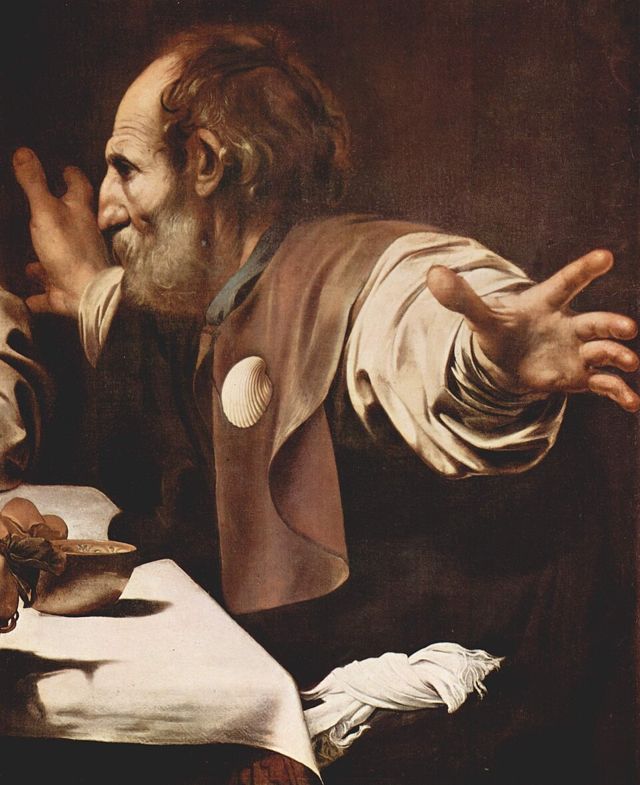
Cleopas is one of the two disciples who were walking to Emmaus on the day of the Resurrection when the risen Lord joined them on the road (Luke 24:13–35). As they walked, He explained to them the Scriptures concerning Himself, and they recognised Him in the breaking of bread. Beyond this Gospel scene there is no reliable information about him. He is the Cleophas entered in the Roman Martyrology (the Church's official list of saints for each day) on 25 September.
Clopas appears in St. John's Gospel, where a Mary standing by the cross is called "Mary of Clopas," usually taken to mean his wife (John 19:25). Many have identified Clopas with Alphaeus, the father of James the Less, treating the two names as different renderings of one Aramaic name; others think the linguistic evidence is against this. The early historian Hegesippus, quoted by Eusebius (bishop of Caesarea, d. c. 339, the first historian of the Church), said that Clopas was a brother of St. Joseph and the father of Simeon, who later led the church of Jerusalem. If Clopas and Alphaeus were the same man, he would be closely tied to the family of James and the "brethren of the Lord"; if not, Scripture tells us nothing of Clopas beyond that single verse.
Later tradition, which the Roman Martyrology took up, says that Cleopas of Emmaus was killed by the Jews in the very house where the Lord had made Himself known to him in the breaking of bread. Baring-Gould notes there is no historical evidence for this. He also records that Cleopas was regarded as a patron of the Teutonic Order. The Gospel scene itself is certain: a grieving disciple on the road, his heart burning as the Scriptures were opened to him, and the stranger he recognized at last at table.